
Hunza Valley Travel Guide: Explore the Jewel of Gilgit-Baltistan
Nestled along the legendary Karakoram Highway, Hunza Valley is one of Northern Pakistan’s most enchanting destinations. From the turquoise waters of Attabad Lake and towering peaks like Rakaposhi to 700-year-old forts and vibrant autumn foliage, Hunza offers an unmatched blend of history and accessibility.
Whether you’re planning a cultural holiday, honeymoon, photography expedition, or a customized family journey, Northern Discover helps you explore Hunza with trusted local expertise, carefully planned itineraries, and reliable travel support.
✓ Local Travel Experts
✓ Customized Hunza Tours
✓ Trusted Accommodation & Transport
✓ Personalized Travel Support
Hunza at a Glance
Essential travel information to help you plan your journey to the historical heart of the Karakoram.
| Region | Gilgit-Baltistan |
| Elevation | Approximately 2,438 m (7,999 ft) at Karimabad |
| Best Time to Visit | April – October |
| Ideal Trip Length | 5–7 Days |
| Best For | Families, Couples, Culture Enthusiasts, Photographers |
| Famous For | Rakaposhi Views, Attabad Lake, Altit/Baltit Forts, Autumn Colors |
Why Visit Hunza Valley
Quick Answer
People visit Hunza because it delivers serious high-altitude mountain scenery without requiring a trek to reach it. You can drive to viewpoints that would take multi-day hikes to reach in most other ranges, then walk twenty minutes from your hotel to a 700-year-old fort. That combination — accessibility plus scale — is genuinely rare.
Overview
Like a normal valley drive — the scale here is genuinely different from most mountain regions travelers have seen. The valley rewards a slower pace better than most “bucket list” destinations. Karimabad’s bazaar, the walk between Baltit and Altit, an evening at a rooftop restaurant with Rakaposhi turning pink at sunset — none of it requires an itinerary packed with activities. Several of our returning clients say the second visit, when they stop rushing between sights, is the one they remember better.
Politically, the area was an independent princely state, ruled by a line of Mirs from Baltit (now Karimabad), until it joined Pakistan directly in 1974. That history is still visible: Baltit Fort was the Mir’s seat for centuries, Altit Fort predates it as the original capital, and the transition from monarchy to district-level governance happened recently enough that older residents remember it firsthand.
The Karakoram Highway, built through the 1970s with Chinese engineering support, ended centuries of relative isolation and is the reason Hunza is as accessible as it is today — before it existed, reaching the valley meant days on foot or horseback.
What Makes Hunza Unique?
A Destination That Blends Epic Scale with Deep History
Unlike many mountain destinations, Hunza allows you to experience the might of 7,000-meter peaks from the comfort of a luxury resort or historic town square. Travelers can explore ancient cobblestone villages, boat across neon-blue lakes, and drive the world’s highest paved international road without needing extensive physical preparation.
Reasons to Visit
- ⛰️ Unmatched views of Rakaposhi & Ultar Sar
- 🌊 The vibrant turquoise waters of Attabad Lake
- 🚗 The legendary Karakoram Highway drive
- 🏛️ 700-year-old Baltit and Altit Forts
- 🌸 World-famous cherry blossoms (Spring)
- 🍂 Spectacular autumn foliage (Fall)
- 👨👩👧👦 Highly accessible and family-friendly
- 🍒 Unique local culture, longevity, and cuisine
- 🏨 Boutique hotels and comfortable lodgings
- 🗺️ Gateway to Upper Hunza and the Khunjerab Pass
Must-Visit Places in Hunza Valley
Explore the top attractions that make Hunza an unforgettable destination.
Attabad Lake
Formed in 2010 by a massive landslide, this striking neon-blue lake has become one of Pakistan’s top attractions. Enjoy boating, jet skiing, or simply marveling at the contrast of the bright water against the jagged mountains.
Baltit Fort
Perched high in Karimabad, this 700-year-old fort was the traditional seat of the Mirs of Hunza. Beautifully restored, it offers a fascinating glimpse into the region’s royal history and sweeping views of the valley below.
Passu Cones
Located in Upper Hunza (Gojal), these razor-sharp, sun-drenched peaks are the most iconic rock formations on the Karakoram Highway. A true photographer’s paradise.
Eagle’s Nest (Duikar)
One of the highest viewpoints in the valley, reachable by car. It offers unparalleled 360-degree views of the entire Hunza Valley, especially famous for sunrise and sunset.
Altit Fort & Shikamari
Predating Baltit Fort as the original capital, Altit Fort sits dramatically on a cliff edge overlooking the Hunza River. The surrounding royal gardens (Shikamari) offer a peaceful retreat.
Hussaini Suspension Bridge
Often labeled as one of the world’s most thrilling rope bridges, crossing this wooden-planked structure over the fast-flowing Hunza River is an unforgettable experience.
Experiences You’ll Remember
Whether you prefer rich cultural history or jaw-dropping nature, Hunza offers experiences suited to every travel style.
- 🌅 Watch Rakaposhi turn pink at sunset
- 🏛️ Walk between Altit and Baltit Forts
- 🚗 Drive the world-famous Karakoram Highway
- 🚤 Take a boat ride across Attabad Lake
- 🍒 Taste fresh local apricots, cherries, and walnuts
- 📸 Photograph the dramatic Passu Cones
- 🏔️ Drive to the Khunjerab Pass (Pak-China Border)
- 🛍️ Shop for local handicrafts in Karimabad’s bazaar
- 🌉 Cross the thrilling Hussaini Suspension Bridge
- 🍲 Enjoy a rooftop dinner with mountain views
- 🧊 Hike to the base of the Batura or Passu Glacier
- 🗣️ Experience the warm hospitality of the Wakhi and Burusho people
When Should You Visit Hunza?
Quick Answer
The best times to visit Hunza are from April to May for the spring cherry blossoms, and October to early November for the spectacular autumn colors. Summer (June-August) is excellent for escaping the heat and clear road access.
Seasonal Guide
🌸 Spring (April–May)
Cherry, apricot, and apple blossoms turn the valley pink and white. Absolutely magical for photography.
☀️ Summer (June–Aug)
Lush green terraces, pleasant temperatures, and peak tourism. Great for family holidays and open mountain passes.
🍁 Autumn (Oct–Nov)
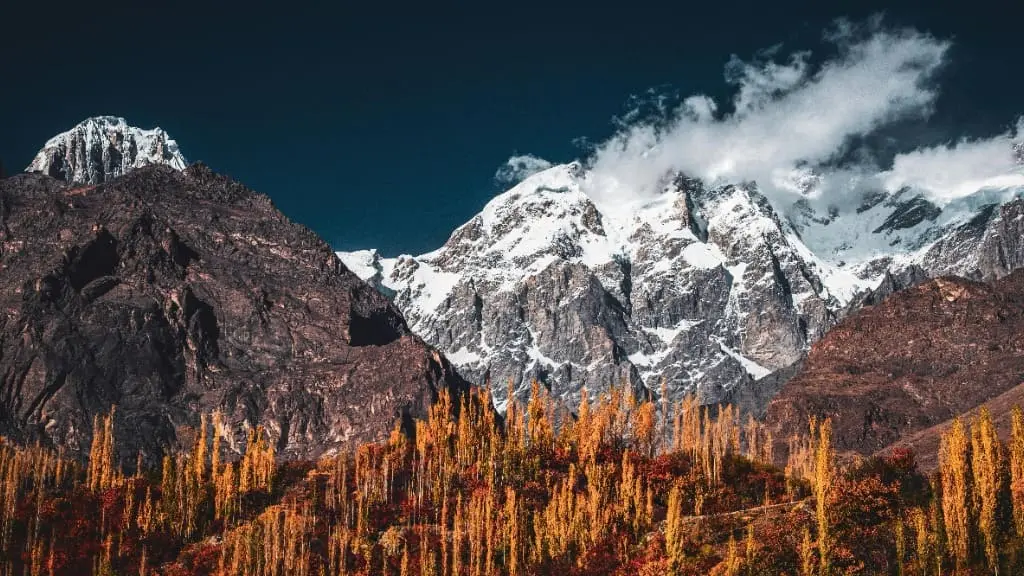
Poplar and apricot trees turn vibrant gold and red. Many consider this the most breathtaking time to visit Hunza.
❄️ Winter (Dec–March)
Quiet and deeply frozen. Heavy snow restricts travel beyond certain points, suited only for hardcore winter enthusiasts.
Weather & Climate
Hunza Valley boasts four highly distinct seasons, defining the look and feel of your trip.
Summers in Central Hunza are surprisingly warm during the day but crisp at night, making sightseeing incredibly comfortable. Autumn provides perfect crisp, clear days ideal for viewing peaks. Spring brings mild days but chilly evenings, and winter coats the entire valley in deep snow.
No matter what time of year you visit, layering is essential. A warm jacket for the evenings is required even in mid-summer.
How to Reach Hunza
Travelers generally reach Hunza by a combination of air travel and scenic road journeys.
✈️ By Air
Take a spectacular 45-minute flight from Islamabad to Gilgit Airport (subject to weather). From Gilgit, Hunza (Karimabad) is a smooth, incredibly scenic 2 to 3-hour drive via the Karakoram Highway.
🚙 By Road
Driving from Islamabad takes you along the famed Karakoram Highway via Naran/Babusar Pass (in summer) or Besham. The drive takes about 12-14 hours to Gilgit, and another 2.5 hours to Hunza. We highly recommend splitting the journey with an overnight stay.
How Many Days Should You Spend in Hunza?
Choose an itinerary that matches your travel style and schedule.
3-Day Trip
Ideal if flying into Gilgit. Focus on Karimabad, Altit/Baltit Forts, Eagle’s Nest, and a quick visit to Attabad Lake.
5-Day Trip
The perfect balance. Explore Central Hunza, take a boat on Attabad Lake, and venture into Upper Hunza (Gojal) to see the Passu Cones and Hussaini Bridge.
7-Day Journey
Experience all of Hunza at a relaxed pace, extending your trip to the Khunjerab Pass (China Border) and exploring neighboring valleys like Nagar or Naltar.
Turn your travel plans into reality
Explore our carefully selected tours, accommodation, and transportation options designed specifically for exploring Hunza Valley.
[ INSERT SPECTRA QUERY LOOP HERE: Featured Hunza Tours (ND-C04) ]
[ INSERT SPECTRA QUERY LOOP HERE: Featured Hotels (ND-C08) ]
[ INSERT SPECTRA QUERY LOOP HERE: Transportation Options (ND-C20) ]