Northern Discover

Hunza Valley Travel Guide 2026: Weather, Culture, Costs, Safety & Best Places to Visit

Hunza Valley Quick Overview

climate & weather

Climate & Weather

Pleasant summers and cold winters, with temperatures averaging around 18°C.

popularity for

Speciality

Famous for its breathtaking scenery, historical forts, and long-living inhabitants.

transport routes

Transport Routes

Accessible by road connections to Gilgit and Skardu, nearest airport in Gilgit.

historical places

Historical Places

Home to ancient sites like Baltit Fort and Altit Fort, reflecting the valley’s rich history.

tourist points

Tourist Points

Top spots include Karimabad, Attabad Lake, and Passu Cones.

hotel & restaurant

Hotel/Restaurant

Over 50 hotels and restaurants offering diverse options for tourists.

facts and figures

Facts & Figures'

A vital valley known for its apricot orchards and as a base for exploring the Karakoram Range.

geographical location

Geographical Location

Situated in northern Pakistan, Hunza Valley covers an area of about 7,900 km² at an altitude of 2,500m.

TL;DR — Quick Summary of Hunza Valley

  • Best time to visit: April–May for cherry blossoms; September–October for autumn colours
  • Ideal trip length: 5–8 days for a balanced cultural and sightseeing experience
  • Top attractions: Attabad Lake, Baltit Fort, Passu Cones, Khunjerab Pass
  • Average trip cost (2026): PKR 25,000–40,000 (budget) | PKR 60,000–100,000 (mid-range) | PKR 150,000+ (luxury)
  • Safety: Widely considered one of the safest tourist regions in Pakistan for families, solo travellers, and photographers
  • Languages spoken: Burushaski, Wakhi, Shina, Urdu, and English in tourist areas
  • Travel route: Most travellers arrive via the Karakoram Highway from Islamabad or through Gilgit
  • Internet & SIMs: Mobile speeds tend to drop significantly north of Gulmit, especially during tourist-heavy summer weeks.
  • Cultural highlight: Traditional mountain hospitality, apricot farming, and Silk Road heritage

Hunza valley Seasonal weather chart | Route map | Budget ranges | Best attractions by season | Safety rating overview

“Hunza Valley at a Glance” Infographic] Include: Seasonal weather chart | Route map | Budget ranges | Best attractions by season | Safety rating overview

Where Is Hunza Valley?

Hunza Valley Location Explained

Hunza Valley is a high-altitude mountain valley located in the Gilgit-Baltistan region of northern Pakistan, sitting at an average elevation of 2,438 metres (8,000 ft) above sea level. It is framed by the Karakoram mountain range — home to some of the world’s tallest peaks, including Rakaposhi (7,788 m) — and has served as a key corridor along the ancient Silk Route, recognized in historical mapping initiatives by the UNESCO Silk Roads Programme.

Administratively, Hunza Valley falls within Gilgit-Baltistan, Pakistan’s northernmost territory, bordered by Afghanistan’s Wakhan Corridor to the northwest and China’s Xinjiang region to the northeast.

Why Hunza Valley Is Famous Worldwide

Hunza Valley draws travellers from across the globe for a rare combination of reasons:

  1. Dramatic mountain scenery — snow-capped peaks, glaciers, and turquoise lakes define every horizon
  2. Historic forts — Baltit and Altit forts are UNESCO-nominated heritage landmarks
  3. Adventure tourism — trekking, glacier walks, and jeep safaris on one of the world’s most scenic highways
  4. Cultural uniqueness — the Burusho and Wakhi communities maintain traditions found nowhere else on earth
  5. Longevity mythology — the region’s reputation as a “Shangri-La” of long life continues to attract researchers and wellness travellers

Hunza Valley Regions Explained (Upper, Central & Lower Hunza)

Upper Hunza (Gojal)

Upper Hunza, commonly known as Gojal, is the northernmost subregion of Hunza Valley, encompassing the villages of Passu, Gulmit, and Sost — the last Pakistani town before the Chinese border. The dominant language here is Wakhi, and the terrain is defined by vast glaciers, including the Passu and Batura glaciers. This is the go-to zone for serious trekkers and glacier enthusiasts.

Central Hunza

Central Hunza is the tourism heartland of the region, anchored by the historic town of Karimabad. This is where most first-time visitors base themselves. It holds the majority of hotels, restaurants, and tour operators, and provides direct access to both Baltit Fort and the Eagle’s Nest viewpoint at Duikar.

Lower Hunza

Lower Hunza is the quieter, more agricultural stretch of the valley, characterised by terraced apricot orchards, mulberry groves, and close-knit farming communities. It is ideal for travellers seeking authentic cultural immersion away from tourist crowds.

Hunza Valley Micro-Region Map
“Hunza Valley Micro-Region Map”] Include: Main villages | Languages by region | Best activities | Family-friendly vs trekking-focused zones

Best Time to Visit Hunza Valley in 2026

Spring (March–May) — The Cherry Blossom Window

Spring is Hunza’s most photogenic season. From mid-March, the valley erupts in pink and white cherry blossoms, drawing photographers and travel bloggers from around the world. Temperatures are mild (10°C–20°C in April), according to Global weather forecast network AccuWeather, roads are generally clear after winter, and accommodation is more available before peak summer demand.

Summer (June–August) — Peak Season

Summer brings the highest tourist footfall and the best road accessibility across all subregions. The Khunjerab Pass fully opens to tourists in May, and trekking routes to Rakaposhi base camp and the Passu glaciers are at their safest. Expect temperatures of 20°C–30°C in Karimabad.

Autumn (September–October) — The Underrated Season

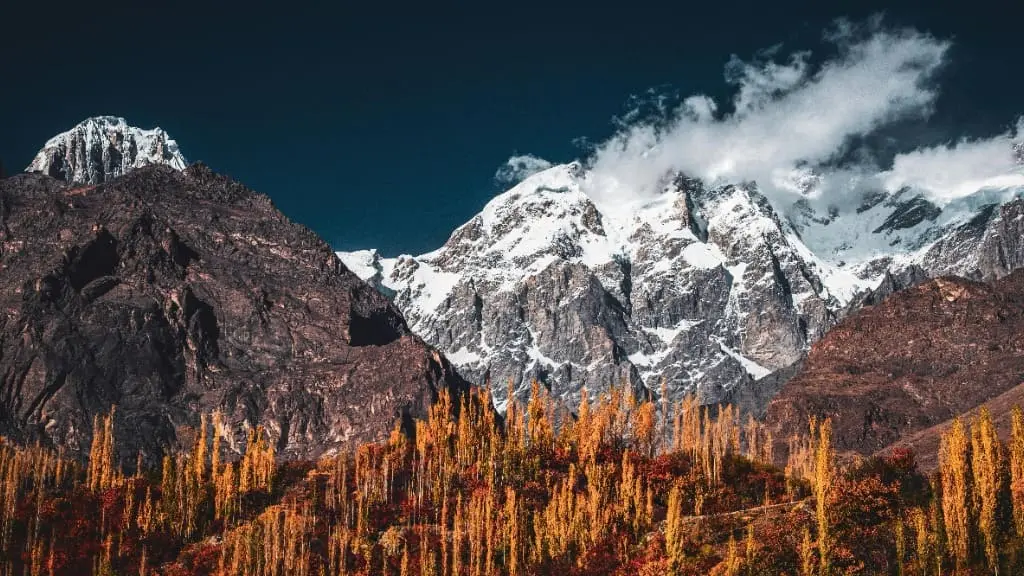
Autumn is arguably the most rewarding time for cultural travellers. According to local guides in Upper Hunza, October is generally considered the best balance between weather stability and reduced tourist traffic. The valley transforms into a tapestry of gold, amber, and crimson as apricot and poplar trees change colour. Crowds thin significantly after September, prices drop, and the crisp air makes for ideal trekking conditions.

Winter (November–February) — For the Adventurous

Winter travel to Hunza is scenic but logistically challenging. Snowfall can close the Babusar Pass and sections of the Karakoram Highway near Gilgit. However, Karimabad itself remains accessible, and the frozen landscape offers extraordinary photographic opportunities.

Month-by-Month Weather & Risk Table

MonthTemperature RangeRoad ConditionsCrowd LevelLandslide RiskEstimated Daily Cost
Jan−5°C to 7°CPartial closuresVery LowLowPKR 2,500–4,000
Feb−3°C to 10°CImprovingLowLowPKR 2,500–4,000
Mar2°C to 15°COpeningModerateLow–MediumPKR 3,000–5,000
Apr8°C to 20°CGoodHighMediumPKR 4,000–7,000
May12°C to 25°CExcellentVery HighMedium–HighPKR 4,500–8,000
Jun18°C to 30°CExcellentHighMediumPKR 4,500–8,000
Jul20°C to 32°CGoodHighHighPKR 4,500–8,000
Aug19°C to 31°CGoodHighHighPKR 4,000–7,500
Sep12°C to 25°CGoodModerateMediumPKR 3,500–6,000
Oct5°C to 18°CGoodLow–ModerateLow–MediumPKR 3,000–5,500
Nov−1°C to 12°CDeterioratingVery LowLowPKR 2,500–4,000
Dec−4°C to 8°CPartial closuresVery LowLowPKR 2,500–4,000
Hunza Valley Risk vs Reward Calendar
Hunza Valley Risk vs Reward Calendar Columns Month Weather Crowd Level Best Activity Travel Risk Estimated Costs

How to Reach Hunza Valley

Islamabad to Hunza by Road

The most common route from Islamabad to Hunza Valley follows the Karakoram Highway (KKH) — a 620 km drive that takes approximately 14–16 hours non-stop. Most travellers break the journey overnight in Chilas or Gilgit. The alternative Babusar Pass route (via Naran) is shorter in distance but is only open from June to September due to heavy snowfall.

Key fuel stops on the KKH route: Abbottabad, Mansehra, Besham, Chilas, Gilgit.

Flights to Gilgit

PIA operates regular flights between Islamabad and Gilgit Airport, reducing travel time to under one hour. However, flights are subject to frequent cancellations due to mountain weather conditions — always book with flexible travel dates and a road backup plan.

Public Transport & Bus Services

  • NATCO (Northern Areas Transport Corporation) operates affordable bus services from Gilgit and Rawalpindi to Hunza
  • Daewoo Express connects Rawalpindi to Gilgit with a comfortable overnight service
  • Shared Suzuki vans are the main local transport within Hunza between villages

Winter Travel Challenges in 2026

Road closures due to snowfall and landslides are the primary risk for winter travellers. The National Disaster Management Authority (NDMA) publishes real-time alerts on road conditions. Always carry emergency supplies, offline maps, and a local guide contact when travelling November–March.

Best Places to Visit in Hunza Valley

Hunza Valley contains a concentrated cluster of world-class attractions within a relatively compact geographic area, making it possible to cover multiple sites in a single trip.

baltit fort hunza

Baltit Fort

Dating back over 700 years, this Mir's palace overlooks Karimabad and offers some of the finest views in Gilgit-Baltistan. It is a symbol of Hunza's royal Burusho heritage.

Altit fort hunza

Altit Fort

Older than Baltit by at least 900 years, Altit is one of Pakistan's most ancient inhabited settlements. Recent restoration work has made it a landmark of heritage tourism.

Attabad lake

Attabad Lake

A stunning turquoise lake formed in 2010 after a catastrophic landslide blocked the Hunza River. Boating, jet skiing, and kayaking are available. The lake's electric-blue water is best photographed in morning light.

hussaini suspension bridge

Hussaini Bridge

One of the most thrilling and adventurous spots in Hunza is the Hussaini Suspension Bridge, known as one of the most dangerous bridges in the world. S

rakaposhi viewpoint

Rakaposhi Viewpoint

Rakaposhi Viewpoint is a short drive away and offers spectacular views of the Rakaposhi peak, one of the most prominent mountains in the Karakoram Range.

eagles nest hunza

Eagle's Nest & Duikar

A high ridge above Karimabad offering panoramic views of the Hunza Valley, Rakaposhi, and up to five 7,000-metre peaks at sunrise.

passu cones

Passu Cones

A row of sharp, cathedral-like rock spires rising from the valley floor. During autumn mornings, visibility around Passu is often clearest before 8 AM, when winds are lower and mountain haze is minimal.

hussaini suspension bridge

Khunjerab Pass

At 4,693 metres, this is the highest paved international border crossing in the world, connecting Pakistan with China. Open to tourists from May to November.

Hunza Valley Top Attractions Distance Map
Top Attractions Distance Map Include Driving times Entry fees Best season Recommended stay duration

Hunza Valley Culture & Local Life

Languages Spoken in Hunza

Hunza Valley is one of the most linguistically diverse regions in Asia. Four distinct languages co-exist across its subregions:

  • Burushaski — a language isolate with no known relatives, spoken primarily in Central Hunza
  • Wakhi — an Iranian language spoken in Upper Hunza (Gojal)
  • Shina — spoken in parts of Lower Hunza and Gilgit
  • Urdu and English — widely understood in tourist-facing businesses throughout Karimabad

Traditional Hunza Lifestyle

The Burusho people of Central Hunza have historically lived as subsistence farmers, cultivating apricots, wheat, and vegetables on meticulously terraced hillsides. Apricot harvest (July–August) is a community event; the fruit is dried on rooftops and forms the backbone of both local diet and cottage-industry exports.

Hunza Food Guide

Traditional Hunza cuisine is organic, seasonal, and deeply tied to the land. Must-try foods include:

  • Chapshuro — a meat-filled flatbread baked on an open griddle
  • Hunza bread (Tumoro) — a dense, multigrain bread eaten with apricot oil
  • Diram Phitti — a traditional sweet made from apricot kernels and mulberry juice
  • Butter tea — a salted, yak-butter tea that is an acquired taste but culturally significant

The Hunza Longevity Myth — Truth vs Reality

The claim that Hunza people routinely live past 100 years originated largely in Western travel writing from the early 20th century and was popularised by wellness authors in the 1970s who dubbed the valley a real-life “Shangri-La.” The truth is considerably more nuanced.

Popular ClaimEvidence LevelScientific Consensus
Hunza people live 120+ yearsVery weakLack of verifiable birth records; claims unsubstantiated
Diet is a key health factorModerateHigh fruit, low processed food likely beneficial
Zero cancer or diseaseFalseModern surveys show normal disease prevalence
Glacial water has special propertiesAnecdotalNo peer-reviewed evidence supports this
Hunza Valley Longevity Myth vs Scientific Evidence

What researchers do confirm is that traditional Hunza lifestyle — low caloric intake during winter, physical activity from mountain terrain, and low stress — likely contributes to above-average wellbeing relative to urban Pakistan, without the supernatural longevity claims.


Is Hunza Valley Safe in 2026?

Hunza Valley is consistently rated as one of the safest tourist destinations in Pakistan, with remarkably low crime rates reported by both domestic and international travellers. Local hospitality is a cornerstone of Burusho and Wakhi culture.

  • For families: Karimabad and Altit are fully family-friendly. Healthcare is accessible in Karimabad, though serious emergencies require evacuation to Gilgit.
  • For solo female travellers: Hunza is widely considered safe for women travelling alone. Conservative dress (covered arms and legs) is recommended as a cultural courtesy, not a legal requirement.
  • Road safety: The primary safety risk is road travel, particularly during or after heavy rainfall, landslide risk increases along the KKH during monsoon periods, with advisories periodically issued by the National Disaster Management Authority Pakistan. Monitor NDMA alerts.
  • Connectivity: Jazz and Telenor offer the most stable mobile coverage. Wi-Fi is available in mid-range and luxury hotels in Karimabad; expect speeds of 2–10 Mbps.

Hunza Valley Trip Cost Breakdown (2026)

Budget TypeAccommodationFood (Daily)TransportDaily Total
BackpackerPKR 800–1,500 (hostel dorm)PKR 600–1,200Shared vansPKR 2,500–4,000
Mid-RangePKR 3,000–7,000 (hotel)PKR 1,500–2,500Private hirePKR 6,000–12,000
LuxuryPKR 15,000–40,000 (resort)PKR 4,000–8,000Private SUVPKR 25,000–55,000

Hidden costs travellers frequently overlook:

  • Attabad Lake boat rides and jet skiing (PKR 500–2,000 per person)
  • Khunjerab Pass entry fee (non-Pakistanis: check current NOC requirements)
  • ATM fees and cash shortfalls — ATMs exist in Karimabad but frequently run out of cash; carry sufficient PKR from Gilgit or Islamabad
  • Seasonal price surges during cherry blossom peak (April) and Eid holidays
2026 Hunza Valley Budget Calculator by Northern-Discover
2026 Hunza Valley Budget Calculator

Where to Stay in Hunza Valley

  • First-time visitors: Base in Karimabad for central access to forts, markets, and day trips
  • Nature & photography lovers: Passu or Gulmit for glacier proximity and dramatic Passu Cones backdrops
  • Families: Altit village for a quieter, community-oriented stay with good safety infrastructure
  • Trekkers: Upper Hunza guesthouses near Sost or Passu for early morning access to glacier trails

Things to Do in Hunza Valley

Adventure Activities

  • Multi-day trekking to Rakaposhi Base Camp (3–5 days) and Passu Glacier (1 day)
  • Jeep safaris along unpaved mountain tracks in Upper Hunza
  • Camping under some of Asia’s darkest skies for Milky Way photography

Cultural Experiences

  • Village home tours in Altit — many families welcome guests for tea and apricot tastings
  • Cooking demonstrations for Chapshuro and traditional Hunza bread
  • Guided fort visits with local historians

Photography Experiences

  • Sunrise at Eagle’s Nest — arrive by 5:30 AM for golden-hour alpenglow on Rakaposhi
  • Autumn foliage at Attabad Lake shoreline — best in mid-October
  • Passu Cones at blue hour — long exposures at dusk reveal extraordinary detail

Sustainable & Responsible Tourism in Hunza

Hunza faces growing environmental pressures from rapid tourism expansion. Glacier melt, plastic waste on trekking routes, and seasonal overcrowding in Karimabad are documented concerns. As a visitor, you can make a measurable difference:

  • Choose homestays over large hotels — revenue goes directly to local families
  • Hire local guides certified by the Hunza Tourism Association rather than outside agencies
  • Carry a reusable water bottle — Hunza’s spring water is safe and clean; single-use plastic is an environmental burden in a region with limited waste infrastructure
  • Respect restricted areas — drone photography requires permits; always confirm with the GB Tourism Department before flying

Suggested Hunza Valley Itineraries

3-Day Itinerary

Day 1: Arrive Karimabad → Baltit Fort → Eagle’s Nest sunset
Day 2: Attabad Lake boat trip → Altit Fort → local dinner
Day 3: Morning bazaar → drive to Gilgit for onward journey

5-Day Road Trip

Days 1–2: Islamabad → Babusar Pass → Chilas → Karimabad
Days 3–4: Attabad Lake, Passu Cones, Passu Glacier walk
Day 5: Khunjerab Pass day trip → return to Karimabad

7-Day Adventure & Culture Itinerary

Add to the 5-day plan: Rakaposhi base camp overnight trek + a village homestay in Altit for a full cultural immersion day with cooking, local stories, and apricot farm visit.


Essential Travel Tips Before Visiting Hunza Valley

What to pack:

  • Layered warm clothing even in summer (temperatures drop sharply after sunset)
  • Sturdy trekking boots with ankle support
  • Personal medications, altitude sickness tablets (Diamox — consult your doctor), and a basic first-aid kit

SIM cards & cash:

  • Purchase a Jazz or Telenor SIM in Islamabad or Gilgit before entering the valley
  • Withdraw sufficient PKR before leaving Gilgit — ATMs in Karimabad are unreliable

Health & altitude:

  • Acclimatise for 24 hours before undertaking strenuous treks
  • Drink at least 3 litres of water daily
  • Avoid alcohol at altitude — it accelerates dehydration

Final Thoughts on Visiting Hunza Valley

Hunza Valley stands apart from every other destination in northern Pakistan because it layers geological drama, living cultural heritage, and genuine community warmth into a single, accessible destination. It is not a theme park version of mountain tourism — it is a real, evolving society that has chosen to open its doors.

The valley’s future depends on whether tourism grows in ways that benefit local people and protect the landscape. The most meaningful thing any visitor can do is travel slowly, spend locally, and leave as little behind as possible — except, perhaps, a review that sends the next responsible traveller their way.


Frequently Asked Questions About Hunza Valley

What is the best month to visit Hunza Valley? April–May for cherry blossoms and September–October for autumn colours are the two peak seasons. October offers a strong balance of scenery, manageable crowds, and good road conditions.

Is Hunza Valley safe for tourists?
Yes. Hunza consistently receives high safety ratings from both domestic Pakistani tourists and international travellers. Crime rates are among the lowest in the country.

How many days are enough for Hunza Valley?
A minimum of 5 days is recommended to see the key attractions without rushing. Seven days allows for a trek, cultural immersion, and day trips to Khunjerab Pass.

Can families travel to Hunza Valley with children?
Yes. Karimabad and Altit are particularly family-friendly, with gentle terrain, safe roads within the village, and welcoming local communities.

Is internet available in Hunza Valley?
Internet exists in major villages and most hotels in Karimabad. Speeds vary from 2–10 Mbps. Remote trekking areas have no connectivity.

What language do people speak in Hunza?
The main languages are Burushaski, Wakhi, Shina, and Urdu. English is widely understood in hotels, restaurants, and tour operations around Karimabad.

Is winter travel to Hunza dangerous?
It carries real risks — snowfall can close mountain passes and some highway sections. With careful planning, local guidance, and flexible dates, winter travel is feasible but not recommended for first-time visitors.

Are there ATMs in Hunza Valley?
There are ATMs in Karimabad and Aliabad, but during peak blossom season, travellers frequently report ATMs in Karimabad running out of cash by evening.

. Always carry sufficient PKR from Gilgit or Islamabad.

What is Hunza famous for?
Mountain scenery, historic forts (Baltit and Altit), Attabad Lake, the Karakoram Highway, cherry blossom season, Silk Road heritage, and its distinctive Burusho culture.

Is the Hunza longevity story true?
The “120-year lifespan” claims are largely unverifiable due to the absence of historical birth records. What is true is that traditional Hunza lifestyle — active, plant-rich, and low-stress — likely supports above-average health outcomes relative to urbanised populations.


About the Author
Northern Discover is a Gilgit-Baltistan-based travel research platform and community. Specializing in high-altitude logistics and mountain culture, their team combines decades of first-hand Karakoram trekking experience with verifiable, localized expedition planning. Their work prioritizes sustainable eco-tourism, cultural preservation, and adherence to regional Directorate of Tourist Services Gilgit Baltistan protocols.

Last Updated: May 2026
Road, weather, and travel cost information verified for the 2026 travel season.


Sources of Information: GB Tourism Department | UNESCO Silk Roads Programme | NDMA Pakistan | ICIMOD | WMO Climate Data

More About Hunza Valley:

Scroll to Top