
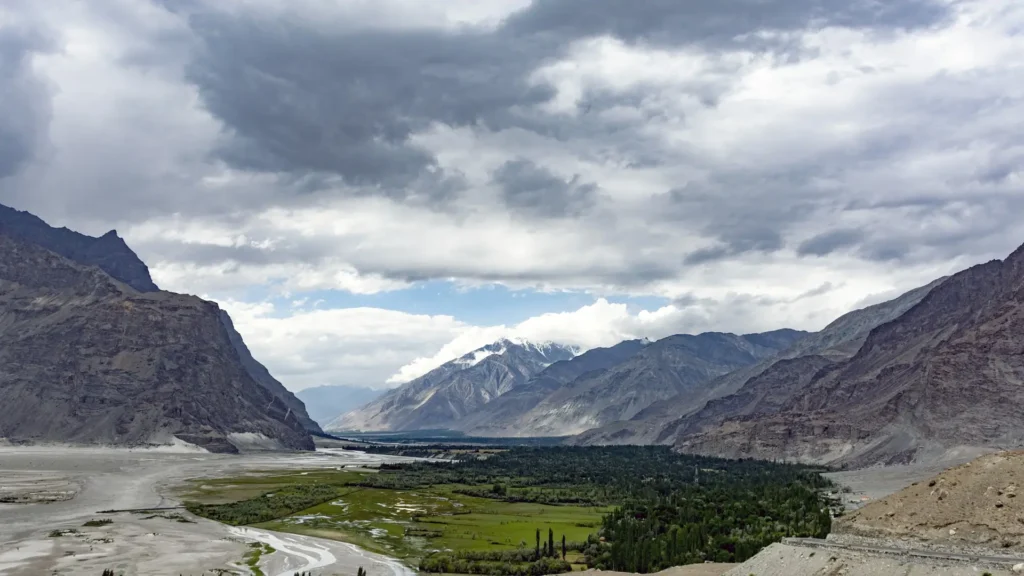
Shigar Valley — Baltistan’s Heritage Gateway to the Karakoram
By Hassan Sulaimani | Last Updated: September 2026
A 400-year-old royal fort, a cold desert beside the Indus, and the last comfortable stop before K2 — Shigar is Baltistan’s most complete day trip, about 30 km from Skardu. Plan it with Northern Discover’s local team.
✅ Local Skardu-Based Guides
💬 24/7 WhatsApp Support
🏰 Heritage & Culture Focused
🧭 Flexible, Honest Itineraries
Shigar Valley — Quick Facts
| Location | Shigar District, Gilgit-Baltistan, Pakistan |
| District | Shigar |
| Region | Gilgit-Baltistan (federally administered territory) |
| Elevation | Roughly 2,200–2,500 m (7,200–8,200 ft), varying across the valley floor |
| Distance from Skardu | Approx. 30 km — a 45–60 minute drive on a paved road |
| Valley Length (Skardu to Askole) | Approx. 170 km |
| Best Time to Visit | Late April to October (peak season: June–September) |
| Recommended Stay | 1–2 nights for the valley itself; longer if continuing toward Askole/K2 Base Camp |
| Road Access | Sealed road from Skardu; onward tracks toward Askole are unpaved and seasonal |
| Mobile Network | Reasonable coverage in Shigar town; patchy in outlying villages |
| Internet Availability | Available at hotels/guesthouses in Shigar town; limited further out |
| Suitable For | Families, couples, culture & heritage travelers, photographers, and trekkers heading toward Baltoro/K2 |
| Weather Snapshot | Warm, dry summer days with cool nights; cold winters with snowfall at higher elevations |
These figures are approximate and can shift with road work, weather, and season — for exact current conditions before you travel, message our team on WhatsApp.
What Is Shigar Valley?
Shigar Valley is a fertile side-valley of Baltistan, about 30 km northeast of Skardu, where the Shigar River cuts a green corridor between the Indus and the high wall of the Karakoram. It’s the last stretch of settled, orchard-lined land before the road runs out and the mountains take over — the valley itself stretches roughly 170 km from Skardu all the way to Askole, the final village before the Baltoro Glacier and K2.
For centuries this was the seat of the Amacha dynasty, the ruling family of the independent Shigar kingdom before Baltistan came under the Maqpon rulers of Skardu. That royal history is still standing: Shigar Fort, the Amacha palace-on-a-rock, has been restored and now anchors the valley’s identity as a living heritage site rather than a ruin.
What makes Shigar worth the detour is the contrast packed into one short drive: apricot and walnut orchards, a centuries-old wooden mosque, a glacial lake, a genuine cold desert on the bank of the Indus, and — beyond the last village — the start of one of the world’s great mountaineering approaches. Most travelers pair it with Skardu as a half-day or full-day trip; those heading toward Baltoro treat it as their real starting point.
Why Visit Shigar Valley
Travelers add Shigar to a Baltistan itinerary for reasons that don’t overlap much with why they come to Hunza or Skardu proper:
- Real heritage architecture — Shigar Fort and the Amburiq Mosque are two of the best-preserved Balti-era structures in the region, both restored by the Aga Khan Cultural Service rather than rebuilt from scratch.
- A genuine cold desert — the Sarfaranga (Katpana) dunes sit beside the Indus with the Karakoram as a backdrop, a landscape combination that’s hard to find anywhere else.
- Balti culture at a slower pace — Shigar town feels lived-in rather than touristic, with working orchards, small bazaars, and villages that still run on agriculture.
- The gateway to Baltoro and K2 — Askole, at the valley’s far end, is the last road-connected village before trekkers walk into Baltoro Glacier and Concordia.
- An easy add-on, not a detour — because it’s roughly 30 km off the Skardu road, Shigar fits into almost any Baltistan itinerary without eating a full extra day.
The sections below walk through exactly what to see, when to go, and how to get there — starting with the valley’s signature landmark.
Top Attractions in Shigar Valley
Shigar Fort (Fong Khar — “Palace on the Rock”)
Shigar Fort was built in the early 17th century by Raja Hasan Khan of the Amacha dynasty, on a large boulder outcrop that gives the palace its Balti name, Fong Khar — “Palace on the Rock.” It served as the royal residence of the Shigar rajas until the dynasty declined and the building fell into disrepair.
History: Between 1999 and 2004, the Aga Khan Cultural Service Pakistan carried out a six-year, roughly $1.4 million restoration, rebuilding the fort using traditional Balti carpentry and stonework rather than modern materials. The project later received international heritage recognition for the quality of that restoration.
Visitor experience: Part of the complex now operates as the Shigar Fort Residence, a heritage guesthouse run by Serena Hotels, while the original royal hall functions as a small museum of Balti woodcarving, textiles, and household objects. Even travelers who aren’t staying overnight can usually visit the museum and gardens.
Tips: Go in the morning for softer light on the stone façade, and set aside 45–60 minutes to see the museum properly rather than rushing through on a jeep-safari schedule.

Shigar Fort Residence
The Shigar Fort Residence is the heritage guesthouse built into the restored fort complex, combining the original palace, the “Old House,” and the “Garden House” into a small number of individually designed rooms overlooking the Amacha Garden and the valley. It’s less a hotel bolted onto a monument and more a way to actually stay inside the history — one of the more distinctive overnight experiences in Baltistan. We can arrange bookings here as part of a Shigar itinerary; ask us on WhatsApp for current room availability and rates.
Blind Lake (Zharba Tso / Jarba Zhou)
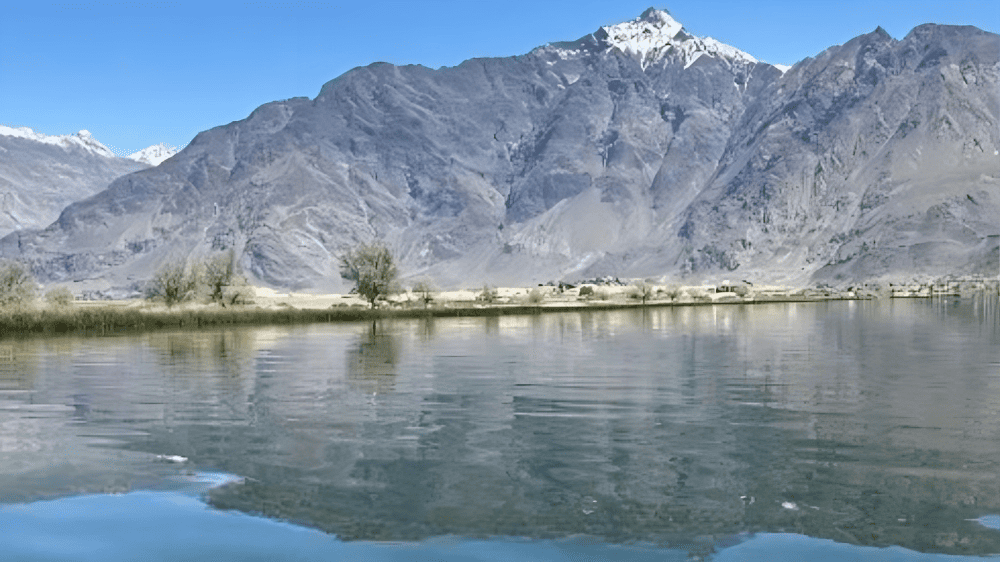
Blind Lake is a narrow, roughly 1.4 km-long lake right on the way into Shigar Valley, about 30 minutes from Skardu. Fed by the Indus and used locally as a water reservoir, it’s called “blind” because it appears to have no visible inlet or outlet — the water seems to simply sit still, mirroring the surrounding cliffs. It’s an easy, low-effort stop that photographs well in the late afternoon.
Amburiq Mosque
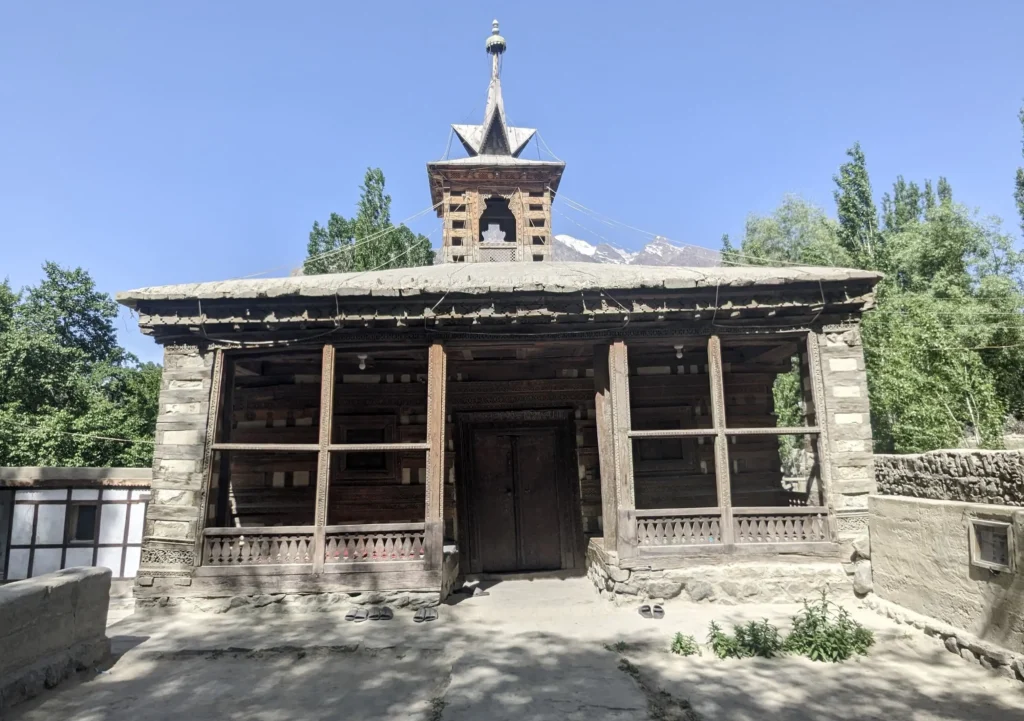
Amburiq Mosque is widely regarded as the oldest mosque in Baltistan, believed to date to the 14th century. Tradition credits its construction to craftsmen who traveled with the Sufi preacher Syed Ali Hamdani, making it the first Islamic monument built in Shigar Valley. Its wooden, two-tiered structure — built with a traditional interlocking “cribbage and cator” technique — shows a visible Tibetan and Kashmiri influence in its carved tower, a reminder of the Buddhist architecture that came before it. The mosque was restored between 1998 and 2000 by the Aga Khan Cultural Service Pakistan, with funding support from the Royal Norwegian Embassy, and remains an active place of worship as well as a heritage site.
Hashupi Garden
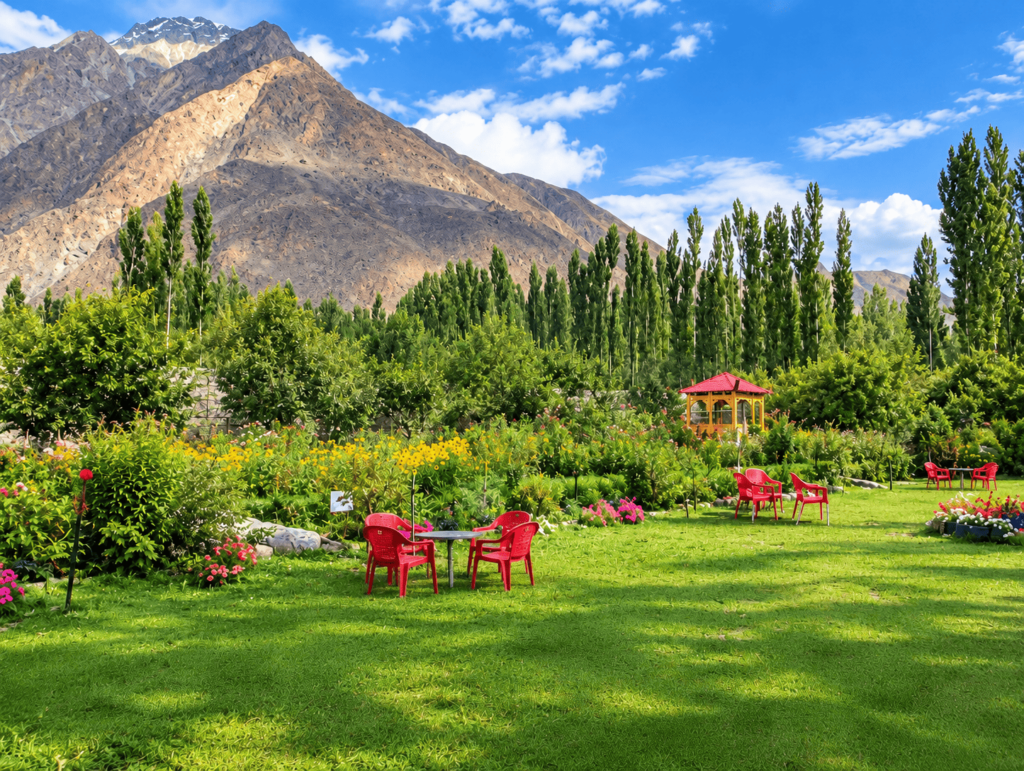
A quiet orchard garden near Shigar town, Hashupi Garden is where locals and visitors alike come for shade, apricot and apple trees, and a slower-paced break between fort and desert. It’s not a “ticketed attraction” so much as a genuinely local spot — worth a short stop if you want fifteen minutes away from the jeep.
Sarfaranga Cold Desert (Katpana Desert)
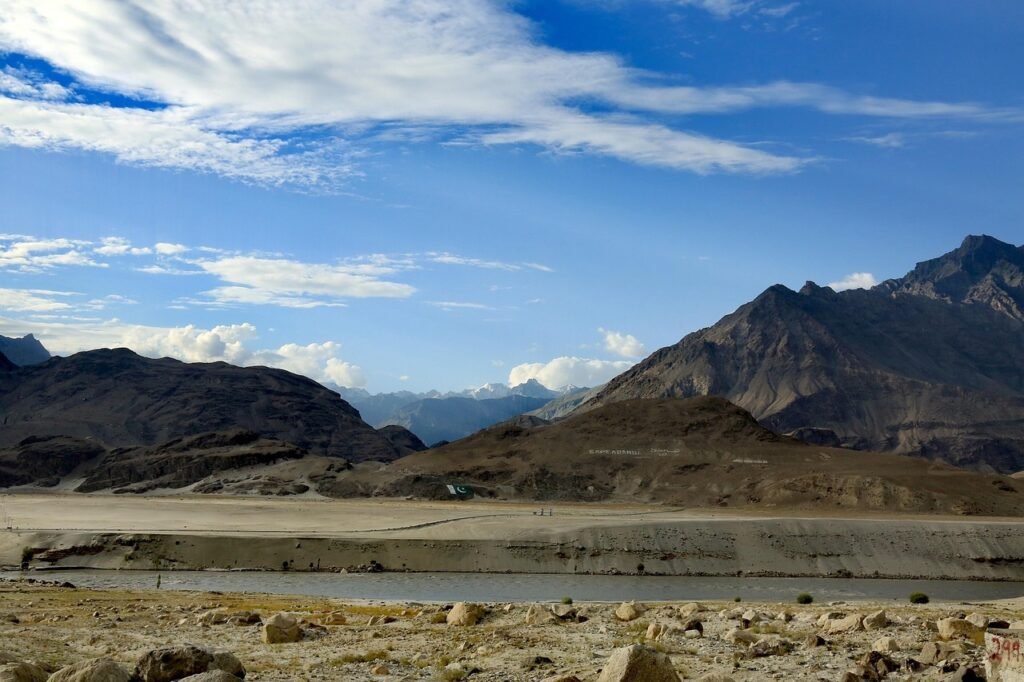
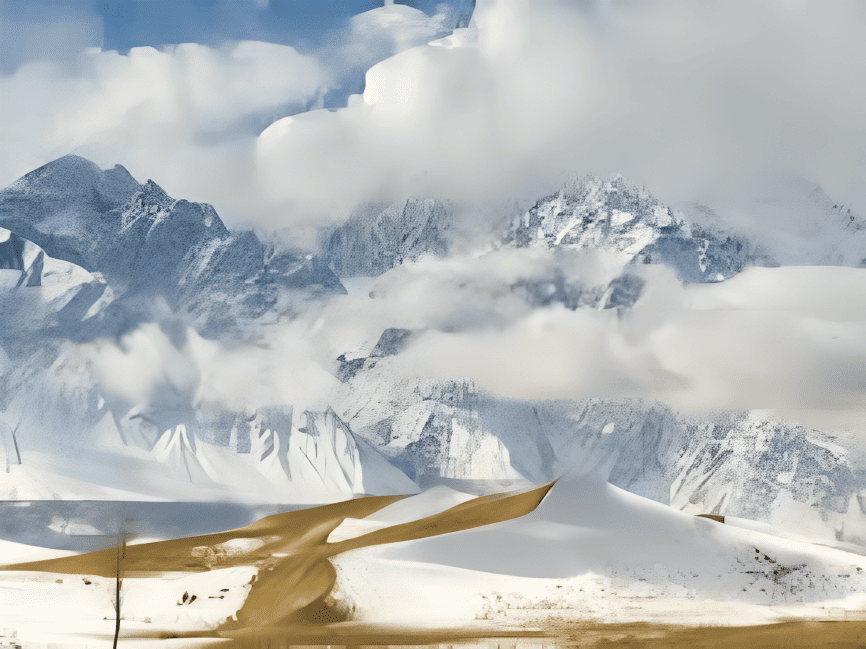
Sarfaranga — also known as the Katpana Desert — sits around 20–25 km from Skardu city, roughly a 30-minute drive along the Skardu–Shigar road, at an elevation of about 2,226 m (7,300 ft). It’s one of the highest cold deserts in the world: rolling white sand dunes running straight into the Indus River, with the Karakoram peaks as a backdrop. In summer it hosts an annual jeep rally that draws off-road drivers from across Pakistan; year-round it’s popular for jeep safaris, short camel or horse rides, and — for the more adventurous — paragliding over the dunes. Sunrise and sunset give the best light for photography.
Braldu River
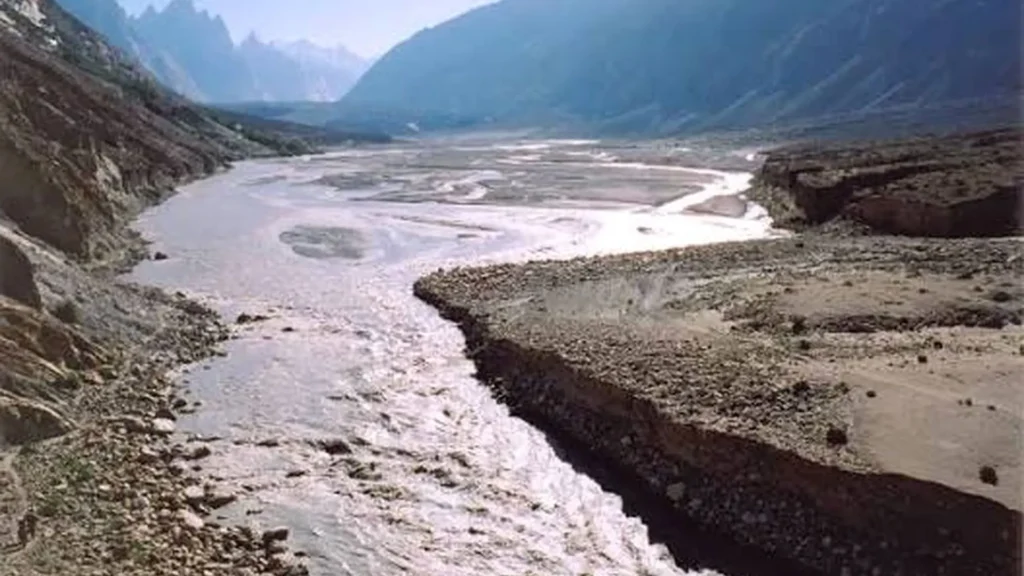
The Braldu River flows down from the Baltoro and Biafo glaciers, joining the Basha River near Tigstun to form the Shigar River itself. It’s the waterway that traces the historic route toward Askole and the Karakoram’s biggest peaks — more a landmark on the way to the mountains than a standalone stop, but a good reminder of exactly where the road is heading.
Askole — Gateway to the K2 Trek
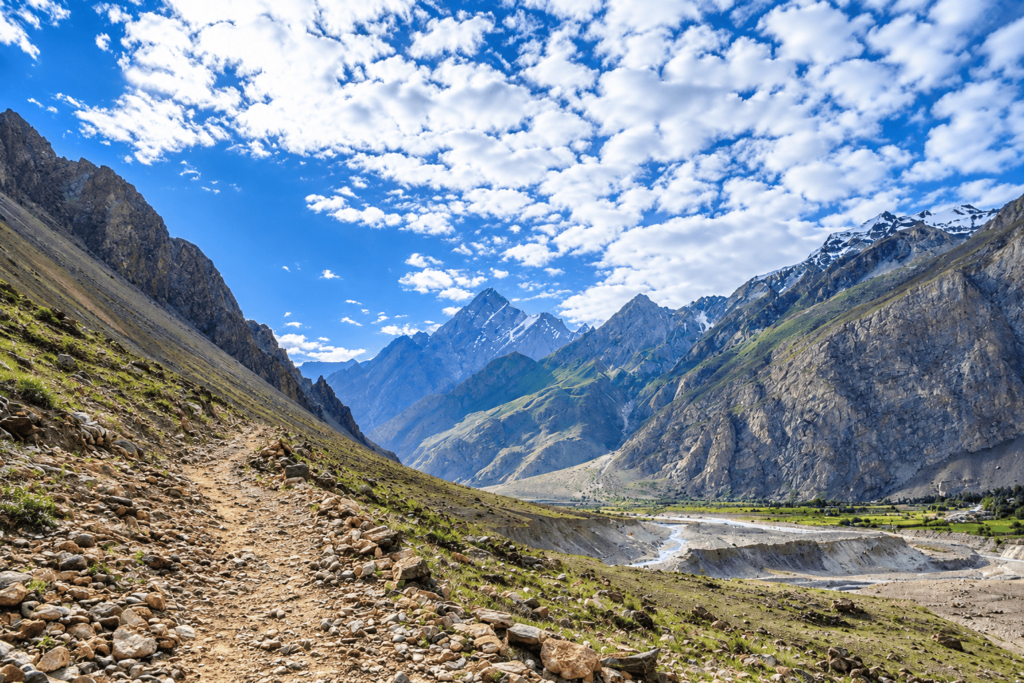
At the far end of the valley, roughly 170 km from Skardu, Askole is the last road-connected village before trekkers set out on foot toward Baltoro Glacier, Concordia, and K2 Base Camp. For most travelers it’s simply worth knowing about rather than visiting directly — the road beyond Shigar toward Askole is rough, seasonal, and really only worth the journey if you’re continuing on foot into the mountains. We cover route planning, permits, and logistics for that trek in a dedicated Askole guide rather than repeating it here.
Things to Do in Shigar Valley
- Tour Shigar Fort and its small Balti heritage museum
- Walk through Shigar’s old bazaar and orchard lanes
- Visit Amburiq Mosque and Blind Lake on the same short loop
- Photograph the fort, mosque, and Sarfaranga dunes in early morning or golden-hour light
- Take a jeep excursion across the Sarfaranga Cold Desert, with optional paragliding
- Camp or picnic beside the Shigar or Braldu River
- Spend a night inside Shigar Fort Residence for a genuine heritage-stay experience
- Browse local stalls for dried fruit, walnuts, and handwoven goods
- Use Shigar as your launch point toward Askole and the Baltoro/K2 trekking route
Best Time to Visit Shigar Valley
The short answer: late April through October, with June to September as the busiest and most reliable window. Here’s how each season actually plays out.
Spring (April–May)
Orchards blossom across the valley and temperatures are pleasant, though nights can still be cool and some higher-altitude side-routes may still be affected by late snowmelt. Good for photography and for travelers who want green scenery without peak-season crowds.
Summer (June–September)
The most reliable season for road access, trekking toward Askole/Baltoro, and outdoor activities at Sarfaranga. Warm, dry days and cool evenings. This is also when the Sarfaranga jeep rally typically takes place and when Skardu’s flight schedule is at its most stable, though weather-related delays are still possible.
Autumn (October)
Orchards turn gold, crowds thin out, and the light is excellent for photography. Nights get noticeably colder. This is a strong shoulder-season choice if you want the same scenery with fewer other travelers.
Winter (November–March)
Cold, with snowfall at higher elevations and reduced facilities in some guesthouses. A niche season for travelers who specifically want a quiet, snow-dusted heritage visit — not recommended for families or first-time visitors, and Askole/trekking routes are not accessible.
Our recommendation: for most families, couples, and first-time visitors, aim for June–September for the easiest logistics, or October for similar scenery with fewer crowds.
Shigar Valley Weather
Shigar sits at a moderate elevation compared with high-altitude Baltistan destinations like Deosai, so its climate is milder than you might expect from the surrounding peaks. Summers are warm and dry during the day, cooling noticeably after sunset; winters are cold with snow at higher points in the valley, while the town itself sees less accumulation than the mountains above it.
Packing suggestions: light layers and sun protection for summer days, a warm layer for evenings year-round, and proper winter gear if visiting between November and March. Because weather in the wider Skardu region can shift quickly — and can affect flights in and out of Skardu Airport — we recommend checking a live forecast in the days before you travel rather than relying on seasonal averages alone.
How to Reach Shigar Valley
From Islamabad
By air: Fly Islamabad to Skardu (roughly 1–1.5 hours, weather-permitting and subject to seasonal delays), then continue by road to Shigar (~30 km, 45–60 minutes). By road: Islamabad to Skardu via the Karakoram Highway is a long overland journey — commonly 18–20+ hours depending on road conditions — followed by the same short Skardu–Shigar leg. Most travelers fly one way, at minimum, to save time.
From Skardu
The easiest leg of the trip: a paved, scenic 30 km drive along the Skardu–Shigar road, passing Blind Lake and the Sarfaranga Cold Desert on the way. Private car, hired taxi, or jeep all work well; no 4×4 is required for the main road into Shigar town itself.
From Gilgit
Gilgit to Skardu by road takes roughly 5 hours, followed by the ~45–60 minute drive on to Shigar. This route is often combined with a wider Hunza–Gilgit–Skardu loop.
Not sure which combination makes sense for your dates and budget? Send us your travel dates on WhatsApp and we’ll map out the most efficient route.
Suggested Shigar Valley Itineraries
| Itinerary | Best For | Focus |
|---|---|---|
| 1-Day Shigar Tour | Travelers based in Skardu | Shigar Fort, Amburiq Mosque, Blind Lake, Sarfaranga Desert |
| 2-Day Shigar Experience | Couples & photographers | Full valley exploration plus a night at Shigar Fort Residence |
| 3-Day Shigar Adventure | Slow travelers & culture-focused trips | Heritage sites, village walks, river time, and a Sarfaranga jeep safari |
| Shigar + Skardu | First-time Baltistan visitors | Combine Shigar’s heritage with Skardu’s lakes and bazaars |
| Shigar + Khaplu | Travelers wanting two heritage forts | A broader Baltistan fort-and-valley loop |
| Shigar + Deosai | Nature & landscape travelers | Pair heritage in Shigar with the high plains of Deosai National Park |
| Shigar + Askole Expedition | Trekkers & mountaineers | Use Shigar as a staging point before the Baltoro/K2 approach |
Every itinerary above can be adjusted for pace, budget, and group size. Browse our full tour list or ask us to build a custom version around exactly the days you have.
Travel Costs for Shigar Valley
Costs for a Shigar Valley trip generally fall into a few categories. Exact figures shift with season, group size, and fuel prices, so we’ve kept this to categories rather than fixed numbers — message us on WhatsApp for a current, itemized quote based on your dates and group size.
- Transport: private car/jeep hire for the Skardu–Shigar round trip, or inclusion within a multi-day Baltistan package
- Accommodation: ranges from simple guesthouses in Shigar town to a heritage stay at Shigar Fort Residence
- Meals: local Balti food and standard guesthouse/hotel menus, generally inexpensive by international standards
- Entry & activity fees: a small entry fee applies at Shigar Fort’s museum; optional Sarfaranga Desert activities such as jeep safaris and paragliding carry their own per-activity charges, which we can confirm at time of booking
- Guides: recommended for the Fort/mosque history and essential if you’re continuing toward Askole
- Camping & expedition logistics: relevant only if continuing beyond Shigar toward Askole and Baltoro — porters, permits, and camping gear are organized separately for that leg
Where to Stay in Shigar Valley
Shigar’s accommodation options range from a genuine heritage stay to simple, comfortable guesthouses:
- Heritage hotel: Shigar Fort Residence — rooms built into the restored 17th-century fort complex, run by Serena Hotels
- Guesthouses: a handful of family-run guesthouses in Shigar town, suited to budget and mid-range travelers
- Homestays: available in some villages for travelers who want a closer look at daily Balti life
- Camping: possible along the Shigar or Braldu River, and a common choice for trekking groups staging toward Askole
We can book any of the above as part of your itinerary — tell us your dates and budget on WhatsApp and we’ll confirm availability directly.
Getting Around: Transportation in Shigar Valley
The main road from Skardu into Shigar town is paved and manageable in a standard private car. Once you’re exploring within the valley — particularly for Sarfaranga’s sand tracks or anything heading toward Askole — a 4×4 jeep with an experienced local driver is the more practical choice. Self-drive is possible on the main road but not recommended beyond Shigar town, where terrain and route knowledge matter more. Northern Discover arranges private cars, SUVs, and 4×4 jeeps with drivers as part of any Shigar itinerary.
Featured Shigar Valley Tours
Whichever way you’d like to experience Shigar, we can build it around your dates:
Shigar Valley Trips
Fort, mosque, lake, and desert in one well-paced day from Skardu.
Family Heritage Tour
A relaxed, family-friendly pace through Shigar’s history and landscapes.
Cultural & Photography Tour
Extra time at the Fort, Amburiq Mosque, and golden-hour desert shots.
Honeymoon Tours
A quiet heritage stay at Shigar Fort Residence, paired with Skardu’s lakes.
Need something more specific — an expedition support package toward Askole, or a fully custom route? Create Plan for Your Trip.
Local Culture in Shigar Valley
Shigar is home to Balti people, whose language, Balti, is closely related to Ladakhi and rooted in the wider Tibetan linguistic family — a legacy of the valley’s pre-Islamic Buddhist history, still visible in details like the tower design of Amburiq Mosque. Daily life here still runs largely on agriculture: apricot, walnut, and apple orchards, wheat fields, and small-scale herding.
Hospitality is a genuine cultural value rather than a tourism slogan — it’s common to be offered tea or fruit simply for stopping to talk with someone in the bazaar. Traditional architecture, seen clearly at Shigar Fort and in older village homes, blends stone, timber, and mud in techniques suited to the region’s earthquakes and cold winters. Local handicrafts — woodcarving, weaving, and embroidery — are still practiced in and around the valley, often visible in the small shops near the Fort.
Local Food in Shigar Valley
Balti cuisine in Shigar leans heavily on what the valley itself produces. Expect fresh-baked local bread (khambir), organic seasonal vegetables, and — depending on the time of year — some of the best apricots in Baltistan, eaten fresh or dried. Butter tea (gur gur chai) is a common local drink, especially in cooler months, alongside standard Pakistani tea. Guesthouses and the Shigar Fort Residence typically serve a mix of Balti and general Pakistani dishes; for something more local, ask your driver or guide about a small dhaba (roadside eatery) in Shigar bazaar rather than sticking only to hotel menus.
Shopping in Shigar Valley
- Handwoven wool products (shawls, socks, caps) from local weavers
- Dried fruit — apricots and walnuts are a Shigar specialty
- Semi-precious stones and gemstones sold in small shops around Skardu and Shigar
- Traditional Balti handicrafts and woodcarving souvenirs near Shigar Fort
Small local markets in Shigar bazaar are your best bet for anything genuinely made in the valley, rather than items brought in from elsewhere.
Shigar Valley Photography Guide
- Golden hour: early morning or late afternoon light works best on Shigar Fort’s stone façade and the Sarfaranga dunes
- Heritage photography: Shigar Fort and Amburiq Mosque for architectural detail and woodcarving close-ups
- Desert landscapes: Sarfaranga’s dunes against the Karakoram backdrop, especially at sunrise or sunset
- Mountains: clearest views typically come on cloudless summer mornings before afternoon haze builds up
- Village life: always ask permission before photographing people directly
- River scenery: the Shigar and Braldu Rivers offer strong foreground elements against the mountain backdrop
- Astrophotography: Shigar’s relatively low light pollution makes clear summer nights good for night-sky shots, especially out toward the desert
- Drones: check current regulations before flying — drone use near forts, mosques, and certain zones in Gilgit-Baltistan may be restricted, and rules can change, so confirm locally before your trip
Safety in Shigar Valley
Shigar sits within Baltistan, generally considered one of the more stable and tourist-friendly regions of Gilgit-Baltistan. That said, sensible precautions apply here as anywhere in the mountains:
- Road safety: the main Skardu–Shigar road is paved and generally straightforward, but mountain roads can still be affected by weather, landslides, or seasonal closures — always travel with an experienced local driver
- Weather: check conditions before traveling, especially outside peak season, and build in buffer time given how weather can affect Skardu flights
- Altitude: Shigar’s elevation is moderate and rarely causes issues, but altitude effects become more relevant if you continue toward Askole and Baltoro
- Trekking safety: anyone continuing beyond Shigar toward Askole/K2 Base Camp should travel with a licensed guide and proper permits — this is expedition-level terrain, not a casual add-on
- Responsible tourism: respect the fort, mosque, and village spaces as living heritage and community sites, not just photo backdrops
- Emergency planning: keep a copy of your itinerary and emergency contacts with someone outside the group, and confirm mobile coverage expectations before heading into outlying areas
- Family travel: the core Shigar sights (Fort, mosque, Blind Lake, Sarfaranga) are comfortably manageable for families and older travelers
For current, official guidance, we recommend checking advisories from the Gilgit-Baltistan Tourism Department before you travel, alongside your own government’s travel advisory if you’re visiting internationally.
Travel Tips for Shigar Valley
- Pack layers — summer days are warm but evenings cool quickly
- Carry cash; card acceptance is limited outside Skardu city
- Download offline maps in advance — connectivity is inconsistent once you’re off the main road
- Dress modestly, particularly around the mosque and village areas
- Support sustainable tourism by buying local handicrafts and produce directly where possible
- Ask before photographing people, and be mindful around religious sites
- Charge devices and carry a power bank — supply can be inconsistent in guesthouses outside Shigar Fort Residence
- Follow local etiquette cues from your guide, especially inside the Fort museum and mosque
Nearby Destinations to Combine With Shigar
Skardu — the region’s hub, ~30 km away
Khaplu Valley — a second heritage-fort valley for a broader Baltistan loop
Deosai National Park — high-altitude plains, reachable via Skardu
Askole — the last village before Baltoro/K2
Sarfaranga Cold Desert — covered above, on the Skardu–Shigar road
Manthokha Waterfall — day-trip territory further into Kharmang
Kharmang Valley — a quieter, less-visited extension of the region
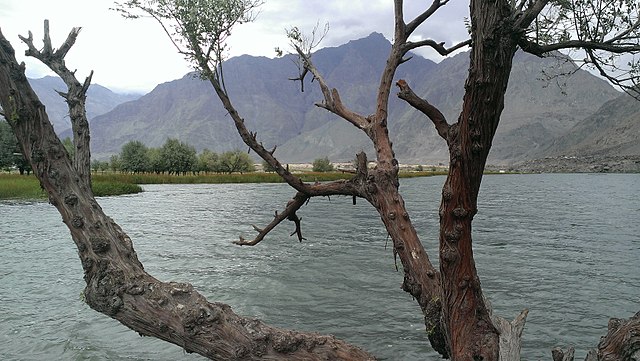
Shigar Valley in Pictures
A visual look at what to expect — from the fort’s stonework to the dunes of Sarfaranga.
Frequently Asked Questions About Shigar Valley
Where is Shigar Valley?
Shigar Valley is in the Shigar District of Baltistan, Gilgit-Baltistan, roughly 30 km northeast of Skardu, stretching about 170 km further to the village of Askole.
Is Shigar worth visiting?
Yes — Shigar packs restored heritage architecture, a genuine cold desert, and a glacial lake into a short, easy drive from Skardu, making it one of the highest-value day trips in Baltistan.
How many days should I spend in Shigar Valley?
A single day is enough to see the main highlights — Shigar Fort, Amburiq Mosque, Blind Lake, and Sarfaranga Desert. Stay 2 nights if you want a slower pace or an overnight at Shigar Fort Residence, and longer only if you’re continuing on toward Askole.
What is the best time to visit Shigar Valley?
Late April through October, with June to September as the most reliable window for road access and weather. October offers similar scenery with fewer crowds.
Is Shigar Valley safe?
Shigar sits within Baltistan, generally considered a stable, tourist-friendly part of Gilgit-Baltistan. Standard mountain-travel precautions apply — check current road and weather conditions, and travel with an experienced local driver or guide, especially if continuing beyond Shigar town.
How far is Shigar from Skardu?
About 30 km, roughly a 45–60 minute drive on a paved road.
Can families visit Shigar Valley?
Yes. The core sights — Shigar Fort, Amburiq Mosque, Blind Lake, and Sarfaranga Cold Desert — are easily manageable for families and older travelers on a standard day trip.
Are hotels available in Shigar Valley?
Yes — options range from the heritage Shigar Fort Residence to local guesthouses and homestays in Shigar town.
Can I visit Shigar and Khaplu together?
Yes — many travelers combine the two on a broader Baltistan loop, since both valleys branch out from Skardu in different directions. We can build a combined itinerary around your available days.
Is Shigar the gateway to K2 expeditions?
Yes — Shigar Valley leads to Askole, the last road-connected village before the Baltoro Glacier and the trekking route toward K2 Base Camp and Concordia.
Ready to Explore Shigar Valley?
Whether it’s a single day from Skardu or a slower heritage stay at Shigar Fort Residence, our local team can plan the route, book accommodation, and arrange transport — no pressure, just a straight answer on what fits your trip.