
Written by Shahid Hashmi [Tour Operator & Manager], Northern Discover · Last updated 2 September 2026
Khaplu Valley: Baltistan’s Quiet Royal Valley
A restored royal palace, a 700-year-old mosque, and a paved road instead of a jeep track — Khaplu is where Baltistan’s history is easiest to actually reach.

Quick Facts
| Location | Khaplu town, Ghanche District, Gilgit-Baltistan, Pakistan |
| Elevation | ~2,600 m (8,500 ft) |
| District | Ghanche (administrative capital: Khaplu) |
| Main draws | Khaplu Palace, Chaqchan Mosque, Hushe Valley (Masherbrum/K6/K7 gateway), Machulu, Saling Valley |
| Best time to visit | April/May to September/October; peak June–August |
| Nearest airport | Skardu Airport (~1-hour flight from Islamabad, weather-dependent) |
| Distance from Skardu | ~103 km / roughly 3–4 hours by road (paved) |
| Distance from Islamabad | ~700+ km; fly to Skardu or drive 20+ hours via the Karakoram Highway |
| Local language | Balti (Urdu widely understood, basic English in Khaplu town) |
| Road access | Paved road to Khaplu town; 4×4 recommended beyond Machulu into Hushe Valley |
Overview
Khaplu sits where the Shyok River meets the edge of Baltistan’s high peaks, about 103 km east of Skardu on a road good enough that you don’t need a jeep to get there — which already sets it apart from most of the valleys in this region. It was, for centuries, the second-largest kingdom in old Baltistan under the Yabgo dynasty, controlling the trade route that once ran from here toward Ladakh, and that history is still standing rather than described on a plaque: a restored royal palace, a mosque that’s been in continuous use for roughly 700 years, and a handful of villages that haven’t been rebuilt around tourism the way parts of Hunza or Skardu have.
What Khaplu gives you is a genuine sense of Baltistan’s Balti culture and royal history, plus a jumping-off point into the Hushe Valley, one of the Karakoram’s quieter approaches to serious mountains: Masherbrum, K6, K7, and the Gondogoro La pass that trekkers descending from K2 Base Camp use to exit the Baltoro. You don’t have to be a mountaineer to get something out of Khaplu, though — the palace, the mosque, and the villages along the Skardu-Khaplu road are worth the trip on their own, and most visitors come first for the history and culture, with Hushe as an optional extension for those who want to go further.
It’s not a big place, and it won’t try to be Skardu or Hunza. It’s a smaller, calmer valley that rewards a couple of unhurried days more than a checklist of sights.
Why Visit Khaplu Valley
Khaplu makes its case on three things: a genuinely well-preserved piece of Baltistan’s royal history, one of the region’s oldest continuously used mosques, and a good road that makes both easy to actually reach.
Khaplu Palace — known locally as Yabgo Khar — was built in the mid-19th century for the ruling Yabgo family and later restored by the Aga Khan Trust for Culture, a project recognized with UNESCO’s Award of Distinction for Cultural Heritage Conservation in 2013. It’s now run as a heritage hotel by Serena Hotels, which means you can walk through it, and in some cases stay in it, rather than viewing it from behind a rope. The building blends Tibetan, Balti, and Kashmiri architectural styles in a way that’s rare to see this intact anywhere in Gilgit-Baltistan.
A short walk from the palace, Chaqchan Mosque has been standing for roughly 700 years — commonly dated to around 1370 CE, founded by the Sufi preacher Mir Sayyid Ali Hamadani, who is generally credited with bringing Islam to the region. Its wooden construction and carved detailing reflect a Tibetan-Kashmiri architectural crossover from the era when the local population was transitioning from Buddhism to Islam, and it remains an active place of worship today, not a museum piece.
Beyond the town, Khaplu is also the practical gateway to the Hushe Valley — the quieter, less commercialized route into the peaks around Masherbrum, K6, and K7, and one of the exit routes for trekkers coming off the Baltoro via Gondogoro La. It’s worth being direct about this: Hushe isn’t a casual add-on. Visiting Hushe village itself and the Saicho meadow above it is a straightforward day or two; anything further, toward the base camps, sits in a designated restricted zone near the Line of Control and requires a trekking permit and a licensed guide arranged in advance. Our Hushe Valley guide walks through exactly where that line sits.
For travelers who want Baltistan’s history and culture without a multi-day trek, Khaplu on its own — palace, mosque, Machulu, and Saling — is a comfortable two- to three-day addition to a Skardu-based trip. Our Khaplu Tour Packages are built around that shorter version by default, with Hushe offered as a clearly separated extension for travelers who want it.
Top Attractions
Khaplu Palace (Yabgo Khar)

Built in the mid-1800s by the Yabgo Raja Daulat Ali Khan, Khaplu Palace was restored by the Aga Khan Trust for Culture. It’s now operated as a heritage hotel by Serena Hotels — meaning the building is a working part of the town. The architecture is a genuine blend of Tibetan, Balti, and Kashmiri styles.
Learn more about Khaplu Palace.
Chaqchan Mosque
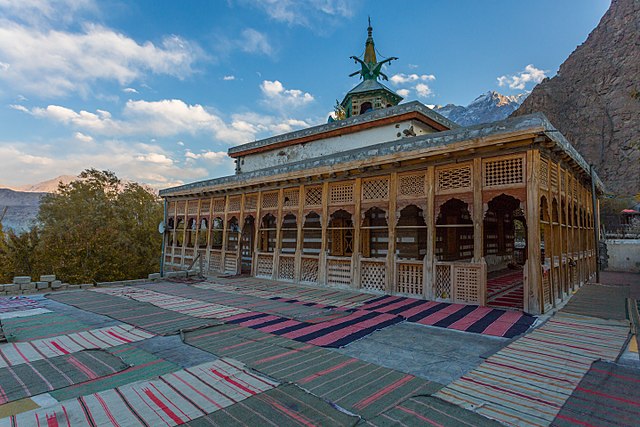
One of the oldest mosques in Gilgit-Baltistan, generally dated to around 1370 CE and attributed to the Sufi preacher Mir Sayyid Ali Hamadani. Its wooden frame and carved detailing reflect a Tibetan-Kashmiri architectural crossover. It remains an active mosque. Learn more about Chaqchan Mosque.
Hushe Valley
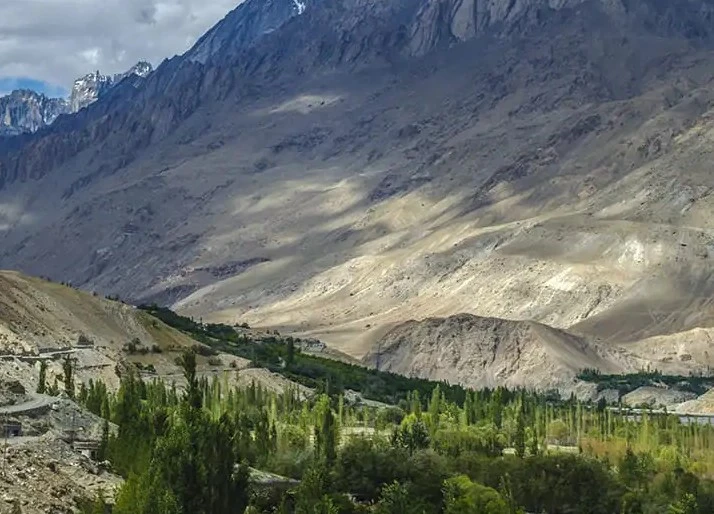
The practical gateway to Masherbrum (7,821 m), K6, K7, and Laila Peak. Hushe village and Saicho meadow are accessible on a day trip; anything beyond requires a trekking permit and licensed guide.
Learn more about Hushe Valley.
Machulu
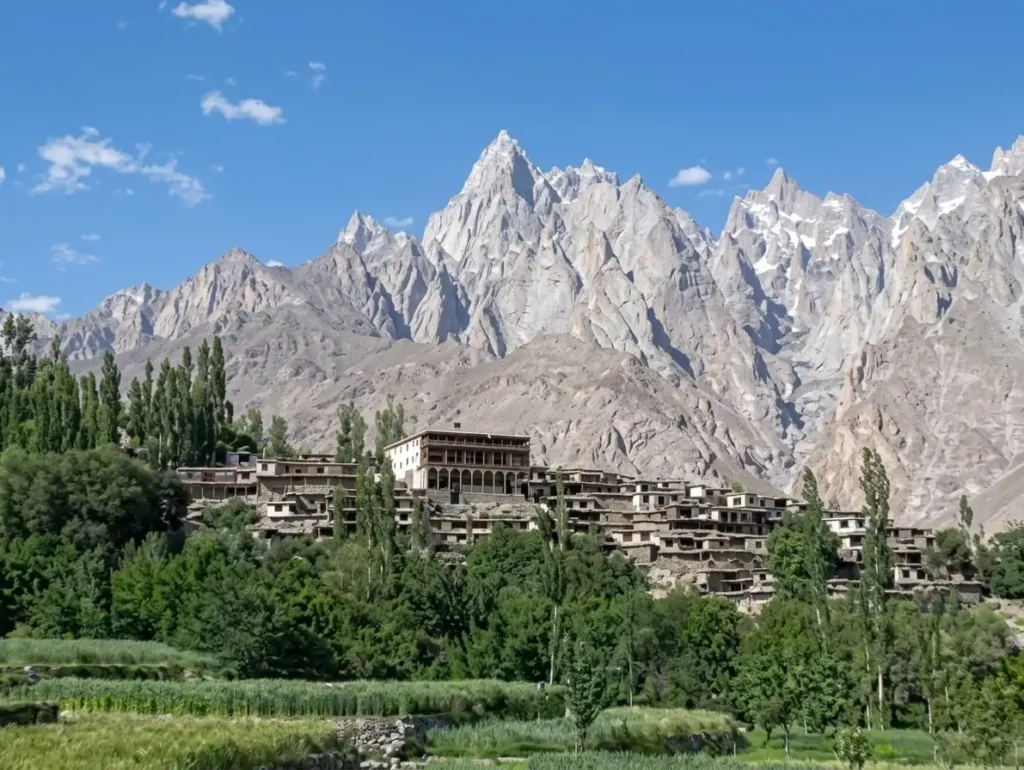
A common acclimatization stop for trekkers heading toward Masherbrum, offering a clear view of the peak from the village itself. Come for the Masherbrum view and the authentic village atmosphere.
Saling Valley
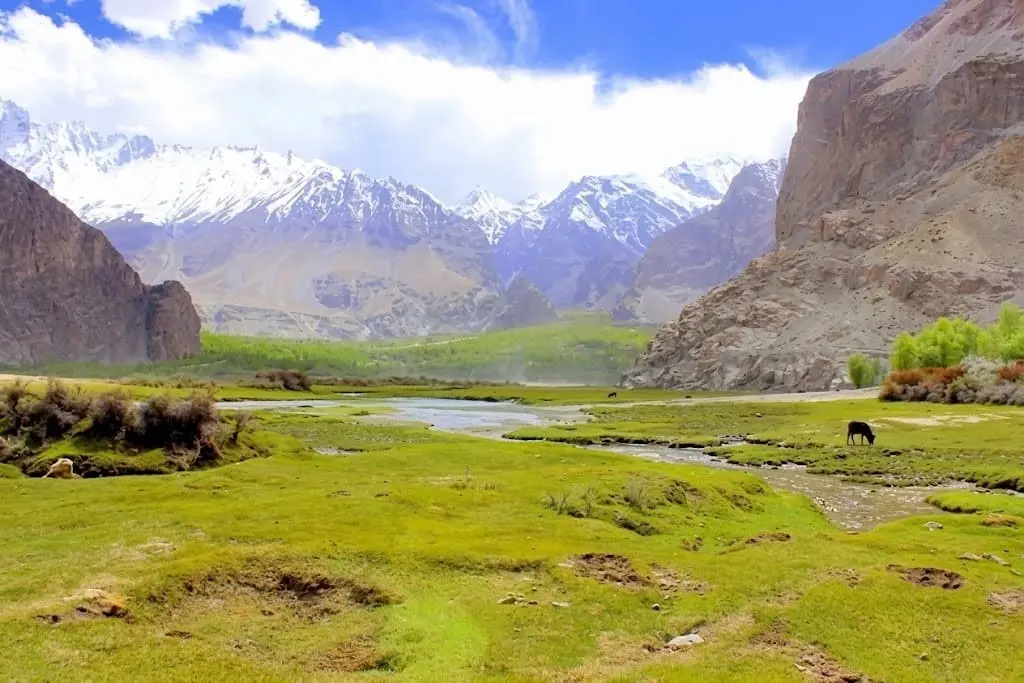
A short detour off the main Khaplu road, featuring a trout farm, small resort, hot spring, and Sogha Lake. It’s a good half-day add-on if you want a slower, more local-feeling stop.
Thoqsikhar & Shyok River
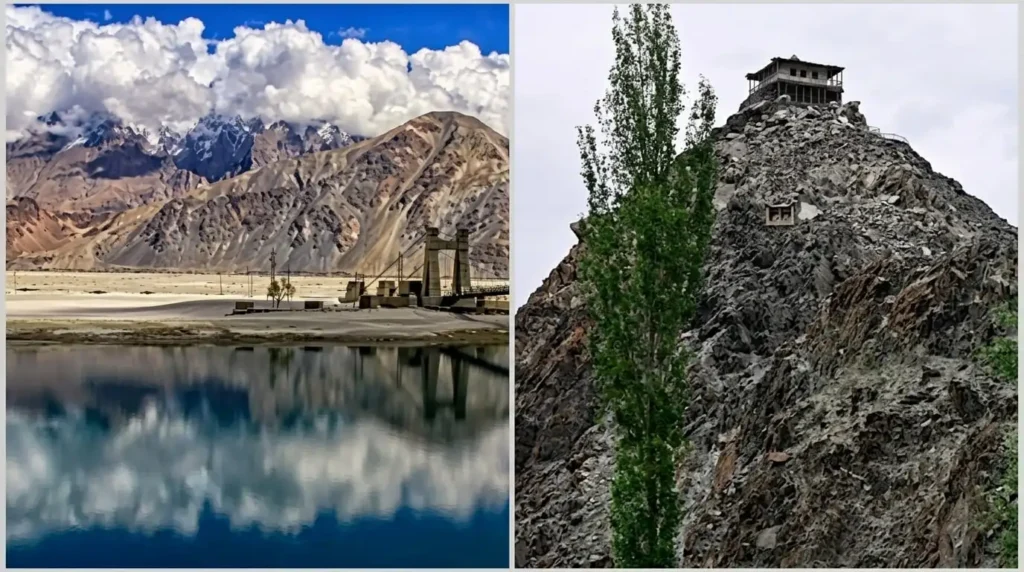
Thoqsikhar is a lesser-documented spot near Khaplu with limited access. The Shyok River shapes Khaplu’s geography, offering a stunning scenic backdrop visible along most of the Skardu-Khaplu road.
Things to Do
- Cultural sightseeing. Khaplu Palace and Chaqchan Mosque are the anchor activities, both walkable from central Khaplu and easily covered in half a day together.
- Village walks. Khaplu town and the villages along the road to Hushe — Machulu, Talis, Saling — reward slow exploration on foot more than most other stops.
- Trekking and mountaineering. Hushe Valley is the access point for Masherbrum, K6, K7, Laila Peak, and Gondogoro La.
- Camping. Saicho meadow above Hushe and the sites around Saling both work well for a night under canvas.
- Photography. Architecture, woodwork, and the Shyok River corridor. See our Photography Guide.
- Jeep tours. The Khaplu-Hushe road itself is worth treating as an activity.
- Fishing. Saling’s trout farm and a handful of streams in the wider valley offer casual fishing.
Best Time to Visit & Weather
The short answer: April/May through September/October, with June to August as the most reliable stretch for weather and full access to Hushe Valley. Khaplu’s climate is milder than the high-altitude valleys further into the Karakoram, sitting at a comparatively moderate elevation, but it’s still a genuinely cold-winter, dry-summer mountain climate.
| April–May | Orchards bloom; good window for the palace and town. Higher Hushe trekking routes may still be snow-affected. |
| June–August | Full valley is open, including Hushe base camp treks. Apricot season. Warm days, cool nights. |
| September–October | Clearer air, comfortable daytime temperatures, and the beginning of autumn color. |
| November–March | Cold and often severe at night; heavy snowfall in surrounding mountains. Not the season for trekking. |
How to Reach
By air. Fly Islamabad to Skardu (roughly 1 hour, weather-dependent), then continue to Khaplu by road.
By road from Skardu. This is the main route, and it’s a genuinely easier drive than most Gilgit-Baltistan valley approaches: roughly 103 km, generally cited at 3–4 hours depending on stops and current road conditions, on a paved road. A private car or hired driver is comfortable for this leg; you don’t need a 4×4 to reach Khaplu town itself.
By road from Islamabad. A long option rather than a practical one for most travelers — driving the full Karakoram Highway takes upward of 20 hours.
Beyond Khaplu town. The road toward Hushe Valley, past Machulu, is rougher, and a 4×4 is the right call.
If you’d rather not manage flights and road transfers separately, our Car Rental service and Tour Packages handle the whole route.
Accommodation & Transportation
Khaplu’s standout option is Khaplu Palace itself, restored and operated as a heritage hotel by Serena Hotels. Beyond the palace, Khaplu town and the surrounding villages have a smaller set of guesthouses, and Saling in particular has lodging tied to its trout farm. Hushe village offers homestays and basic guesthouses. Book the palace well ahead if it’s a priority. See our Khaplu Hotels page for current, verified options.
Khaplu town itself is reachable by standard car. That changes once you head toward Hushe Valley: the road past Machulu narrows and roughens, and a 4×4 with an experienced local driver is the practical choice. Our Car Rental service arranges both.
Featured Destinations
If the mix of royal history, a working 700-year-old mosque, and an optional trek toward some of the Karakoram’s less-visited peaks sounds like your kind of trip, that’s what our Khaplu packages are built around.
Khaplu Palace & Chaqchan Mosque
3 Days — The Cultural Edition.
Khaplu, Machulu & Hushe Valley
5 Days — Village walks and Masherbrum views.
Hushe Valley Masherbrum Base Camp Trek
9 Days — A genuine, permitted Karakoram trek.
Local Culture & Food
Khaplu sits in the heart of Balti-speaking Baltistan, and its culture is shaped as much by its royal history as by the mountains around it. Balti is the valley’s main language, closely tied to Tibetan roots and distinct from the Shina or Wakhi spoken further north. Hospitality here follows the pattern common across Baltistan: an offer of tea or a meal is rarely just a formality.
Khaplu’s food follows Balti cuisine more broadly: khambir, a local flatbread, is a staple. Balti chicken comes up often when locals host, and apricot soup is a genuine regional specialty. Saling’s trout farm means fresh trout is a realistic option if you stop there. See our Baltistan Food Guide.
Safety & Travel Tips
Khaplu is a safe, low-crime destination. The main practical considerations here are logistical rather than security-related for the town itself.
- Khaplu town and the main road are safe, well-traveled areas.
- Hushe Valley beyond the village falls within a restricted zone near the Line of Control. Multi-day treks require a trekking permit and licensed guide, arranged in advance.
- Siachen Glacier is a military area, not a standard civilian tourist destination.
- You don’t need a 4×4 to reach Khaplu town; save it for Hushe Valley.
- Dress modestly at Chaqchan Mosque and remove shoes before entering.
- Carry cash — card payment is unreliable outside Skardu.
- Build a buffer day into any itinerary with Skardu flights.
Nearby Destinations
Skardu
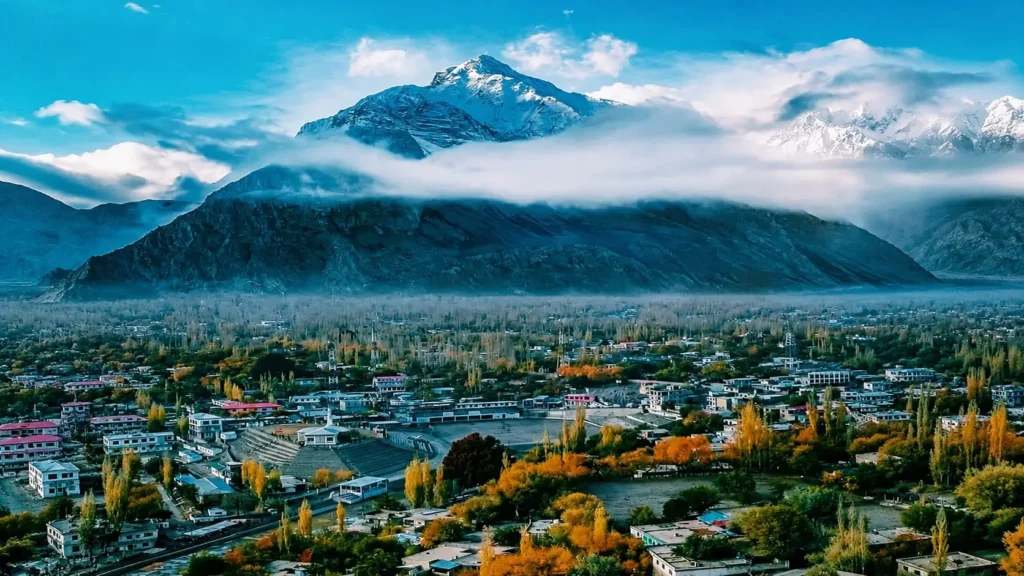
Roughly 103 km away, this is the region’s main hub and the natural base for combining Khaplu with the wider Baltistan region.
Shigar Valley
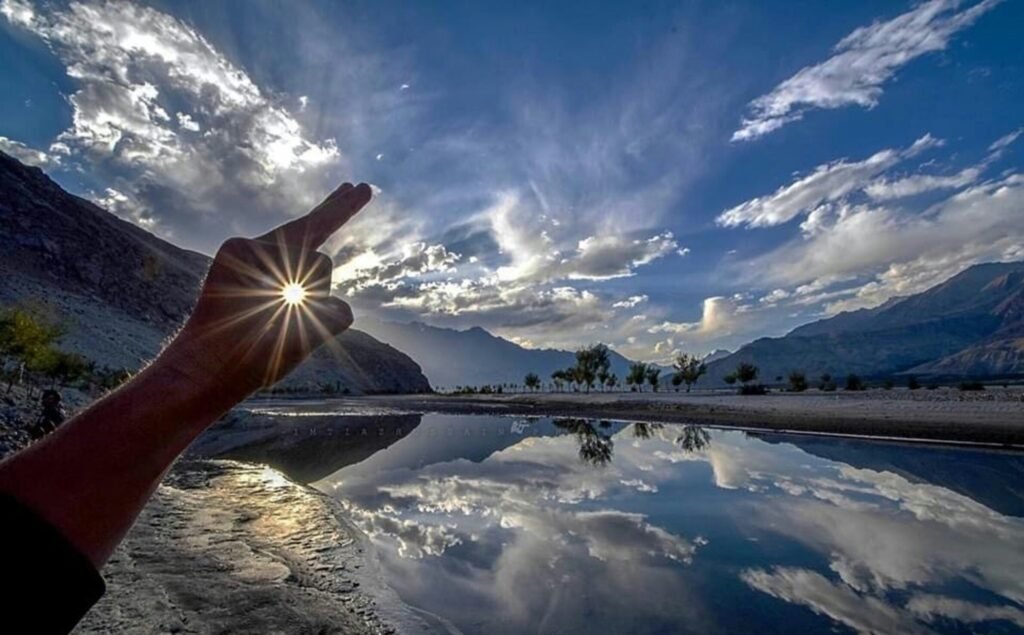
Offers a similar pairing of heritage architecture (Shigar Fort) and mountain scenery, making it a natural comparison point.
Manthokha Waterfall
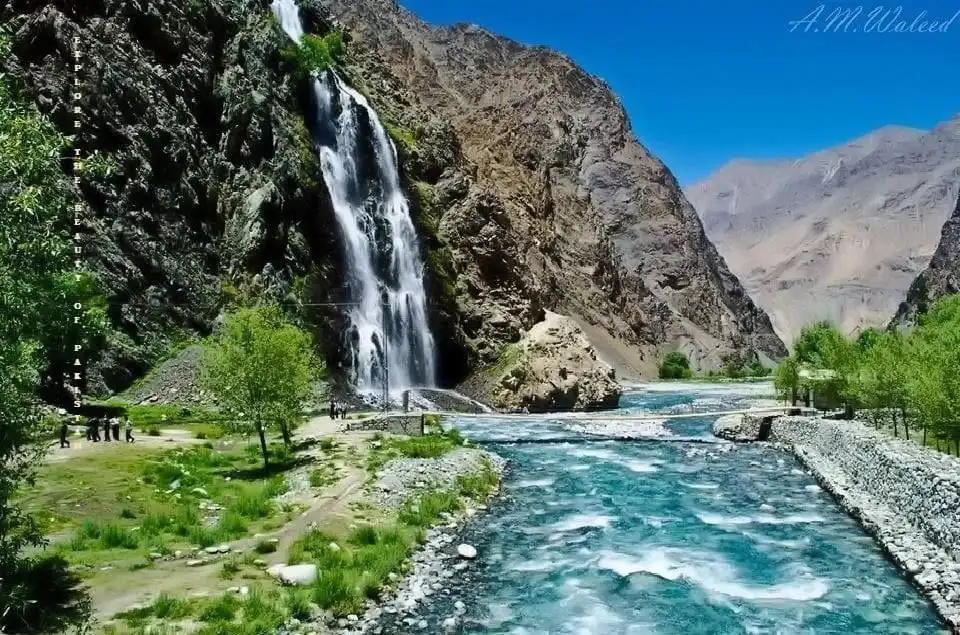
In neighboring Kharmang district, a roughly 55-metre waterfall with a trout restaurant nearby, worth a short detour en route.
Frequently Asked Questions
Is Khaplu Valley worth visiting?
Yes, if you want Baltistan’s history without a hard drive to reach it. Khaplu gives you a restored royal palace, a mosque that has been in continuous use for roughly 700 years, and a paved road most of the way — which is rare in this region. It’s a smaller, calmer valley than Skardu or Hunza, and it rewards a couple of unhurried days rather than a checklist.
How far is Khaplu from Skardu?
Roughly 103 km, generally cited at 3–4 hours by road depending on stops and current conditions. The road is paved the whole way to Khaplu town, so a standard car is fine — you only need a 4×4 once you head past Machulu toward Hushe Valley.
Is Khaplu Palace a hotel or a museum?
Both, in practice. The palace — known locally as Yabgo Khar — was restored by the Aga Khan Trust for Culture and is now run as a heritage hotel by Serena Hotels. You can walk through it, and in some cases stay in it, rather than viewing it from behind a rope. Book well ahead if staying there matters to you.
How old is Chaqchan Mosque?
Roughly 700 years. It’s commonly dated to around 1370 CE and attributed to the Sufi preacher Mir Sayyid Ali Hamadani. It’s still an active place of worship, not a museum piece — dress modestly and remove your shoes before going in.
Do I need a permit for Hushe Valley or Masherbrum Base Camp?
Not for Hushe village itself or the Saicho meadow above it — those are a straightforward day or two. Anything further toward the base camps sits in a designated restricted zone near the Line of Control, and that does require a trekking permit and a licensed guide, arranged in advance.
Is Khaplu the same as Baltistan?
No — Khaplu is one valley within Baltistan. Baltistan is the wider Balti-speaking region that also includes Skardu, Shigar and Kharmang. Khaplu was, for centuries, the second-largest kingdom in old Baltistan under the Yabgo dynasty, and it’s the administrative capital of Ghanche District today.
How many days do you need in Khaplu Valley?
Two to three days covers the cultural version — the palace, Chaqchan Mosque, and the villages along the road. Four to five if you want to add Machulu and Hushe village. Seven to ten if you’re doing the full Hushe trekking extension, which is a genuinely different trip.
Is Khaplu safe to visit, given it’s near the Line of Control?
Khaplu town and the main road are safe, well-travelled areas, and it’s a low-crime destination. The practical considerations here are logistical rather than security-related. The one real limit is that Hushe Valley beyond the village falls within a restricted zone near the Line of Control, which is why multi-day treks there need a permit and a licensed guide arranged ahead of time. Siachen Glacier is a military area and not a civilian destination at all.
What’s the difference between Khaplu and Shigar?
They’re the natural comparison — both pair heritage architecture with mountain scenery, and both are within reach of Skardu. Khaplu gives you Khaplu Palace, Chaqchan Mosque and the gateway to Hushe Valley; Shigar gives you Shigar Fort and its own valley approach.

Plan Your Khaplu Valley Trip
Khaplu rewards a bit of planning mainly because it has two genuinely different modes — a relaxed cultural stop built around the palace and mosque, or that plus a real trekking extension into Hushe Valley. Tell us your dates, your group, and whether Hushe Valley is part of the plan, and we’ll build the itinerary around it.