
Astore Valley Travel Guide: Everything You Need to Know
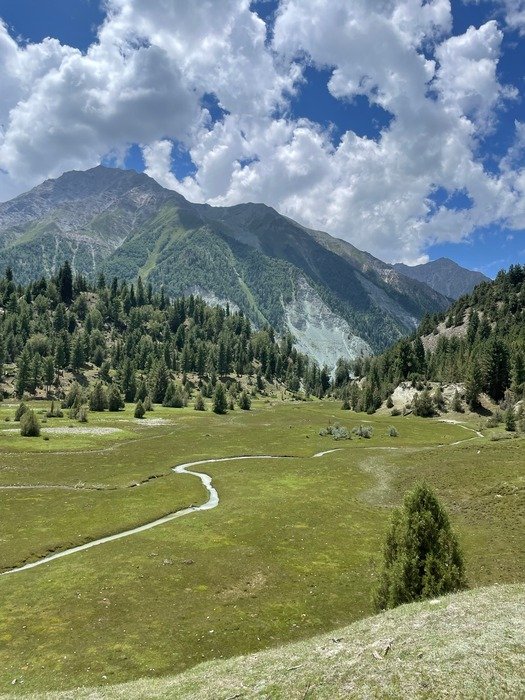
Astore Valley is a high-altitude mountain valley in Gilgit-Baltistan, Pakistan, sitting at an average elevation of 2,600 meters in the shadow of Nanga Parbat.This guide explains how to reach Astore Valley via Jaglot or Babusar Top, where to stay in Astore town, estimated jeep fares to Rama Meadows and Deosai, seasonal road conditions, and practical costs for travelers from Islamabad, Gilgit, and Skardu.
This Astore Valley travel guide explains how to reach Astore Valley via Jaglot or Babusar Top, where to stay in Astore town, estimated jeep fares to Rama Meadows and Deosai, seasonal road conditions, and practical travel costs .
This guide helps first-time visitors, families, photographers, and trekkers planning routes to Rama Meadows, Minimarg, Deosai National Park, and the Rupal Face of Nanga Parbat . It covers the June–September peak window as well as shoulder season options for those willing to manage additional road risk.
Quick Facts
| Item | Detail |
| Location | Astore District, Gilgit-Baltistan, Pakistan |
| Average Valley Elevation | 2,600 m (8,530 ft) |
| Nearest Major City | Gilgit (approx. 90 km) |
| Peak Season | June to September |
| Main Attractions | Rama Meadows, Rama Lake, Minimarg, Sheosar Lake, Rupal Face |
| Road Access | Via Jaglot (KKH) or via Babusar Top (seasonal) |
Where is Astore Valley?
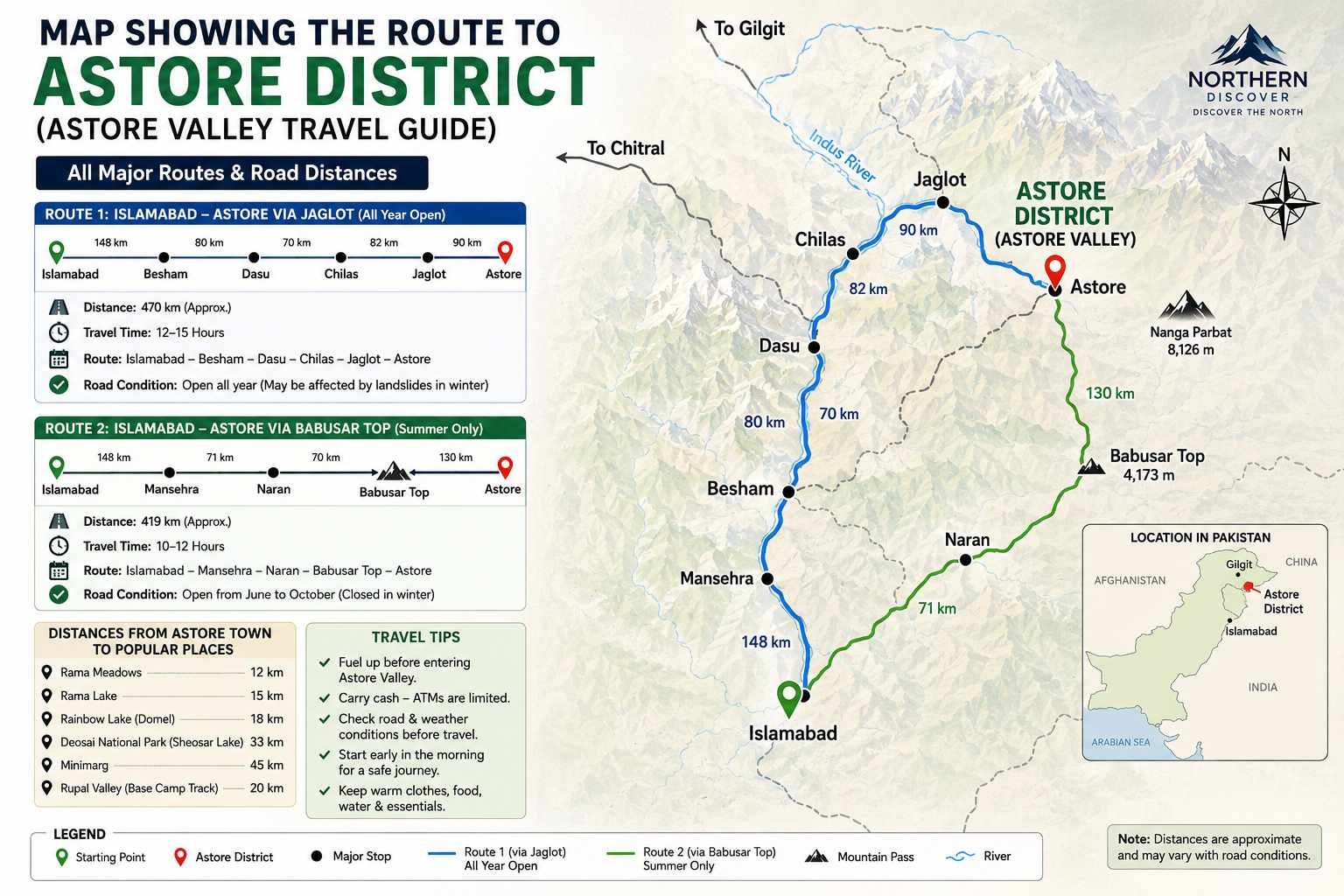
Astore Valley lies in Astore District, Gilgit-Baltistan, approximately 90 kilometers southeast of Gilgit city. The valley runs along the Astore River, which flows northwest before joining the Indus River near Jaglot on the Karakoram Highway.
Nanga Parbat (8,125 m) defines the valley’s southern horizon. To the east, the valley opens toward the Deosai Plains and Sheosar Lake at 4,142 meters. To the north, Jaglot serves as the main entry junction on the KKH between Gilgit and Chilas. The valley floor sits between 2,400 and 2,800 meters, rising sharply to alpine zones above 3,000 meters at Rama Meadows and Minimarg.
Nearby destinations within reach of Astore Valley include Gilgit city (90 km north), Skardu (approximately 170 km east via Deosai), Chilas (60 km south on KKH), and Fairy Meadows (accessible via Raikot Bridge, roughly 80 km from Astore town by road).
The valley splits into two main travel zones. The northern zone — Rama Meadows, Rama Lake, and Astore town — is the more accessible and tourist-ready section. The southern zone — Tarshing, Rupal Valley, and the Rupal Face viewpoint — is quieter, less developed, and requires more planning.
Why Visit Astore Valley?
If you are planning your trip, this comprehensive Astore Valley Travel Guide highlights why this destination rewards travelers who slow down Astore Valley gives travelers direct access to Nanga Parbat’s Rupal Face — the tallest mountain wall on Earth at 4,600 meters — without the crowds that Fairy Meadows attracts on the Diamir side. This alone makes it a distinct destination rather than an alternative to other Gilgit-Baltistan valleys.
The Astore River runs cold and fast through the valley floor, flanked by pine forest between 2,400 and 3,000 meters — a landscape that differs from the bare rock and glacier terrain of the upper Karakoram. Rama Meadows at 3,300 meters offers a wide alpine plateau with direct Nanga Parbat views, accessible by jeep in under an hour from Astore town.
For photographers, the valley offers four distinct environments within a single trip: river-level pine forest, open alpine meadow, high-altitude lake terrain at Sheosar (4,142 m), and the vertical rock wall of the Rupal Face. These four environments rarely coexist within a single valley system in Gilgit-Baltistan.
Adventure options include the 2–3 hour trek from Rama Meadows to Rama Lake, the multi-day Rupal Valley approach to Nanga Parbat Base Camp, and a jeep journey through Chilam into Deosai National Park . None of these require technical climbing skills, making the valley accessible to fit general travelers.
Cultural activity in Astore Valley centers on Shina-speaking communities whose village structure, seasonal farming calendar, and local food differ from Hunza’s Burusho culture and Skardu’s Balti traditions — a distinction worth noting for travelers who have already visited those areas.
Best Time to Visit: Astore Valley Travel Guide
June to September is the best time to visit Astore Valley, when both road access routes are open, temperatures at valley level stay between 15°C and 28°C, and all major attractions including Sheosar Lake and Minimarg are reachable by jeep.
| Month | Temperature Range | Road Status | Conditions | Recommendation |
| January–March | -10°C to 5°C | Babusar closed; Jaglot open but icy | Heavy snow above 2,800 m; Rama Meadows inaccessible | Not recommended |
| April | 2°C to 15°C | Jaglot route open; Babusar still closed | Snow clearing on upper tracks; cherry blossoms at valley level | Possible with caution |
| May | 8°C to 20°C | Both routes partially open | Wildflowers begin; upper tracks muddy from snowmelt | Early season — check road status before departure |
| June | 12°C to 25°C | Both routes fully open | Peak visibility; Sheosar Lake accessible; ideal trekking | Highly Recommended |
| July | 15°C to 28°C | Fully open | Warmest month; Rama Meadows green; some afternoon storms | Highly Recommended |
| August | 14°C to 27°C | Fully open | Monsoon-adjacent cloud possible; still good overall | Recommended |
| September | 8°C to 22°C | Fully open; closing by late September | Autumn colors begin; fewer crowds; cooler nights | Recommended |
| October | 2°C to 14°C | Babusar closes mid-October; Jaglot still open | Early snow above 3,500 m; Sheosar Lake may freeze | Late season — limited access |
| November–December | -5°C to 5°C | Babusar closed; upper tracks blocked | Valley-level driving possible but upper attractions inaccessible | Not recommended |
Cherry blossoms appear at Astore town level in early to mid-April, roughly two weeks later than Hunza due to higher elevation. Autumn foliage peaks in late September along the Astore River pine corridor between Jaglot and Astore town.
How to Reach Astore Valley
Astore Valley is reached by two road routes: the Jaglot route via the Karakoram Highway (open year-round in normal conditions) and the Babusar Top route via Naran (open June to mid-October only). Both routes end at Astore town, the valley’s main settlement.
Route 1 — Via Jaglot (Karakoram Highway) — Recommended Year-Round Route
From Islamabad:
- Drive or take a bus from Islamabad to Gilgit via KKH — approximately 600 km, 10 to 14 hours depending on road conditions and stops
- From Gilgit, continue south on KKH toward Chilas — approximately 60 km, 1 to 1.5 hours
- Turn off at Jaglot junction (before Chilas) onto the Astore road
- Drive from Jaglot to Astore town — approximately 60 km, 2 to 2.5 hours on a partially paved mountain road
- Total from Islamabad: approximately 720 km, 14 to 17 hours
From Gilgit directly:
- Gilgit to Jaglot junction: 30 km, 45 minutes on KKH
- Jaglot to Astore town: 60 km, 2 to 2.5 hours
- Total: approximately 90 km, 3 hours
Route 2 — Via Babusar Top (Seasonal: June to Mid-October Only)
From Islamabad:
- Drive Islamabad to Naran via Kaghan Valley — approximately 250 km, 5 to 6 hours
- Naran to Babusar Top — 76 km, 2.5 to 3 hours (road becomes rough above Battakundi)
- Babusar Top to Chilas — 43 km, 1.5 to 2 hours (steep descent)
- Chilas to Jaglot junction — 30 km, 45 minutes on KKH
- Jaglot to Astore town — 60 km, 2 to 2.5 hours
- Total from Islamabad: approximately 460 km, 13 to 15 hours
The Babusar route is shorter in distance but slower in speed due to road quality above Babusar Top. It is the preferred scenic route for travelers coming from Islamabad who want to avoid retracing the full KKH. Confirm Babusar Top status before departure — it closes without warning after early snowfall.
Islamabad to Astore Distance & Travel Time
| Route | Distance | Estimated Drive Time | Road Type | Seasonal Availability |
| Islamabad → Gilgit (KKH) → Jaglot → Astore | ~720 km | 14–17 hours | KKH paved + mountain road | Year-round |
| Islamabad → Naran → Babusar Top → Chilas → Astore | ~460 km | 13–15 hours | Mixed paved and rough mountain | June–mid October only |
| Gilgit → Jaglot → Astore (direct) | ~90 km | 2.5–3 hours | KKH + mountain road | Year-round |
| Skardu → Deosai → Chilam → Astore | ~170 km | 5–6 hours | Off-road / Deosai plateau | July–September only |
All times assume normal road conditions with no landslide delays. Add 1 to 2 hours buffer during July and August when afternoon rain increases landslide risk between Jaglot and Astore town.
Road Conditions & Driving Tips
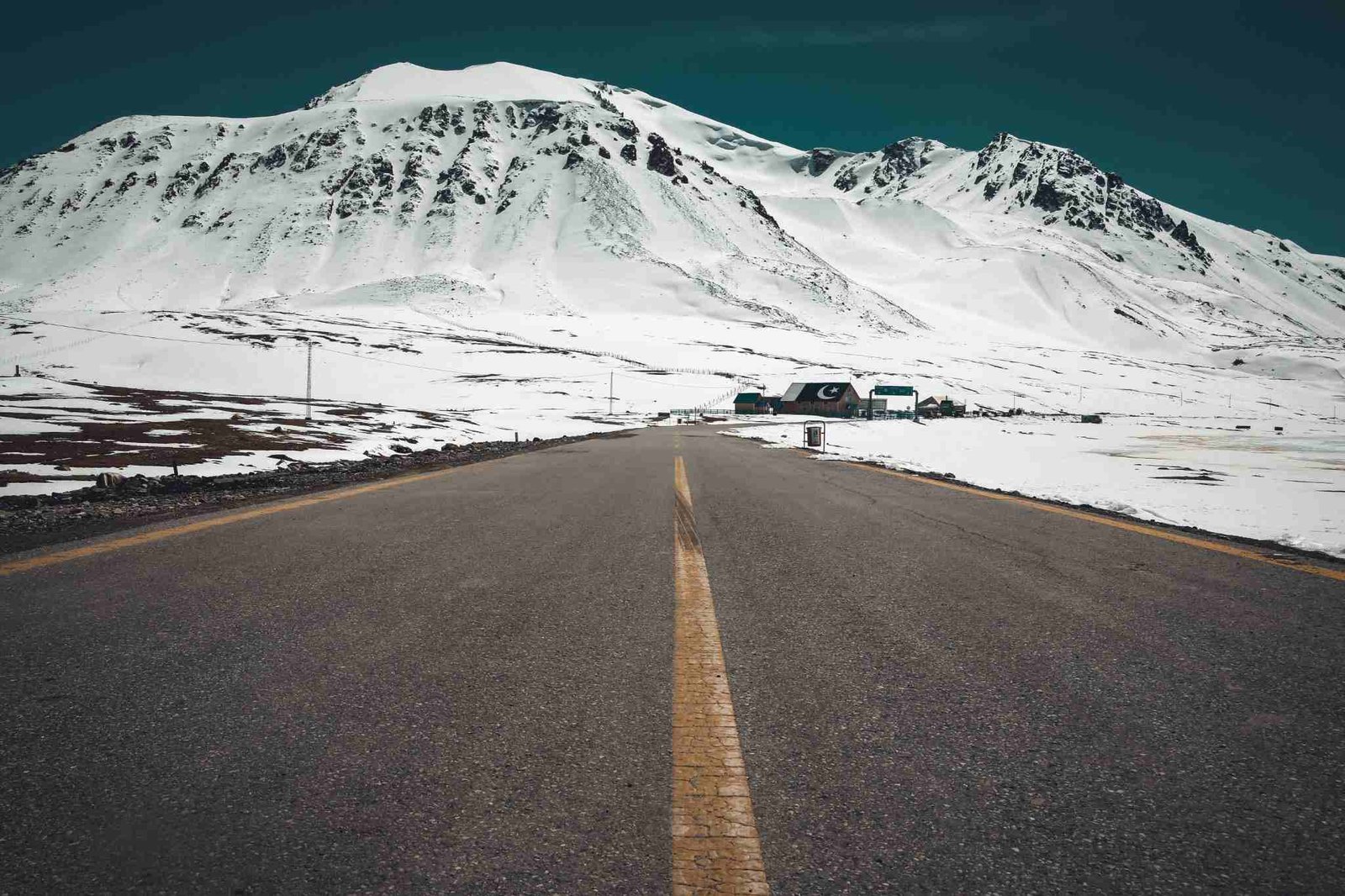
The Jaglot to Astore town road is partially paved — the first 20 kilometers from Jaglot are paved tarmac, the remaining 40 kilometers to Astore town are compacted gravel and mountain track with sections of loose rock near seasonal stream crossings.
Key road hazards to know:
Landslide risk is highest between July and August on the Jaglot–Astore section, particularly near two narrow gorge sections approximately 25 km and 40 km from Jaglot. Local drivers know these sections and typically wait or pass quickly depending on conditions.
Fuel stations exist in Jaglot and Astore town. There are no fuel stops between these two points. Fill your tank at Jaglot before turning onto the Astore road — do not rely on finding fuel mid-route.
Police checkpoints operate at Jaglot junction and at the Astore town entry point. Carry original CNIC (Pakistani nationals) or passport with valid visa (foreign nationals) at all points. Foreign nationals may also need to register at the Astore District Police office — confirm this with your guide or hotel before arrival.
Mobile network coverage is available in Astore town (Jazz and Telenor with 3G/4G). Coverage drops to 2G or zero beyond Astore toward Rama Meadows, Minimarg, and the Rupal Valley. Download offline maps (Maps.me or Google Maps offline) before departing Astore town.
High-clearance vehicles (Toyota Land Cruiser, Hilux, or local jeep) are recommended for all routes above Astore town. Standard sedans can reach Astore town via Jaglot but should not attempt the Rama Meadows or Minimarg roads.
Local Transport & Jeep Fares
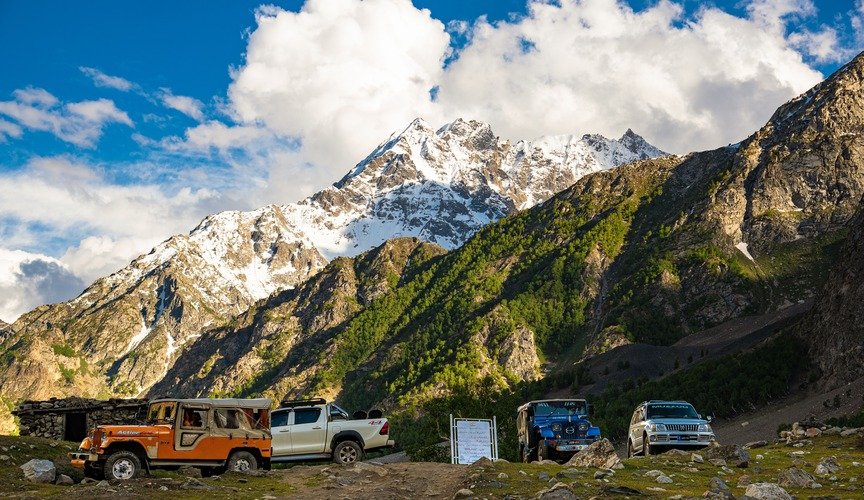
All transport within Astore Valley beyond the main town runs on hired jeep basis. There is no public bus or shared wagon service to Rama Meadows, Minimarg, or the Rupal Valley. Jeeps are hired from Astore town’s central jeep stand.
| Destination | Distance from Astore Town | Estimated Jeep Fare (One Way) | Travel Time | Notes |
| Rama Meadows | 10 km | PKR 1,500–2,500 | 30–45 min | Road passable by standard 4×4 |
| Minimarg | ~50 km | PKR 4,000–6,000 | 2–3 hours | High-clearance required |
| Rainbow Lake (Domel) | ~52 km | PKR 4,500–6,500 | 2.5–3 hours | Beyond Minimarg |
| Tarshing / Rupal Valley | ~50 km | PKR 4,000–6,000 | 2–3 hours | Separate route from Minimarg |
| Chilam (Deosai entry) | ~60 km | PKR 5,000–8,000 | 3–4 hours | 4×4 essential; Deosai entry fee separate |
| Jaglot Junction | 60 km | PKR 3,000–4,500 | 2–2.5 hours | Departure point for KKH |
All fares are approximate and subject to seasonal variation, fuel prices, and negotiation. Confirm current rates at the Astore jeep stand before hiring.
Hiring tips: Negotiate the full day rate rather than one-way fares if visiting multiple destinations in a day. A full-day jeep hire in Astore Valley typically runs PKR 8,000 to PKR 15,000 depending on distance. Confirm whether the driver will wait at the destination or return and pick up at a fixed time.
Where to Stay in Astore Valley
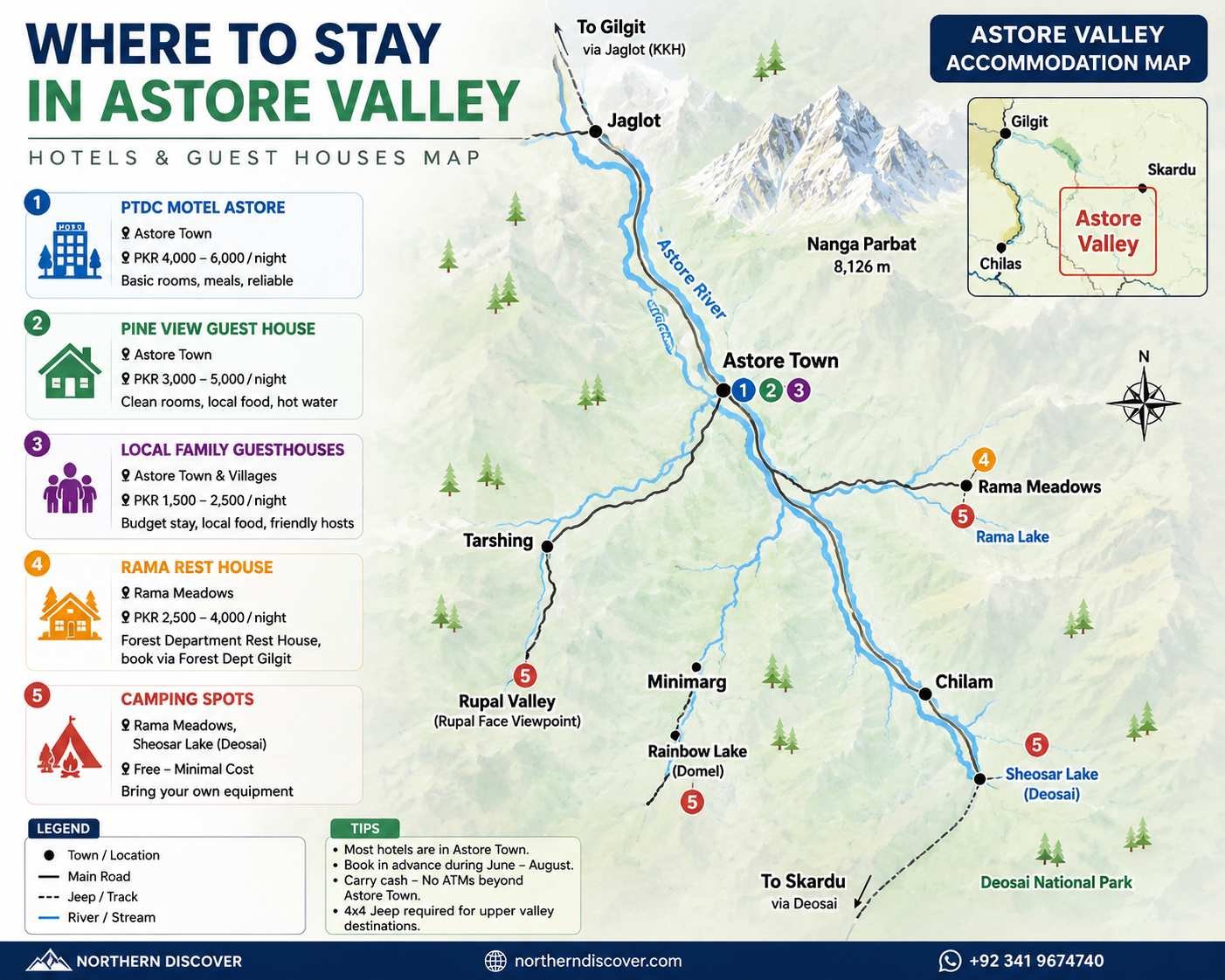
Accommodation in Astore Valley is concentrated in Astore town, with limited options at Rama Meadows and no permanent hotels at Minimarg, Rainbow Lake, or Rupal Valley. Book ahead for July and August — Astore’s small hotel inventory fills quickly during peak weekends.
Most Astore Valley hotels are located in Astore town, while a few seasonal rest houses operate near Rama Meadows. Booking Astore Valley hotels in advance is recommended during July and August because accommodation fills quickly during peak travel season .
| Property | Type | Location | Approx. Price/Night | Facilities |
| PTDC Motel Astore | Government rest house | Astore town | PKR 4,000–6,000 | Basic rooms, meals available, reliable |
| Pine View Guest House | Mid-range guesthouse | Astore town | PKR 3,000–5,000 | Clean rooms, local meals, hot water |
| Rama Rest House | Forest Department rest house | Rama Meadows | PKR 2,500–4,000 | Basic; book via Forest Dept Gilgit |
| Local Family Guesthouses | Budget homestay | Astore town & villages | PKR 1,500–2,500 | Shared bathroom, local food, no frills |
| Camping (self-arranged) | Tent camping | Rama Meadows, Sheosar Lake | Minimal/free | No facilities; bring full equipment |
Hotel prices in Astore town typically increase during June, July, and August when domestic tourism peaks and accommodation demand is highest . Confirm current rates with the property before arriving in Astore town .Always confirm your booking directly with the hotel or guesthouse before arriving in Astore, especially during weekends in July and Augus .
Booking advice: PTDC Motel is the most consistent option for first-time visitors — contact PTDC Gilgit office directly for availability. The Rama Rest House requires advance booking through the Forest Department office in Gilgit, not through the property itself. Family guesthouses do not have online booking — ask your jeep driver or contact Astore locals via travel Facebook groups for current recommendations.
A minimum of 3 days is recommended to explore Astore Valley’s main highlights, including Rama Meadows and Rupal Valley, while a 5 to 7-day itinerary allows enough time to add Minimarg, Rainbow Lake, and Deosai National Park without rushing
Suggested Astore Valley Itineraries (3, 5 & 7 Days)
3-Day Itinerary — Core Astore Valley
Day 1: Depart Gilgit early morning → Jaglot → Astore town (3 hours). Check in, rest, explore Astore bazaar. Evening walk along Astore River.
Day 2: Astore town → Rama Meadows by jeep (45 min) → Trek to Rama Lake (2–3 hrs one way) → Return to Rama Meadows for sunset → Back to Astore town.
Day 3: Astore town → Tarshing → Rupal village (2.5 hrs by jeep) → Walk toward Rupal Face viewpoint (2–3 hrs on foot) → Return to Astore. Depart for Gilgit same evening or next morning.
5-Day Itinerary — Valley + Deosai Crossover
Day 1: Gilgit → Astore town. Rest and acclimatize.
Day 2: Astore → Rama Meadows → Rama Lake trek → return.
Day 3: Astore → Minimarg → Rainbow Lake (Domel). Return to Astore.
Day 4: Astore → Chilam → Sheosar Lake → Deosai Plains day trip (full day, 4×4 essential). Return to Astore.
Day 5: Astore → Tarshing → Rupal Valley → return to Astore. Depart for Gilgit.
7-Day Itinerary — Complete Astore Valley
Day 1: Islamabad → Naran → Babusar Top → Chilas → Astore (via Babusar route, June–October only).
Day 2: Rest day in Astore. Short riverside walk. Local bazaar.
Day 3: Rama Meadows → Rama Lake trek. Overnight at Rama Rest House.
Day 4: Return to Astore. Afternoon: Tarshing and Rupal Valley drive.
Day 5: Minimarg and Rainbow Lake full day.
Day 6: Deosai crossover — Chilam → Sheosar Lake → Deosai Plains. Return to Astore.
Day 7: Astore → Jaglot → Gilgit. Depart or connect onward to Hunza or Skardu.
Estimated Travel Cost
| Category | Budget Traveler (Solo) | Mid-Range Traveler (Solo) | Family of 4 |
| Accommodation (per night) | PKR 1,500–2,500 | PKR 3,500–6,000 | PKR 6,000–12,000 |
| Food (per day) | PKR 800–1,200 | PKR 1,500–2,500 | PKR 4,000–7,000 |
| Jeep hire (per day, shared or hired) | PKR 2,000–3,000 (shared) | PKR 8,000–12,000 (private) | PKR 10,000–15,000 |
| Deosai National Park entry | PKR 300/person | PKR 300/person | PKR 1,200 total |
| Fuel (Islamabad–Astore return via KKH) | PKR 8,000–12,000 (own vehicle) | PKR 8,000–12,000 | PKR 10,000–15,000 |
| Guide (optional, per day) | PKR 2,000–3,000 | PKR 3,000–5,000 | PKR 3,000–5,000 |
| Estimated 5-Day Total | PKR 25,000–40,000 | PKR 55,000–90,000 | PKR 120,000–200,000 |
The estimated costs reflect typical 2025–2026 travel prices and may change because of fuel prices, hotel demand, and seasonal jeep availability . Fuel prices, jeep fares from Astore town, and hotel rates change throughout the June–September travel season, so confirm current prices before your trip.
. Figures reflect 2025–2026 typical ranges.
Packing List for Astore Valley
Clothing
- [ ] Thermal base layer (essential above 3,000 m, even in July)
- [ ] Windproof and waterproof outer jacket
- [ ] Fleece mid-layer for evenings at Rama Meadows and Sheosar Lake
- [ ] Trekking trousers (not jeans — heavy and slow-drying)
- [ ] Sun hat and warm beanie (needed at same trip, different elevations)
- [ ] Gloves for early mornings above 3,500 m
Trekking Gear
- [ ] Trekking poles (essential for Rama Lake ascent and Rupal Valley approach)
- [ ] Waterproof hiking boots, ankle-support (broken in before trip)
- [ ] Daypack 20–30 liters
- [ ] Sleeping bag rated to -10°C (for Rama Meadows and Sheosar camping)
Medicines & Health
- [ ] Ibuprofen or paracetamol for altitude headache
- [ ] Oral rehydration salts
- [ ] Basic first aid kit (bandages, antiseptic, blister pads)
- [ ] Personal prescription medications with extra supply
- [ ] Sunscreen SPF 50+ (UV intensity high above 3,000 m)
- [ ] Lip balm with SPF
Electronics & Connectivity
- [ ] Offline maps downloaded (Maps.me — Astore area) before leaving Astore town
- [ ] Portable power bank (electricity unreliable at Rama Rest House)
- [ ] Camera with extra batteries (cold drains batteries faster at altitude)
Documents & Cash
- [ ] Original CNIC or passport (required at checkpoints)
- [ ] Sufficient cash in PKR — no ATMs in Astore Valley beyond Astore town
- [ ] Emergency contact numbers saved offline
Safety Tips for Travelers
No Astore Valley Travel Guide is complete without essential safety tips for high-altitude environments
Weather
- Check road status on the day of travel — landslides on the Jaglot–Astore road can close the route for hours without advance notice
- Afternoon storms are common in July and August above 3,000 m — plan to be back at camp or vehicle by 2 PM on trek days
- Temperature swings of 15–20°C between midday and midnight are normal at Rama Meadows and Sheosar Lake — always carry a warm layer regardless of morning conditions
Altitude
- Astore town (2,600 m) causes mild symptoms in some travelers arriving directly from Islamabad — rest for half a day before driving up to Rama Meadows
- Sheosar Lake (4,142 m) is the highest point most visitors reach — headache and reduced appetite are common on first arrival; drink 3 liters of water per day and avoid alcohol
- Descend immediately if you experience confusion, loss of coordination, or breathlessness at rest
Roads
- Never drive the Jaglot–Astore road after dark — the route has no lighting, loose edges, and active rockfall sections
- High-clearance 4×4 is required beyond Astore town for all destinations
- Carry a basic puncture repair kit — flat tyres on gravel mountain roads are common
Communication
- Mobile signal disappears beyond Astore town on most networks
- Inform someone of your itinerary and expected return before heading to Minimarg, Rupal Valley, or Deosai
- Satellite communicators (Garmin inReach) are worth carrying for multi-day treks beyond Rama Meadows
Tour Packages for Astore Valley
Tour packages for Astore Valley are available through Gilgit-based operators and online travel companies, typically running 3 to 7 days and covering transport from Islamabad or Gilgit, accommodation, and guided visits to Rama Meadows, Minimarg, and Deosai.
Standard 3-day packages from Gilgit cover Astore town, Rama Meadows, and one additional destination (Minimarg or Rupal Valley). These suit travelers who want logistics handled without arranging jeep hire independently. Prices for a 3-day group package typically run PKR 25,000 to PKR 45,000 per person depending on group size and hotel category.
Extended 5 to 7 day packages add the Deosai crossover and sometimes the Rupal Face approach trek. These are better value for families or groups of four or more, where private jeep costs per person drop significantly with a package arrangement.
When evaluating packages, confirm whether Deosai entry fees, Rama Rest House booking fees, and guide costs are included or charged separately — these are commonly listed as “excluded” items in budget packages, adding PKR 5,000 to PKR 10,000 to the per-person total.
dev.northerndiscover.com/ works with local Astore-based guides for custom itinerary planning — contact details available on the tour enquiry page.
ND Local View
Astore Valley rewards travelers who slow down. Most visitors rush Rama Meadows as a half-day stop on the way to Deosai, miss the Rupal Valley entirely, and leave without seeing Minimarg. The valley’s actual strength is the combination of these destinations across three or four days — not any single attraction alone.
Jeep drivers at Astore’s main stand know every track in the valley. Spend ten minutes at the stand before finalizing your plan — local drivers will tell you which routes are open that week, where the road washed out last month, and which guesthouse actually has a functional hot shower. That conversation is worth more than any online itinerary, including this one.
Carry enough cash for your full trip before leaving Astore town. There are no ATMs at Rama Meadows, Minimarg, or the Deosai entry point at Chilam — and mobile payment systems do not work without signal.We hope this complete Astore Valley Travel Guide helps you plan an unforgettable journey to Pakistan’s hidden gem.
Frequently Asked Questions
What is the best time to visit Astore Valley?
June to September is the best window. Both the Jaglot route and Babusar route are open, Sheosar Lake is accessible, and temperatures at valley level stay comfortable between 15°C and 28°C. July and August are peak months — expect higher jeep fares and limited hotel availability on weekends.
How do I get to Astore Valley from Islamabad?
Two routes connect Islamabad to Astore Valley. The Jaglot route via KKH runs approximately 720 km and takes 14 to 17 hours — it is open year-round. The Babusar Top route via Naran is shorter at 460 km and takes 13 to 15 hours, but is only open from June to mid-October. Both routes end at Astore town.
Is Astore Valley safe for tourists?
Astore Valley is safe for domestic and foreign tourists during the June–September season. Standard precautions apply: carry original ID documents for police checkpoints, avoid driving after dark on mountain roads, and check road status before departing for Minimarg or the Rupal Valley where landslide risk is higher after heavy rain.
Do I need a permit to visit Astore Valley?
Pakistani nationals do not require any special permit to visit Astore Valley or Rama Meadows. Foreign nationals should carry their passport and may need to register at the Astore District Police office on arrival — confirm current requirements with your Gilgit hotel or guide before travel. Deosai National Park charges a separate entry fee of approximately PKR 300 per person.
What is the distance from Gilgit to Astore Valley?
Gilgit to Astore town is approximately 90 kilometers via the Jaglot junction on KKH. The drive takes 2.5 to 3 hours — 45 minutes from Gilgit to Jaglot on paved KKH, then 2 to 2.5 hours from Jaglot to Astore town on a partially paved mountain road.
Can I visit Astore Valley in winter?
Astore town itself is accessible in winter via the Jaglot route, but Rama Meadows, Minimarg, and all upper valley destinations are closed by snow from November through April. Winter visits to Astore town are possible for experienced travelers who understand the road risk, but the valley’s main attractions are inaccessible outside the June–October window.
What currency should I carry to Astore Valley?
Pakistani Rupees (PKR) in cash. There are no ATMs beyond Astore town’s main bazaar — one or two basic cash facilities exist there but are unreliable. Withdraw sufficient PKR in Gilgit or Islamabad before travel. Mobile payment systems (EasyPaisa, JazzCash) require mobile signal to function and are unavailable beyond Astore town.
How is mobile network coverage in Astore Valley?
Jazz and Telenor provide 3G/4G coverage in Astore town. Coverage drops to 2G or disappears completely beyond town on roads toward Rama Meadows, Minimarg, and Rupal Valley. SCOM (a local Gilgit-Baltistan network) has slightly better rural coverage than national networks — a SCOM SIM is worth buying in Gilgit for the trip.
What vehicles are needed for Astore Valley roads?
A standard car (sedan or hatchback) can reach Astore town via the Jaglot route. All destinations beyond Astore town — Rama Meadows, Minimarg, Tarshing, Chilam, and the Deosai entry — require a high-clearance 4×4 vehicle. Local jeeps (Toyota Land Cruiser or Hilux) are the standard hire option at Astore town’s jeep stand.
Plan Your Astore Valley Trip with Northern Discover
Planning a trip to Astore Valley can be much easier with local advice. Whether you’re looking for a custom itinerary, private jeep, hotel recommendations, or the latest road conditions, our local team can help you plan a smoother journey.
WhatsApp: +92 341 9674740
Email: northerndiscover.pk@gmail.com