

Gilgit-Baltistan celebrates more than a dozen cultural festivals every year — from the freestyle Shandur Polo Festival at 3,700 meters to the summer-solstice Ginani harvest and the spring-equinox Nauroz — each rooted in centuries of farming, faith, and mountain-community tradition. This guide covers every major festival with its real dates, where it happens, how to get there, and how to take part respectfully as a visitor.
Quick Facts: Gilgit-Baltistan’s Cultural Festivals
| Aspect | Details |
|---|---|
| Major festivals recognized | 12+ across the year, spanning spring, summer, autumn, and winter |
| Best-known festival | Shandur Polo Festival — the world’s highest polo ground (3,700 m) |
| Best-known harvest festival | Ginani — Hunza & Nagar, June 21 (summer solstice) |
| Official organizer | Gilgit-Baltistan Tourism, Sports, Culture, Archaeology & Museums Department |
| Cost to attend | Most festivals are free, community or government-organized events |
| Best base towns | Gilgit, Skardu, and Karimabad (Hunza) |
| Info last verified | August 2026 |
Dates for several festivals — especially Shandur — shift year to year based on weather and government scheduling. Always confirm the current year’s dates through the Gilgit-Baltistan Tourism, Sports & Culture Department or with Northern Discover before booking flights.
On This Page
- Culture of Gilgit-Baltistan: A Quick Overview
- Major Cultural Festivals of Gilgit-Baltistan
- Festival Calendar: Month by Month
- How to Reach Festival Sites
- Local Etiquette, Customs & Traditions
- Safety & Travel Advisory Notes
- Plan Your Festival Trip with Northern Discover
- Frequently Asked Questions
Culture of Gilgit-Baltistan: A Quick Overview
Gilgit-Baltistan isn’t one culture — it’s several, layered across valleys that were isolated from each other by mountains for centuries. Locals speak Shina, Balti, Burushaski, Khowar, and Wakhi, often switching between two or three languages within a single village. Communities include Shia, Sunni, Ismaili, and Noorbakhshi Muslims, and most festivals here grew out of agricultural life — solstices, harvests, and sowing seasons — long before they became tourist events.
What ties the region’s festivals together is hospitality and communal celebration: shared meals, torch-lit gatherings, folk music played on the daman and surnai, and a strong sense that a good harvest or a safe winter belongs to everyone in the village, not just one family.
Major Cultural Festivals of Gilgit-Baltistan
Shandur Polo Festival
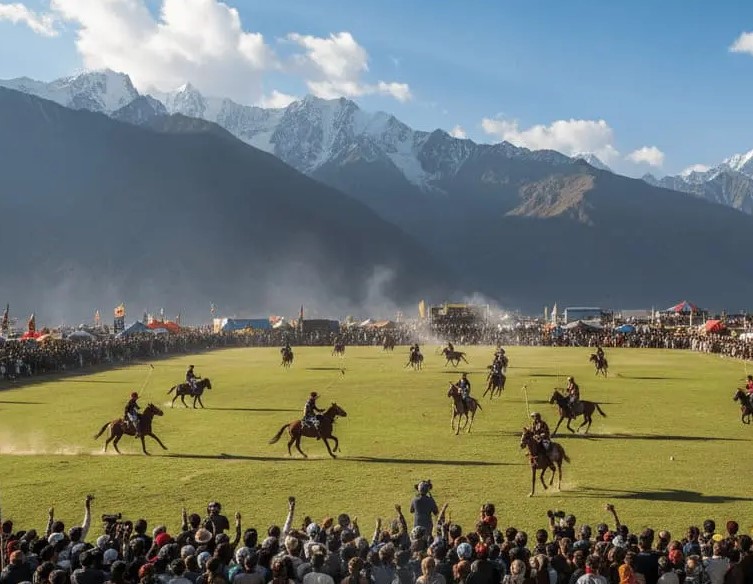
Where: Shandur Pass (3,700 m+), on the border between Ghizer District (Gilgit-Baltistan) and Chitral (Khyber Pakhtunkhwa) — the world’s highest polo ground.
When: Traditionally 7–9 July, but this has changed: 2025 ran June 20–22, and 2026 was officially confirmed for June 11–13 by the KP government. Treat the July date as historical, not reliable — confirm the current year’s dates before booking.
The tournament dates back to 1936, when British political agent Major (later Colonel) Evelyn Cobb organized the first freestyle match between Gilgit and Chitral teams. There are still no modern rules — it’s fast, physical, and genuinely wild. Evenings bring folk music, bonfires, and a full camping village at altitude.
- Bring cash — there are no ATMs near the venue.
- Mobile signal is weak; carry a local SIM and offline maps.
- Nights drop near freezing even in June/July — pack proper camping gear.
- Arrive a day early to acclimatize; the altitude is real at 3,700 m.
Ginani Festival (Hunza & Nagar Harvest)
Where: Central and Upper Hunza (Altit, Baltit, Aliabad, Gulmit), and Nagar Valley.
When: June 21, the summer solstice.
Ginani marks the point when wheat and other crops have ripened enough to survive the season — historically a genuine relief in valleys that faced real famine risk. The same celebration goes by different names across the region: Ganoni in Gilgit, Strublah in Baltistan, and Chineer among Wakhi communities in Upper Hunza. The traditional festival dish is Dirum Pitti. Before 1974, when Hunza was still a princely state, the rituals were performed at Baltit Fort in front of the ruling family.
Do: Observe ceremonies quietly, try the local food, and greet elders politely.
Don’t: Interrupt prayers or photograph rituals without asking first.
Nauroz / Navroz
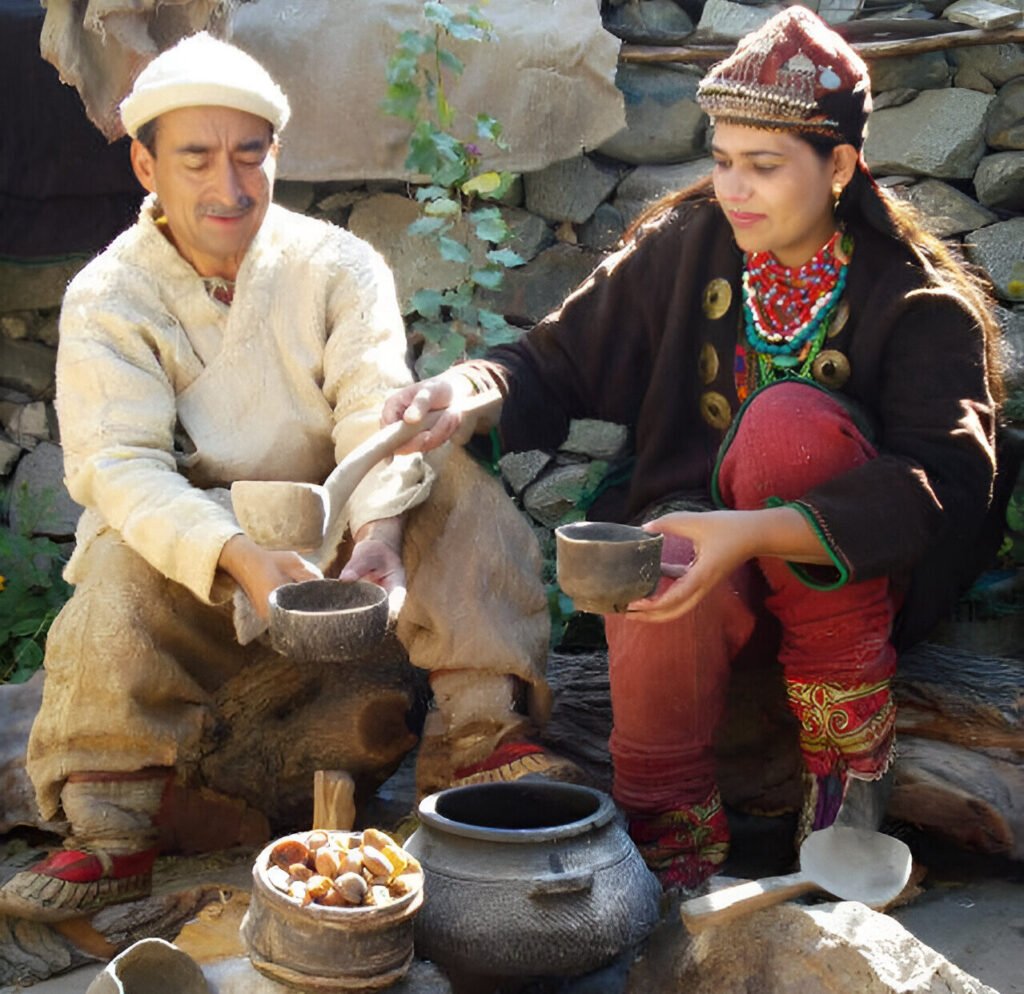
Where: Region-wide — Gilgit, Hunza-Nagar, Ghizer, Astore, Skardu, and Ghanche.
When: March 21, the spring equinox and Persian New Year.
Nauroz is an official Gilgit-Baltistan government holiday, celebrated mainly by Shia and Ismaili communities. In Baltistan, the signature tradition is egg-fighting — striking painted eggs together until one cracks. In Hunza and Nagar, families gather for “Chi Chi,” a village-wide sharing of dried fruit and homemade sweets. Ghanche district runs an official three-day celebration, and a traditional polo tournament typically opens in Skardu the day before Nauroz itself. Hunza’s celebrations coincide with peak apricot blossom season.
Jashn-e-Baharan (Spring Blossom Festival)
Where: Hunza and Nagar valleys.
When: Mid-March through late April, timed to apricot and cherry blossom.
This isn’t one fixed ceremony so much as a season-long celebration — orchards in full bloom, cultural shows, handicraft stalls, and photography tourism at its peak. It’s the best window to combine cultural travel with landscape photography.
Takhum Rezi (Bo / Bee Ganik)
Where: Ghizer District.
When: March, marking the start of the sowing season.
Locally known as Bo or Bee Ganik, this festival features horse racing, tug-of-war, traditional dance, and a torch-lit procession that closes out the evening. It’s less visited than Nauroz or Shandur, which makes it a good pick if you want a genuinely local experience without crowds.
Nasalo Festival
Where: Gilgit, Nagar, Ghizer, and Bagrote Valley.
When: Late November into December (accounts vary by area; Bagrote’s is typically documented around December 13–21).
One of the region’s oldest surviving festivals, with local tradition tracing it back roughly 1,300 years. Nasalo marks preparation for winter: animals are slaughtered, meat is processed into dried sausages (warki or ghittey) to last the cold months, and the day opens with prayers for the family’s survival through winter before turning into music and dance.
May Fung Festival
Where: Balti communities, Baltistan.
When: December 21, the winter solstice.
A tradition with roots in Baltistan’s pre-Islamic Buddhist era that survived into the present: villagers light torches and lanterns and dance after dusk, marking the year’s longest night and the slow turn back toward spring.
Shaman Festival (Bagrote Valley)
Where: Bagrote Valley, near Gilgit.
When: December.
Organized by the GB Tourism, Sports and Culture Department since 2008, this festival showcases Bagrote’s indigenous shamanic (bitan) traditions — trance rituals historically believed to heal and to foresee events. It’s a genuinely rare cultural asset that almost no other travel site covers in depth.
Sevendays Winter Feast (Naltar)
Where: Naltar Valley.
When: January.
A government-organized winter tourism festival named after the seven days it takes snow leopard cubs to open their eyes. Expect winter sports, cultural stalls, theatre performances, and conservation-linked programming run alongside WWF and IUCN. Naltar also separately hosts a longstanding Winter Sports Festival at the PAF ski resort, with skiing, ice hockey, and figure skating.
GB Independence Day & Jashn-e-Azadi Polo
Where: Region-wide, main events in Gilgit.
When: November 1.
This is the closest thing Gilgit-Baltistan has to an official “Culture Day” — there isn’t a separate festival by that exact name. November 1 commemorates the 1947 Gilgit rebellion and accession to Pakistan, with flag hoisting, parades, and cultural performances, plus a Jashn-e-Azadi civil polo tournament organized by the GB Tourism, Sports and Culture Department.
Babusar Polo & Local Summer Sports
Where: Astore, Ghizer, and Gupis.
When: July–August.
Smaller, informal polo and sports gatherings throughout summer. They lack Shandur’s scale, but locals are genuinely welcoming to visitors who show up.
Festival Calendar: Month by Month
| When | Festival | Region |
|---|---|---|
| March 21 | Nauroz / Navroz | Gilgit, Hunza-Nagar, Ghizer, Astore, Skardu, Ghanche |
| March | Takhum Rezi (Bo/Bee Ganik) | Ghizer |
| Mid-March–April | Jashn-e-Baharan (Spring Blossom) | Hunza, Nagar |
| June 21 | Ginani (Ganoni / Strublah / Chineer) | Hunza, Nagar, Gilgit, Baltistan |
| June–July (dates shift) | Shandur Polo Festival | Shandur Pass, Ghizer / Chitral border |
| July–August | Babusar Polo & local sports | Astore, Ghizer, Gupis |
| November 1 | GB Independence Day & Jashn-e-Azadi Polo | Region-wide, mainly Gilgit |
| Nov–December | Nasalo Festival | Gilgit, Nagar, Ghizer, Bagrote |
| December | Shaman Festival | Bagrote Valley |
| December 21 | May Fung Festival | Baltistan |
| January | Sevendays Winter Feast | Naltar |
How to Reach Festival Sites
By air: The most reliable route is Islamabad → Skardu or Islamabad → Gilgit. PIA and Airblue run seasonal, weather-dependent flights — cancellations are common, not rare, so build in one or two buffer days on either end of your trip.
By road: The Karakoram Highway connects Islamabad to Gilgit and Hunza year-round. The Naran–Babusar route is more scenic but only open roughly June–October. For Shandur specifically, continue from Gilgit through Ghizer Valley, or approach from the Chitral side.
- Islamabad → Naran → Babusar → Chilas → Gilgit → Hunza
- For Shandur: continue via Ghizer Valley from Gilgit, or via Chitral from the KP side
For seasonal access windows and winter road conditions, see our Skardu in Winter guide and best time to visit Gilgit-Baltistan.
Local Etiquette, Customs & Traditions
- Dress: Modest layers — respectful and practical given how quickly weather changes.
- Photography: Always ask before photographing people, rituals, or ceremonies up close.
- Language: Shina, Burushaski, Khowar, Balti, Wakhi, Urdu, and English in tourist areas.
- Hospitality: Tea and dried fruit are offered freely — accept with your right hand and a smile; it isn’t a performance, it’s simply custom.
- Gifts: If visiting a harvest festival like Ginani through a local contact, a small gift of sweets or tea is a genuine sign of respect.
Safety & Travel Advisory Notes
⚠️ Altitude & weather: Shandur sits above 3,700 m — take a day to acclimatize. Nights can be near-freezing even in June and July, and sudden storms can close roads or delay flights without much warning.
⚠️ Health: Carry your own medication, a basic first-aid kit, and emergency snacks. If you have a heart or lung condition, talk to your doctor before high-altitude travel. Let your hotel or a family member know your itinerary.
Plan Your Festival Trip with Northern Discover
Sample 5-day Shandur + Hunza itinerary:
| Day | Plan |
|---|---|
| Day 0 | Fly Islamabad → Gilgit; rest and acclimatize. |
| Day 1 | Explore Hunza — Altit and Baltit Forts, local food. |
| Day 2 | Drive to Shandur via Ghizer Valley; set up camp. |
| Day 3 | Full festival day — polo, music, bonfire. |
| Day 4 | Return to Gilgit; buffer day for weather/flights. |
Checklist: confirmed flights and hotels · cash and local SIM · warm sleeping bag and layers · travel insurance · sunscreen and basic meds.
Curious what else pairs well with a festival trip? Browse our Hunza Valley and Skardu Valley guides, or see our full tour packages.
Author of post: Hassan Sulaimani, Northern Pakistan Travel Specialist based in Skardu, Gilgit-Baltistan.
Sourced from: Gilgit-Baltistan Tourism, Sports & Culture Department; Pamir Times; Dawn; The Nation; regional cultural archives.
Reviewed for: Festival dates, regional naming accuracy, and cultural sensitivity.
Last verified: August 2026.
Frequently Asked Questions
What are the main cultural festivals of Gilgit-Baltistan?
The best-known are the Shandur Polo Festival, Ginani, Nauroz, Nasalo, and Jashn-e-Baharan — but the region marks over a dozen festivals across the year, most tied to sowing, harvest, or seasonal change.
When is the Shandur Polo Festival held?
Traditionally 7–9 July, but recent years have shifted earlier — June 20–22 in 2025, and June 11–13 in 2026. Confirm the current year’s dates with the GB Tourism Department before booking.
What is the Ginani festival?
Ginani is a harvest festival celebrated on June 21 in Hunza and Nagar, marking crops surviving to maturity. It’s also called Ganoni in Gilgit and Strublah in Baltistan.
Is there an official Gilgit-Baltistan Culture Day?
Not under that exact name. GB Independence Day (November 1) functions as the closest equivalent, with parades and cultural performances region-wide.
Can foreigners attend these festivals?
Yes. Bring ID, let your accommodation know your plans, and follow local customs — visitors are genuinely welcomed.
How reliable are flights to Skardu and Gilgit?
Weather-dependent and cancellations are common. Book flexible tickets and keep one or two buffer days.
What should I pack?
Layered clothing, a warm sleeping bag, cash, a power bank, and a basic first-aid kit.
Are the festivals ticketed?
Most are free, community or government-organized events. Check the GB Tourism Department for official schedule updates.
What food should I try?
Dirum Pitti during Ginani, and regional dishes like Prapoo and Kiseer during Nauroz in Baltistan.
Is it safe for solo travelers?
Yes. Locals are welcoming — just inform your guesthouse of your daily plans.
Conclusion
The cultural festivals of Gilgit-Baltistan reveal the living heart of the mountains — sport, faith, harvest, and hospitality, all bound together across a dozen distinct celebrations. Plan with flexibility, travel respectfully, and let Northern Discover guide you through Pakistan’s most authentic cultural calendar.