
GILGIT-BALTISTAN TRAVEL GUIDE
Deosai National Park: The Complete Guide to Pakistan’s Land of Giants
One of the world’s highest plateaus, home to Pakistan’s rarest brown bears — here’s exactly how to get there, when to go, and what it costs.
Home / Guides / Deosai National Park
Deosai National Park — Quick Facts
- Location: Between Skardu & Astore districts, Gilgit-Baltistan, Pakistan
- Average elevation: 4,114 m (13,497 ft) — second-highest plateau in the world
- Area: Approximately 3,000 km²
- Established: 1993, to protect the Himalayan brown bear
- Skardu to Deosai distance: ~30 km to the main entrance (1.5–2 hrs by 4×4)
- Astore to Deosai distance: ~70 km via Chilam (3–5 hrs, 4×4 only)
- Best time to visit: Mid-June to mid-October (peak: late July–August)
- Entry fee: PKR 100 (GB residents) / PKR 500 (Pakistani nationals) / $20–40 (foreign nationals)*
- Vehicle needed: 4×4 only — both routes
*Foreign-national entry fees have fluctuated between $20–40 in recent seasons — confirm the current rate with us on WhatsApp before you travel.
On This Page
Where Is Deosai National Park & What Does “Land of Giants” Mean?
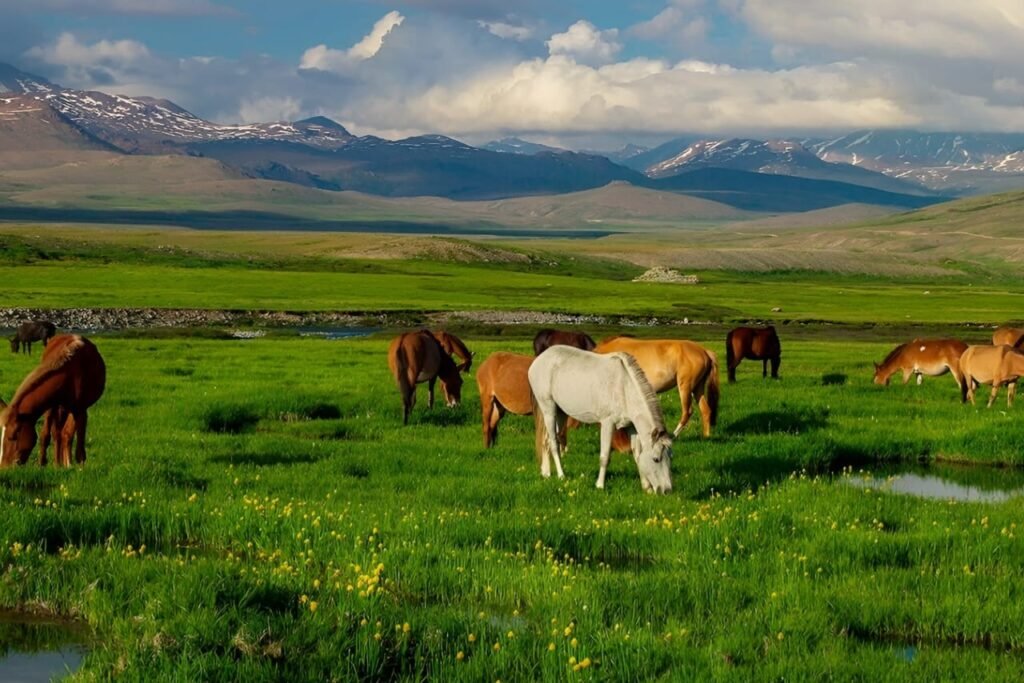
If you’re coming up from the western side, our Astore Valley guide covers the approach road and village stops in detail. Locals call it the “Land of Giants,” and while modern tourism brochures often pluralize it, the name most likely comes from the sheer, treeless scale of the landscape itself rather than any literal giants — vast rolling grassland stretching to the horizon in every direction, ringed by snow peaks, with almost nothing vertical to break the view.
The Deosai plateau covers roughly 3,000 square kilometres of hills, streams, marshland and a handful of high-altitude lakes, the best known being Sheosar Lake. It was declared a national park in 1993 for one specific reason: to protect the Himalayan brown bear (Ursus arctos isabellinus), a critically endangered species that had been hunted to near-extinction in the region. The conservation effort worked — surveys tracked the population rising from just 19 bears in 1993 to around 78 by 2022, making Deosai one of the last places on the planet with a stable, breeding brown bear population.
Because it sits above 4,000 metres, Deosai is only reachable — and only green — for about four months a year. The rest of the time it’s buried under several metres of snow. That short window is exactly what makes it feel so untouched.
Skardu to Deosai Distance: Route, Road Condition & Travel Time
Skardu to Deosai is approximately 30 km to the park’s main entrance, and takes around 1.5 to 2 hours by 4×4 — this is the shortest and by far the most popular way in. It’s also the more physically dramatic of the two approaches: paved road as far as Sadpara Lake, then a rough, partly off-road mountain track climbing onto the plateau itself.
The drive typically breaks down like this from Skardu city:
- Skardu to Deosai entrance / Deosai Top: ~30 km, ~1.5–2 hours
- Skardu to Bara Pani (first major campground): ~35 km
- Skardu to Sheosar Lake: ~60 km, often 3+ hours one-way in poor conditions
That spread is the reason you’ll see wildly different numbers online for “Skardu to Deosai distance” — it depends entirely on which point inside the park someone means. A day-trip that only goes to the entrance and the top of the plateau is a very different drive from one that pushes on to Sheosar Lake or Kala Pani. For the full landmark-by-landmark breakdown, road conditions by season, and a downloadable route map, see our dedicated Skardu to Deosai distance guide.
What matters practically: the road is unpaved and rough for most of its length past Sadpara Lake, with steep switchbacks and loose surface in places. A 4×4 (Land Cruiser or Prado is the local standard) is not a suggestion here — it’s the only realistic way to make the trip.If you’re mapping out the rest of your trip around town, check our rundown of the best places to visit in Skardu to line up your day trips before heading onto the plateau.
Astore to Deosai Distance: The Alternate Route
Astore to Deosai is approximately 70 km via Chilam village, and takes roughly 3 to 5 hours — this route is rougher and slower than the Skardu approach, not smoother, despite what some guides claim. The road from Astore town runs through Chilam, the last village before the plateau, over a track that multiple ground reports describe as poor and unsuitable for regular cars. A 4×4 is required here too, with no real shortcut around that.
Where the Astore route earns its popularity isn’t comfort — it’s the scenery on the way in through Chilam’s green side valleys, and the fact that it sets up a one-way crossing rather than a there-and-back trip. Most travelers who use this route are doing a full plateau traverse: Skardu → Deosai → Astore (or the reverse), which covers about 150–152 km total and takes 7 to 8 hours by jeep, only possible while the plateau road is open (June to September).
| Route | Distance | Road Condition | Recommended Vehicle | Travel Time |
|---|---|---|---|---|
| Skardu → Deosai (entrance) | ~30 km | Rough, partly off-road | 4×4 only | 1.5–2 hrs |
| Astore → Deosai (via Chilam) | ~70 km | Poor, unpaved | 4×4 only | 3–5 hrs |
| Full crossing: Skardu → Astore | ~150–152 km | Jeep track, plateau interior | 4×4 only | 7–8 hrs |
Not sure which route fits your trip?
Tell us your dates and where you’re starting from — we’ll tell you honestly which route makes sense, and whether the road’s actually open right now.
Best Time to Visit Deosai National Park
The best time to visit Deosai National Park is mid-June through mid-October, with late July and August offering the greenest plains and peak wildflower bloom. Outside this window, the plateau is simply not accessible — snow closes the roads on both the Skardu and Astore sides from roughly November through May, and the exact opening date shifts every year depending on snowfall. In 2026, the park opened for the season on 10 June.
- Late June: Snow just cleared, plains still turning green, fewer crowds
- July–August: Peak wildflower bloom, most active bear sightings, warmest days (10–20°C), busiest with domestic tourists
- September: Fewer crowds, clearer light, plains turn golden-brown; still fully accessible
- October: Road can close with the first heavy snow at any point — risky to plan late in the month without checking conditions first
Whatever the calendar says, treat opening and closing dates as approximate. Confirm current road status before you travel — conditions can change fast at this altitude, and no blog (including this one) can promise you an exact date months in advance.
Things to Do in Deosai National Park
Sheosar Lake
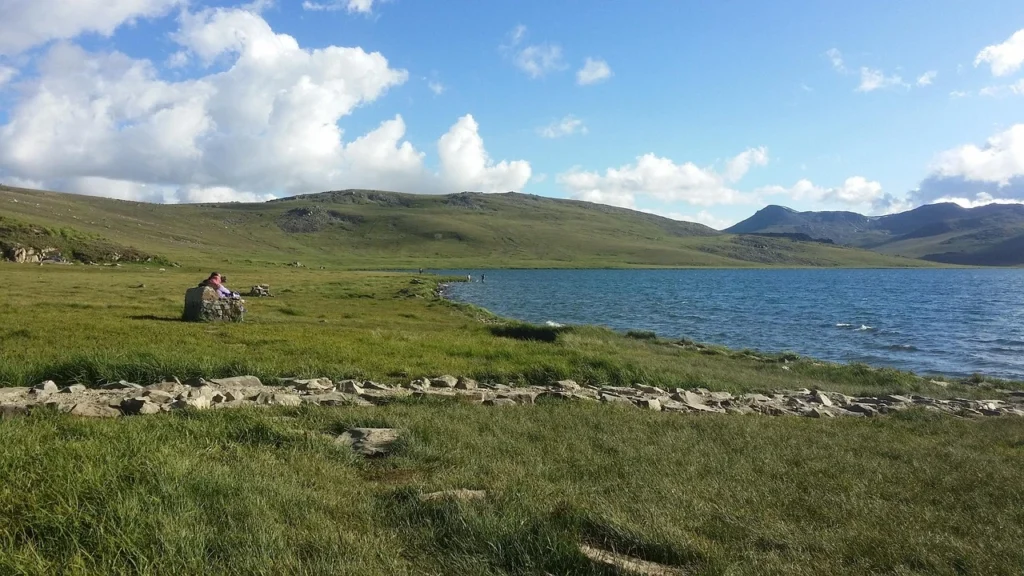
Sheosar Lake, sitting at roughly 4,142 metres in the western part of the park, is Deosai’s signature stop — one of the highest alpine lakes in the world. Its local name translates to “Blind Lake,” because unlike most lakes in the region it isn’t visibly fed by a stream, giving it an unusually still, isolated feel. On a clear day you can see Nanga Parbat from its shore. Most day trips and jeep safaris from Skardu build their itinerary around reaching this lake and back.
Wildlife & the Himalayan Brown Bear
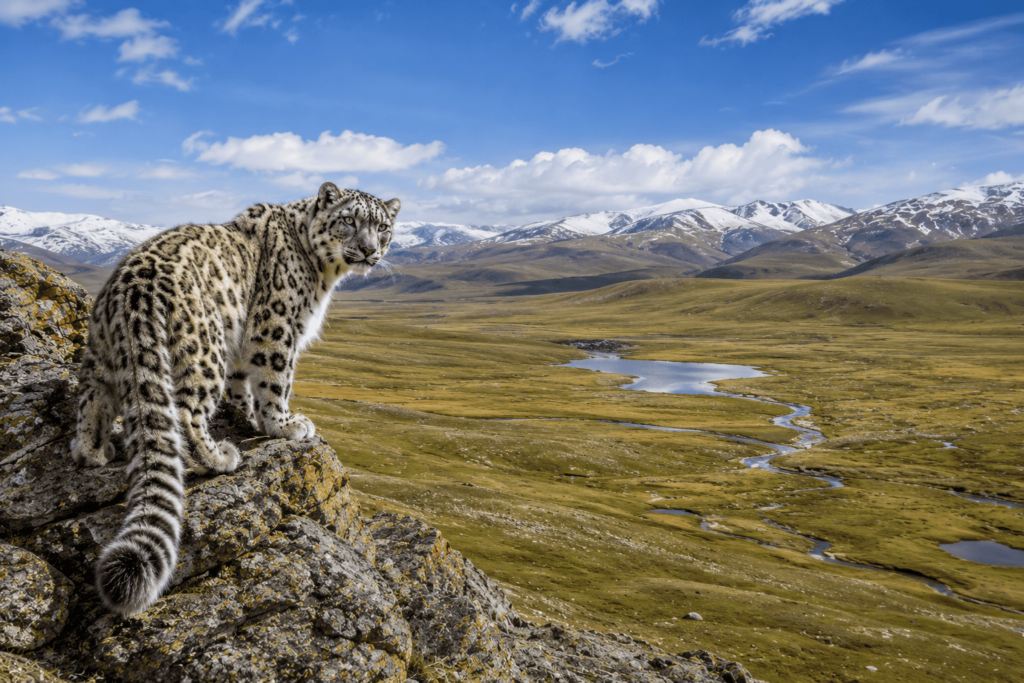
Deosai is one of the last strongholds of the Himalayan brown bear anywhere in the world, and sightings — while never guaranteed — are genuinely common if you’re on the plateau early morning or late afternoon, when bears are most active and easiest to spot at a distance across the open grassland. Beyond the bears, keep an eye out for golden marmots (abundant and easy to see), Himalayan ibex, red foxes, and golden eagles. Snow leopards are occasionally reported in the higher mountains surrounding the plateau, though they’re rarely seen on the open grassland itself.
Wildlife safety note: Keep a safe distance from any bear you spot, stay in or near your vehicle, and never attempt to feed or approach wildlife.
Camping & Stargazing
With no light pollution and thin, high-altitude air, Deosai’s night skies are genuinely spectacular — the Milky Way is visible to the naked eye on a clear night. The park’s three main campgrounds are Bara Pani, Kala Pani, and around Sheosar Lake. If you decide to base out of town instead of sleeping in a tent, browse our recommended places to stay in Skardu to lock in a room with reliable heat and hot water.
Trekking & Hiking
The plateau’s flat, open terrain makes for easy walking rather than technical trekking — think long, exposed rambles rather than summit routes. A short hike around Sheosar Lake takes 2–3 hours; longer multi-day crossings toward Chilam are possible for experienced trekkers but should never be attempted solo, given the lack of marked trails and mobile coverage.
Weather & What to Pack
Deosai’s weather swings hard between day and night, even in peak summer. Expect daytime highs of 10–20°C, dropping close to freezing (or below) after sunset — layers aren’t optional here.
| Season | Daytime Temp | Nighttime Temp | Access |
|---|---|---|---|
| Summer (Jun–Sep) | 10–20°C | Near 0°C, occasionally lower | Open |
| Winter (Nov–May) | Well below 0°C | -20°C or lower | Closed by snow |
- Warm layers and a windproof jacket, even for a day trip in July
- Sturdy, closed hiking shoes for uneven, wet ground near the lakes
- Sunscreen and sunglasses — UV exposure is intense at this altitude
- A power bank — there’s nowhere to charge devices on the plateau
- Basic altitude-sickness awareness: Deosai sits above 4,000 m, so go easy on exertion if you’re not acclimatized
Entry Fees & Permits
Deosai charges a tiered entry fee collected at a checkpoint on the way in:
- Gilgit-Baltistan residents: PKR 100 per person
- Pakistani nationals: PKR 500 per person
- Foreign nationals: $20–40 per person
The foreign-national rate in particular has moved between $20 and $40 across recent seasons based on multiple independent traveler reports, so treat this as a range rather than a fixed number — we’ll confirm the exact current figure for you on request. No advance permit or NOC is required to enter Deosai itself for most nationalities; keep your entry ticket until you exit the park, as it may be checked.
Practical Travel Tips
- No mobile signal: Coverage is patchy to non-existent for most of the route once you leave Skardu or Astore city. Tell someone your plan before you go.
- 4×4 only, no exceptions: Both approach roads rule out regular cars for most of the year.
- No fuel or reliable food inside the park: Fill up and pack supplies before leaving Skardu, Astore, or Chilam.
- Start early: Most operators leave by 6–7 AM to cross safely in daylight and maximize wildlife-viewing chances.
- Check current conditions: Road status can change quickly at this altitude — confirm with a local operator before finalizing dates, especially in June or October at the edges of the season.
Frequently Asked Questions
How far is Deosai from Skardu?
Deosai’s main entrance is about 30 km from Skardu city, roughly 1.5–2 hours by 4×4 via Sadpara Lake. Reaching Sheosar Lake further inside the park adds more distance and time.
Can I visit Deosai in a normal car?
No. Both the Skardu and Astore approach roads are rough and partly unpaved for most of the year. A 4×4 vehicle is required on either route.
Is the Astore route to Deosai easier than the Skardu route?
Not really — it’s actually longer (about 70 km vs. 30 km) and the road condition is generally reported as poor, not smooth. Most travelers choose Astore as part of a one-way plateau crossing rather than for comfort.
What is the best time to visit Deosai National Park?
Mid-June through mid-October, with late July and August offering the best wildflower bloom and most active wildlife. The park is closed by snow the rest of the year.
Will I actually see a Himalayan brown bear?
It’s likely but never guaranteed. Deosai holds one of the last stable brown bear populations in the world, and early morning or late afternoon gives you the best chance.
How much does it cost to enter Deosai National Park?
PKR 100 per person for Gilgit-Baltistan residents, PKR 500 for Pakistani nationals, and $20–40 for foreign nationals, collected at the entry checkpoint. Foreign rates have varied between seasons, so confirm the current fee before you go.
Is there mobile signal in Deosai?
Coverage is patchy to non-existent for most of the plateau. Treat a Deosai trip as a mostly offline day and let someone know your plan in advance.
Plan the Rest of Your Trip
- Skardu to Deosai Distance: Full Route Breakdown
- Deosai Jeep Safari Tour from Skardu
- Skardu & Deosai Adventure Package
- Astore Valley Travel Guide
- Skardu Travel Guide
- All Skardu Tour Package
- Why Travel With Northern Discover? Local Skardu drivers who know the plateau track inside out, 4×4 vehicles prepped for high altitude, and honest road-status updates before you spend a rupee.
Ready to See Deosai for Yourself?
We run daily jeep safaris and multi-day itineraries from Skardu. Tell us your dates, and we’ll confirm the road status, the cost, and the plan.