
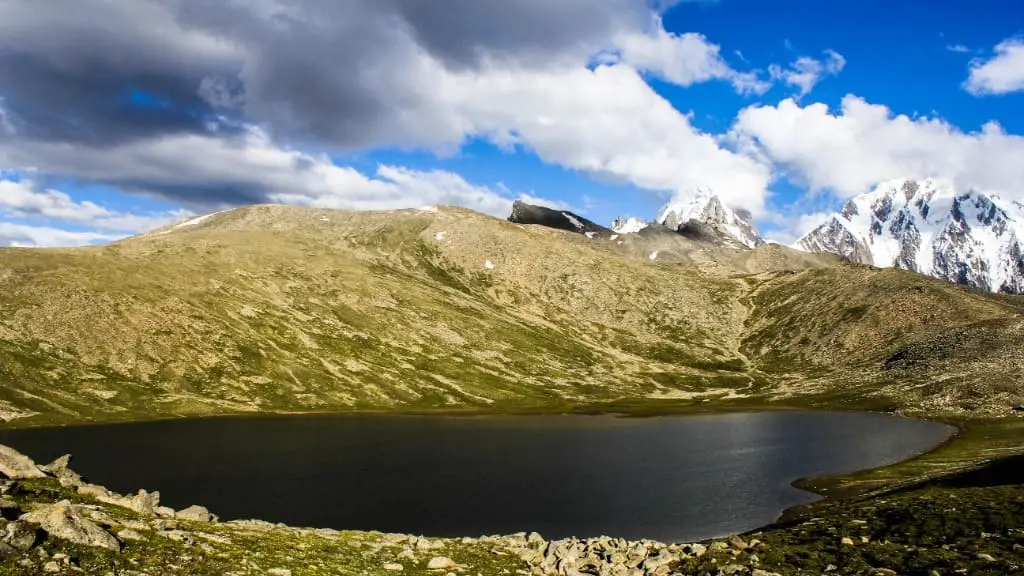
Rush Lake is a high-altitude glacial lake in Nagar (Hopar) valley at ~4,694 m, one of the world’s highest alpine lakes — the trek delivers sweeping Karakoram views (including, on rare clear days, distant K2) and a short but demanding multi-day hike starting from Hoper (Hopar).
1) Overview — why Rush Lake matters
Rush Lake sits in the Hopar/Hoper pocket of Nagar Valley and is framed by Rush Peak and a ring of Karakoram giants (Spantik/Golden Peak, Miar, Malubiting, Ultar).
The short duration of the trek, the dramatic alpine meadow campsites, and the “one of the highest lakes” status make it a frequent pick for trekkers who want alpine views without a long expedition. Many operators also advertise Rush as a K2 viewpoint on exceptionally clear days.
What this guide gives you: practical step-by-step logistics, a realistic itinerary, a downloadable GPX (example track), local lodging budget tiers, safety warnings, and sustainability tips so Northern Discover can publish the best Rush Lake guide online.
2) Quick facts & coordinates
Name: Rush Lake (رش جھیل)
Elevation: ~4,694 m (15,400 ft) — one of Pakistan’s highest alpine lakes.
Location: Hopar / Nagar Valley, Gilgit-Baltistan (north Pakistan).
Coordinates: 36.1745° N, 74.8825° E (approx).
Typical starting point: Hoper (Hopar) village / Hopar Glacier approach.
📍 Local insight: Rush Lake altitude facts, GPS coordinates, nearby peaks (Spantik, Miar), and which valley it belongs to.
3) When to go — best season & weather to Rush Lake
Best months: June → early October.
Peak window: July–August for stable weather and green meadows.
Seasonal highlights: June = wildflowers, September = clearer skies and autumn colors.
Avoid: Winter and late autumn (snowbound, impractical).
⚠️ Warning: Weather in northern Pakistan is unpredictable — glacial melt, heavier rains, and flash floods have affected the region in recent years. Always check local weather, river conditions, and KKH road status before departure.
4) How to get there — route & step-by-step
High-level approach: Islamabad → Gilgit (plane or road) → Hunza / Nagar → Hoper village (drive) → trek.
To Gilgit: Fly from Islamabad (fastest) or drive via Karakoram Highway (KKH).
To Hoper (Hopar) village / Nagar: 1–4 hour road drive from Gilgit / Aliabad depending on traffic and road repairs. Hoper is the standard trailhead.
Trek route: Hoper → Bericho Kor (Barichokor) → Chedan Haraye or Shishkin campsite → Rush Lake. The route includes small glacier crossings (Hopar/Bualtar and Barpu) and steep alpine meadows.
📍 Practical notes: transfer options (flight vs road), jeep/taxi rates, permit checks, guide/porter hiring, and seasonal road closures should be considered.
5) Suggested 5-day itinerary
Day 0 — Arrival
Fly/drive to Gilgit. Overnight in Aliabad/Hunza or Gilgit.
Day 1 — Drive to Hoper, trek to Bericho Kor (3,300m)
Drive ~2–4 hrs to Hoper. Begin trek (6–10 hrs incl. glacier crossing) to Bericho Kor campsite. Overnight tent/guesthouse. (Optional: split into 2 days for acclimatisation.)
Day 2 — Bericho Kor → Chedan Haraye / Shishkin (high camp)
Steep ascent 4–6 hrs to high meadows. Overnight.
Day 3 — Chedan Haraye → Rush Lake (4,694 m)
2–4 hrs to the lake. Spend time at the lake, photography, optional Rush Peak scramble. Return to high camp.
Day 4 — Descend to Hoper, drive to Hunza/Gilgit
Day 5 — Buffer day & departure
Keep a buffer for weather or KKH traffic.
💡 Tip: Add an acclimatisation day if your group has little high-altitude experience.
6) Difficulty, acclimatisation & safety
Difficulty: Moderate → Challenging. Main risks: altitude and steep ascents.
Acclimatisation: Spend at least 24–48 hrs above 2,500–3,000 m first.
Medicines & kit: Carry Diamox (doctor-approved), first aid, oxygen cylinder for groups, satellite comms for emergencies.
Trail hazards: Glacier crossings, loose scree, sudden weather changes, flash floods, and landslides.
⚠️ Warning: Never attempt Rush Peak summit without proper acclimatisation and a certified climbing leader. The lake itself is fine; the peak adds exposure.
7) Packing list & essential gear
Trekking boots (broken in), gaiters, trekking poles
Warm layers (down jacket), thermal wear, gloves, beanie
Sleeping bag (−10°C rating), mat, tent
Sunscreen, sunglasses, headlamp + batteries
Water purification + snacks
Rain shell, crampons/ice axe (early/late season)
ID, cash, permits
8) Lodging & budget tiers
Budget: Guesthouses/homestays in Hoper/Nagar (PKR 2,000–5,000).
Mid-range: Guesthouses in Hunza/Aliabad (PKR 6,000–12,000).
Premium: Private lodges + jeep transfers + guide packages (PKR 15,000+).
💡 Tip: Mid-range comfort + local guide deals work best for balanced cost and safety.
9) GPX & maps
An example GPX route (Hoper → Rush Lake) is available with waypoints and a simple track.
How to use: Import into apps like Gaia, OSMAnd, and Garmin BaseCamp. Use it for planning, but replace points with verified GPS waypoints after a recce.
10) Local tips, culture & sustainability
📍 Local insight: Always hire a local guide from Hoper — they know glacier crossings, seasonal channels, and campsites.
💡 Sustainability: Carry waste out, avoid open fires, pay guides/porters fairly, and use reusable bottles instead of single-use plastics.
FAQs
1. How long is the Rush Lake trek?
Typically 3–5 days from Hoper, depending on pace and acclimatisation.
2. Can I see K2 from Rush Lake?
On very clear days you may glimpse distant Karakoram peaks including K2, but treat it as a bonus, not a guarantee.
3. Do I need a guide or permits?
A local guide is highly recommended for glacier safety. Permits are minimal but check local regulations.
4. What’s the biggest risk on the trek?
Altitude sickness and sudden weather changes (storms, floods, landslides).
5. Is camping necessary?
Yes. Expect 1–2 nights camping on the trek. Guesthouses only exist at Hoper/Gilgit/Hunza.
6. What’s the best season to go?
June–October; July–August for stable weather.
7. How high is Rush Lake?
About 4,694 m (15,400 ft).
8. Is the trek beginner-friendly?
It’s short but challenging due to the altitude and glaciers. Fit beginners with guides can attempt.
9. Can I do it solo?
Not recommended. Glacier crossings are risky without local knowledge.
10. What should I pack?
Trekking boots, warm clothes, a tent, a sleeping bag, food/snacks, water filters, and first aid.
11. Are there porters available?
Yes, in Hoper village — affordable and reliable.
12. How do I get to Hoper village?
From Gilgit or Hunza/Aliabad by jeep (2–4 hrs).
13. Can children join?
Not advisable — altitude and glacier risks make it unsuitable for young kids.
14. Is Rush Peak climbable in the same trek?
Yes, but only for acclimatised and guided groups — it adds difficulty and exposure.
15. Is phone coverage available?
Coverage is very limited; bring satellite comms or download offline maps.
Conclusion
Rush Lake is a short, high-reward alpine trek: sharp scenery, a genuine high-altitude lake, and a challenging but manageable adventure.
Key takeaway: Combine good acclimatisation, a local guide, and proper gear for safety.