
 Fairy Meadows Jeep Road Reality and How to Reach Safely
Is the Fairy Meadows Road Dangerous? An Honest Access & Safety Guide
You’ve likely seen the dramatic claims: “world’s most dangerous road,” “death-defying drive,” “only for the brave.” Then you’ve probably also seen Instagram posts of families with young children at Fairy Meadows, smiling in front of Nanga Parbat. So which version is true?
The reality sits somewhere between sensationalism and casual dismissal. Reaching Fairy Meadows typically involves a challenging mountain jeep track and a steep trek, both of which carry inherent exposure to heights, weather changes, and variable conditions. Many people complete the journey successfully each season, while others find it genuinely uncomfortable or choose to turn back.
This guide explains what “Fairy Meadows access and safety” actually means in practice—the road conditions you’ll encounter from Raikot Bridge to Tatu village, the trek difficulty you should prepare for, and the seasonal and personal factors that influence whether this trip makes sense for you right now.
What and Where Is Fairy Meadows?
Fairy Meadows is an alpine meadow in the Gilgit-Baltistan region of northern Pakistan, positioned near the base area of Nanga Parbat, one of the world’s highest peaks. The plateau sits at an altitude commonly reported around 3,000 to 3,300 meters (approximately 9,800 to 10,800 feet), though exact elevations vary slightly depending on the specific location within the meadows.
Fairy Meadows is an alpine meadow in northern Pakistan, generally reached by a combination of highway travel, a steep jeep track from Raikot Bridge to Tatu, and a short mountain trek.
Conditions on the road and trail can vary significantly by season and maintenance.
Access typically involves three distinct segments: a stretch along a major highway, a narrow mountain jeep track, and finally either a trek on foot or a horse ride. The combination of these elements—particularly the jeep track and the trek—shapes the access challenge and the safety considerations travelers face.
Overview: Main Routes to Reach Fairy Meadows
Most visitors approaching Fairy Meadows follow a standard sequence that has become the most commonly reported access route:
- Highway segment: Travel along the Karakoram Highway (KKH) from major cities like Islamabad, Gilgit, or other points in northern Pakistan until reaching the area near Raikot Bridge.
- Raikot Bridge jeep stand: At or near Raikot Bridge, travelers typically transfer to local 4WD jeeps. Private 2WD vehicles generally do not continue beyond this point due to the road conditions ahead.
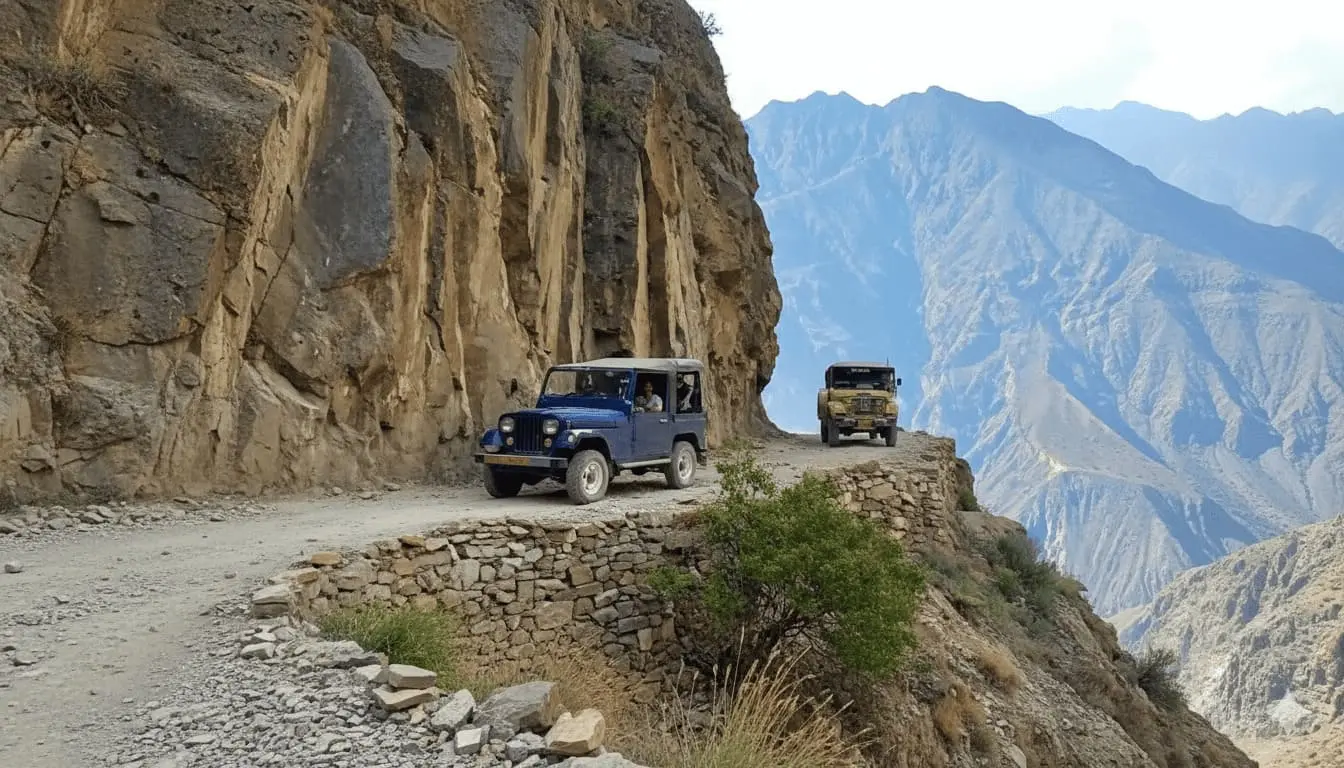
- Raikot Bridge to Tatu village: A roughly 12–16 kilometer unpaved jeep track, often described as steep, narrow, and carved into mountainside slopes.
- Tatu village to Fairy Meadows: A trek of approximately 2 to 4 hours (or a horse ride of similar duration) along a mountain footpath.
Most visitors reach Fairy Meadows by following the Karakoram Highway to Raikot Bridge, then using a local jeep on the Raikot–Tatu track, followed by a 2–4 hour trek or horse ride to the meadows. Variations exist, but this combined jeep-and-trek route is the most commonly reported option.
Some travelers arrange shared jeep rides to reduce costs, while others hire private jeeps for more control over timing and stops. Regardless of arrangement, the physical characteristics of the Raikot–Tatu road remain consistent: a challenging mountain track that requires careful navigation.
Raikot Bridge to Tatu: Jeep Road Condition and Reality
The Raikot Bridge to Tatu jeep road is frequently the focus of traveler anxiety, and understanding its condition helps set realistic expectations.
General Characteristics
This track is commonly described as:
- Narrow and unpaved: Typically wide enough for one vehicle, with designated passing points where two jeeps can carefully maneuver around each other.
- Steep drops: The road often runs along cliff edges with minimal or no guardrails, creating significant exposure to heights.
- Variable surface: A mix of compacted dirt, loose gravel, and embedded rock. Sections may be washed out, potholed, or newly cleared, depending on recent weather and maintenance activity.
- Exposure to natural hazards: During or after heavy rain, snow, or seismic activity, the road may experience rockfall, small landslides, or washouts.
Factors That Change Fairy Meadows Jeep Road Condition
“Northern Gilgit-Baltistan is classified as a landslide-prone mountainous region, according to geological assessments in Pakistan.”
The condition of this track is not static. Several variables commonly affect its usability and difficulty:
- Season: Snow and ice in winter and early spring often make the road impassable or extremely hazardous. Late spring through early autumn is generally considered more accessible, though heavy monsoon rains can still cause problems.
- Maintenance and clearing: Local authorities or community groups sometimes clear debris, repair washouts, or widen sections, but the frequency and extent of such work vary year to year.
- Recent weather events: A single intense rainstorm or landslide can significantly alter road conditions within hours.
The Raikot Bridge to Tatu jeep road is generally a narrow, unpaved mountain track with steep drops, occasional rough patches, and variable maintenance. Jeep prices and conditions change frequently, so travelers are usually advised to confirm current rates and road status on arrival.
Jeep Costs and Arrangements
Jeep prices from Raikot Bridge to Tatu and return are often negotiated locally and tend to fluctuate. Travelers commonly report costs in the range of several thousand Pakistani rupees per jeep (not per person), with variations depending on:
- Shared versus private hire
- Fuel prices
- Demand at the time
- Negotiation between the driver and the passenger
These figures should be treated as approximate and subject to change. It’s generally advisable to confirm current rates upon arrival at the jeep stand rather than relying on outdated information.
Drivers are typically local residents familiar with this specific road, which many travelers find reassuring. However, familiarity with the road does not eliminate risk, and driver behavior—speed, caution during passing, response to passenger concerns—remains a significant safety variable.
Is the Fairy Meadows Road Really Dangerous?
The question “Is Fairy Meadows road dangerous?” appears frequently in search queries, often sparked by viral lists claiming it is “one of the most dangerous roads in the world.”
The Source of “Dangerous Road” Claims
Such rankings typically originate from travel blogs, media listicles, and viral social media content rather than from any official international road safety authority. There is no single global body that objectively measures and ranks road danger across all countries. The characterization is largely shaped by dramatic visuals—steep drop-offs, narrow tracks, and the road’s appearance in photographs—rather than by systematic accident data.
Actual Risk Factors
That said, the Raikot Bridge jeep track does present real risk factors:
- Height exposure: Steep, unguarded drops alongside much of the route.
- Narrow width: Limited room for error during passing or when encountering obstacles.
- Surface variability: Loose gravel, mud, or washouts can reduce traction and control.
- Weather-related hazards: Rain, snow, and ice compound difficulty; rockfall and landslides occur during unstable conditions.
- Human factors: Driver speed, vehicle maintenance, and passenger behavior all influence outcomes.
The Fairy Meadows jeep road is widely perceived as dangerous because it is a narrow, unpaved mountain track with steep drops and limited barriers, and its risk level depends heavily on weather, vehicle condition, and driver behavior. There is no single official ranking that defines it as “the most dangerous,” but it is generally considered a high-exposure mountain road.
Contextualizing “Dangerous”
Many visitors complete the journey each season without incident, commonly reporting that while the ride was intense or unsettling, it proceeded without accident. Others have experienced vehicle breakdowns, near-misses during passing, or exposure to rockfall. Incidents and accidents have been reported over the years, though comprehensive statistics are not publicly available.
The perception of danger is also relative: for travelers accustomed to well-maintained highways with barriers and wide lanes, this road may feel extremely risky. For drivers who navigate such routes daily, it is a challenging but familiar work environment.
A useful way to think about road risk here is as a combination of factors:
Road Risk = Road Design + Weather Conditions + Vehicle Quality + Driver Behavior + Passenger Decisions
You cannot control the road design or fully predict the weather, but you can observe vehicle condition, communicate with your driver, and make informed choices about timing and whether to proceed.
Tatu Village Trek Difficulty: What to Expect
After the jeep ride, the journey continues on foot (or via horse) from Tatu village to Fairy Meadows. Understanding Tatu village trek difficulty helps travelers assess whether they are prepared for this segment.
Typical Trek Characteristics
The trek is commonly reported to take 2 to 4 hours one way, depending on individual pace, fitness level, and whether you are carrying luggage. The path is generally described as:
- Uphill and uneven: A steady ascent along a dirt and stone trail, with some sections steeper than others.
- Exposure to heights: Portions of the trail run near drop-offs, which may be unsettling for people uncomfortable with exposure.
- Variable footing: Depending on recent weather, the path may be dry and firm, or muddy, rocky, and slippery.
The altitude—starting around 2,000 meters at Tatu and rising to approximately 3,000+ meters at Fairy Meadows—means some visitors may feel short of breath or fatigue more quickly than they would at lower elevations.
The trek from Tatu village to Fairy Meadows is generally described as a 2–4 hour uphill walk on a dirt and stone mountain path with some steep and exposed sections. Difficulty varies widely based on fitness, altitude sensitivity, weather, and load.
Factors Affecting Trek Difficulty
Several personal and environmental factors influence how challenging this trek feels:
- Fitness and trekking experience: People accustomed to hiking on uneven terrain generally find it manageable, while those with limited hiking experience may find it strenuous.
- Altitude sensitivity: Some individuals experience mild altitude symptoms (headache, nausea, dizziness) even at moderate elevations.
- Weather: Rain, snow, or ice can make the trail slippery and slow progress significantly. Wind and cold add discomfort.
- Load: Carrying a heavy backpack increases exertion; many travelers hire porters or use horses for luggage.
Self-Assessment Questions
Before committing to the trek, consider:
- Can you comfortably walk uphill for 2–4 hours on uneven ground?
- Are you comfortable walking on narrow paths near drop-offs?
- Do you have any knee, ankle, or cardiovascular conditions that might be aggravated by sustained uphill effort or altitude?
If you’re unsure about any health-related concerns, consulting a healthcare professional before attempting high-altitude mountain treks is generally advisable.
Fairy Meadows Horse Trail Safety Considerations
Many visitors choose to ride horses between Tatu and Fairy Meadows, either to conserve energy or to manage luggage. Understanding Fairy Meadows horse trail safety helps set realistic expectations about this option.
How Horse Rides Typically Work
Horses are commonly available for hire at Tatu village, usually accompanied by local handlers who lead the animals along the trail. This arrangement is widely used and generally straightforward, but it carries its own set of considerations.
Safety Factors to Consider
Using a horse changes the nature of the effort but does not eliminate risk. Key considerations include:
- Animal condition and temperament: Horses vary in training, health, and demeanor. Observing the animal before mounting—checking for obvious signs of distress, injury, or exhaustion—can provide some reassurance.
- Equipment quality: Saddles, stirrups, and reins should appear secure and functional. Loose or damaged equipment increases the risk of falls.
- Trail exposure: The same narrow, exposed sections of the trail that make trekking unsettling also apply to horse riding. Riders need to maintain balance and manage any fear of heights.
- Handler communication: Clear, calm communication with the handler about pace, comfort level, and any concerns is important. Language barriers can complicate this, but are usually manageable through gestures and patience.
Horse rides between Tatu and Fairy Meadows are commonly available, but their safety depends on the specific animal, handler, equipment, trail conditions, and rider comfort with heights. Using a horse can reduce physical effort, but does not remove exposure to falls or trail hazards.
For travelers with limited horse-riding experience or significant fear of heights, a horse may not feel safer than walking. For others, it provides a practical way to manage the distance without excessive exertion.
Seasonal and Weather Factors Affecting Safety
Both the jeep road and the trek are heavily influenced by season and weather, making timing a critical safety consideration.
“Mountain weather in northern Pakistan can change rapidly, a pattern also noted by the Pakistan Meteorological Department.”
General Seasonal Patterns
Based on commonly reported patterns:
- Late spring to early autumn (roughly May through September, variable by year): Generally considered the most accessible period. Roads are usually snow-free, and trails are more likely to be dry and passable.
- Winter and early spring (November through March or April): Snow, ice, and avalanche risk often make both the jeep track and the trek impassable or extremely hazardous. Access may be restricted entirely during these months.
- Monsoon season considerations: Heavy monsoon rains (typically July and August in the broader region, though patterns vary) can cause landslides, washouts, and muddy trails even during the generally “good” season.
Specific Impacts on Access
- Raikot Bridge jeep road condition: Mud, washouts, and rockfall during heavy rains; snow and ice in shoulder seasons; potential for road closures after severe weather events.
- Tatu village trek difficulty: Snow can make the trail slippery and obscure footing; rain creates mud and reduces visibility; strong winds increase cold exposure and make balance more challenging.
Access to Fairy Meadows is strongly affected by season and weather, with the jeep road and trek generally easier in dry, snow-free months and significantly more hazardous in heavy rain, snow, or ice. Local conditions and any restrictions should usually be checked shortly before travel.
Checking Conditions Locally
Weather forecasts in mountain regions are notoriously variable. Conditions can change rapidly, and what was passable in the morning may become dangerous by afternoon. Travelers are commonly advised to:
- Check with local jeep drivers, guesthouse operators, or community contacts near Raikot Bridge shortly before departure.
- Be prepared to delay or abandon the trip if conditions deteriorate.
- Recognize that local authorities or community leaders may sometimes restrict access during particularly hazardous periods.
Practical Safety Tips: Choosing Jeeps, Guides, and Timing
While no set of tips can eliminate risk entirely, certain practical measures are commonly recommended by experienced travelers and may help reduce avoidable problems.
Before the Jeep Ride
- Ask about recent road conditions: Speaking with drivers or other travelers who have recently completed the journey can provide up-to-date insight.
- Visually check the vehicle: While most travelers lack mechanical expertise, a quick visual inspection of tires (adequate tread, proper inflation), general vehicle condition, and seatbelts can catch obvious issues.
- Discuss expectations with the driver: Many travelers report feeling better when they communicate upfront about preferred speed, comfort with heights, and willingness to stop if needed.
During the Jeep Ride
- Stay seated and avoid leaning out: On exposed sections, keeping weight centered in the vehicle reduces risk.
- Speak up if uncomfortable: If the driver is going faster than feels safe, politely requesting a slower pace is reasonable. Drivers may or may not comply, but expressing concern is valid.
Trek Safety Practices
Basic mountain walking guidelines generally apply:
- Footwear: Sturdy shoes with good grip (hiking boots or trail shoes are commonly recommended over casual sneakers).
- Layered clothing: Temperatures can change quickly at altitude; bringing layers and rain protection is standard advice.
- Water and snacks: Carrying sufficient water and some food helps maintain energy and prevents dehydration.
- Timing: Starting early in the day often allows more daylight margin and reduces exposure to afternoon weather changes (thunderstorms, wind).
- Avoid obviously dangerous conditions: Trekking during thunderstorms, heavy fog, or active landslide conditions is generally inadvisable when alternatives exist.
Guides and Porters
Many travelers hire local guides or porters for navigation, pacing assistance, and luggage transport. This support is practical and can enhance the experience, though it does not guarantee safety. Guides familiar with the trail can help identify hazards and adjust plans if conditions worsen.
Practical safety measures for reaching Fairy Meadows generally include checking recent road and weather conditions, assessing jeep and driver behavior, carrying basic mountain trekking gear, and allowing extra daylight time. These steps cannot remove all risk, but may reduce common avoidable problems.
Who Should Consider Skipping Fairy Meadows (for Now)?
Choosing not to visit Fairy Meadows—or to postpone the trip—can be a reasonable, responsible decision depending on personal circumstances.
Groups Who May Wish to Reconsider
- People with a severe fear of heights: The jeep ride and portions of the trek involve significant exposure to steep drops. If this type of environment causes extreme anxiety, the journey may be more distressing than enjoyable.
- Individuals with serious health conditions: Those with known heart, lung, or mobility issues should generally consult a healthcare professional before attempting high-altitude mountain treks and rough vehicle travel.
- Families with very young children or older adults: The combination of a long, bumpy jeep ride and a multi-hour trek may be too physically demanding or uncomfortable for very young children or older adults with limited stamina or mobility.
Travelers with severe fear of heights, serious health conditions, or very limited mobility are often advised to think carefully and consult medical professionals before attempting the Fairy Meadows road and trek. Deciding to skip or postpone the visit can be a reasonable safety choice.
Alternative Considerations
Northern Pakistan offers many scenic and culturally rich destinations with more straightforward road access. Skipping Fairy Meadows does not mean giving up on exploring the region; it simply means prioritizing safety and comfort over a specific destination.
There is no shame in recognizing personal limits or deciding that the risk-to-reward ratio doesn’t align with your current situation.
Frequently Asked Questions on Fairy Meadows Access & Safety
Is the Fairy Meadows jeep road open all year?
No. The road is often closed or impassable during winter and early spring due to snow, ice, and landslide risk. Access is generally most reliable during the late spring through early autumn months, but exact timing varies by year and weather conditions. Checking locally shortly before travel is advisable.
Can a normal car go from Raikot Bridge to Tatu?
Generally, no. The Raikot to Tatu track is typically navigated by high-clearance 4WD jeeps. Most reports indicate that regular 2WD cars do not attempt this section due to the roughness, steep inclines, and narrow, exposed sections. Travelers usually transfer to local jeeps at Raikot Bridge.
How much does the Fairy Meadows jeep cost?
Jeep costs are commonly reported in broad ranges and fluctuate based on fuel prices, demand, and negotiation. Approximate figures often mentioned are several thousand Pakistani rupees per jeep (round trip, not per person), with shared rides reducing individual costs. Prices should be treated as variable and confirmed on arrival.
How hard is the Tatu to Fairy Meadows trek for beginners?
The trek is generally described as a 2–4 hour uphill walk on uneven terrain with some steep and exposed sections. Many beginners with moderate fitness complete it successfully, but those unaccustomed to mountain hiking or sensitive to altitude may find it quite challenging. Assessing personal fitness and comfort with exposure is key.
Is Fairy Meadows safe for solo travelers?
Many solo travelers visit Fairy Meadows without incident. However, solo travelers face the same road, trek, weather, and health risks as groups. Informing someone of your plans, checking conditions carefully, and possibly hiring a guide are commonly recommended practices for solo visitors.
Can children go to Fairy Meadows?
Some families with children visit Fairy Meadows. The decision depends on the child’s age, temperament, health, and comfort with long vehicle rides and trekking. Parents should consider whether the child can handle the exposure, duration, and potential discomfort of both the jeep ride and trek.
Common questions about Fairy Meadows access focus on road openings, jeep suitability, trek difficulty, solo travel, and whether children can manage the journey. Answers generally emphasize that conditions change frequently and that each traveler must assess their risk tolerance, health, and preparation.
Conclusion
Reaching Fairy Meadows involves a multi-stage journey combining highway travel, a high-exposure jeep track from Raikot Bridge to Tatu village, and a steep mountain trek. The Raikot jeep road is genuinely challenging—narrow, unpaved, and exposed—but it is navigated successfully by many travelers each season. The trek from Tatu to Fairy Meadows adds another layer of physical effort and altitude exposure.
Neither the jeep road nor the trek is inherently “safe” or “unsafe” in absolute terms. Risk levels depend on weather, road maintenance, vehicle and driver quality, trail conditions, and individual fitness and comfort with heights.
Reaching Fairy Meadows generally involves a high-exposure jeep road and a mountain trek whose safety depends on weather, road maintenance, vehicle and driver quality, and personal fitness. Informed preparation and honest self-assessment are key to deciding whether this journey is appropriate at a given time.
Approaching this destination with realistic expectations, careful preparation, and a willingness to adjust plans based on conditions is more valuable than relying on blanket assurances or dramatic warnings. Verify current, on-the-ground details before traveling, and recognize that choosing not to go—or to postpone—can be as valid a decision as choosing to proceed.
About the Author
This article was written by a travel-safety-focused researcher specializing in overland route analysis and risk communication for mountain destinations. The content is based on a synthesis of traveler accounts, geographic descriptions, and general mountain safety principles, and was reviewed for accuracy and tone by a regional travel research specialist.