Kharmang Valley Travel Guide: Waterfalls, Forts & How to Visit
By Shahid Hashmi (Tour Operator & Manager) | Last updated: 04 September 2026
Kharmang Valley is the quiet corner of Baltistan where the Indus River first enters Pakistan — a district of waterfalls, apricot orchards, centuries-old forts, and Balti villages that few travelers ever see. This is Northern Discover’s complete, locally verified guide to visiting it.
We’re based in Skardu and run Kharmang trips ourselves — our drivers know the road, and we’ve stayed in the guesthouses we book you into. Every quote is itemised, so you can see exactly what you’re paying for.
Quick Facts
| Location | Southeastern Baltistan, Gilgit-Baltistan, Pakistan |
| District | Kharmang (headquarters: Tolti) |
| Province/Region | Gilgit-Baltistan |
| Elevation | ~2,500 m at the valley floor; surrounding peaks and passes rise to 3,000–5,000 m |
| Distance from Skardu | ~120 km (roughly 3 hours by road) |
| Best Time to Visit | Late April to October; peak season June–September |
| Recommended Duration | 2–4 days (easily combined with Skardu, Khaplu, or Shigar) |
| Road Access | Paved road for most of the route from Skardu; some jeep tracks to side valleys |
| Mobile Network | Available in Tolti and larger villages; patchy in side valleys |
| Internet | Limited 3G/4G in main bazaars; largely unavailable near waterfalls and remote hamlets |
| Suitable For | Families, couples, photographers, cultural travelers, first-time Baltistan visitors |
| Weather Snapshot | Warm, dry summers; cold winters with snow at higher elevations |
Overview: What Is Kharmang Valley?
Kharmang Valley is a district in southeastern Baltistan where the Indus River completes its journey from Ladakh and enters Pakistani territory, carving a long, fertile corridor through the mountains on its way toward Skardu. It sits roughly three hours by road from Skardu city, bordered by Skardu district to the north, Ghanche to the northeast, Astore to the west, and the Kargil and Leh districts of Ladakh to the south.
What makes Kharmang distinct from its better-known neighbors is its unhurried character. There are no crowded viewpoints here, no queues at a fort gate — instead, terraced apricot orchards, willow-lined irrigation channels, and stone-and-timber Balti homes spread along the riverbank, with waterfalls tumbling out of the cliffs above. In Balti, the name Kharmang combines khar (fort) and mang (abundant) — the “valley of forts” — a reference to the string of historic strongholds built here during the era of the Baltistan rulers.
Administratively, Kharmang was carved out as its own district from Skardu in 2015, with its headquarters at Tolti. Geographically and culturally, though, it remains deeply tied to Skardu and the wider Baltistan region: the same Balti language, the same terraced farming traditions, and the same warmth of hospitality that Baltistan is known for. For travelers, this relationship matters practically — Kharmang is almost always visited as an extension of a Skardu trip guide rather than a stand-alone destination, and Northern Discover builds most of its Kharmang itineraries this way.
Why Visit Kharmang Valley
Waterfalls that feel undiscovered. Manthokha and Khamosh waterfalls are among the most striking in Baltistan, yet you’ll likely have them almost to yourself compared to the busier attractions around Skardu.
Genuine Balti village life. Because tourism infrastructure here is lighter than in Skardu or Hunza, daily life continues largely unaffected by visitors — you’re witnessing routine, not performance.
The Indus River, up close. Kharmang is where the Indus enters Pakistan, and the valley offers some of the most accessible, dramatic river viewpoints in the region.
Peace and fewer crowds. For travelers who have already done the popular circuits and want somewhere quieter, Kharmang delivers solitude without sacrificing scenery.
Photography that rewards patience. Layered orchards, mud-and-stone architecture, waterfalls, and the Indus gorge combine for compositions that are hard to find elsewhere in Gilgit-Baltistan.
Authentic hospitality. Homestays and small guesthouses run by local families mean your rupees go directly into the community, and conversations over tea are often the highlight of the trip.
These are the reasons people come — but the valley’s attractions are what fill the itinerary. Here’s what to prioritize.
Top Attractions in Kharmang Valley
Manthokha Waterfall
Overview: The valley’s signature attraction, Manthokha Waterfall drops in tiers down a rock face near Manthokha village, feeding into the Indus below. It’s one of the tallest and most photogenic waterfalls in Baltistan.
Highlights: Multiple viewing points along a short walking trail, a natural pool at the base in some seasons, and a backdrop of orchards and mountains that make it one of the most photographed spots in the district.
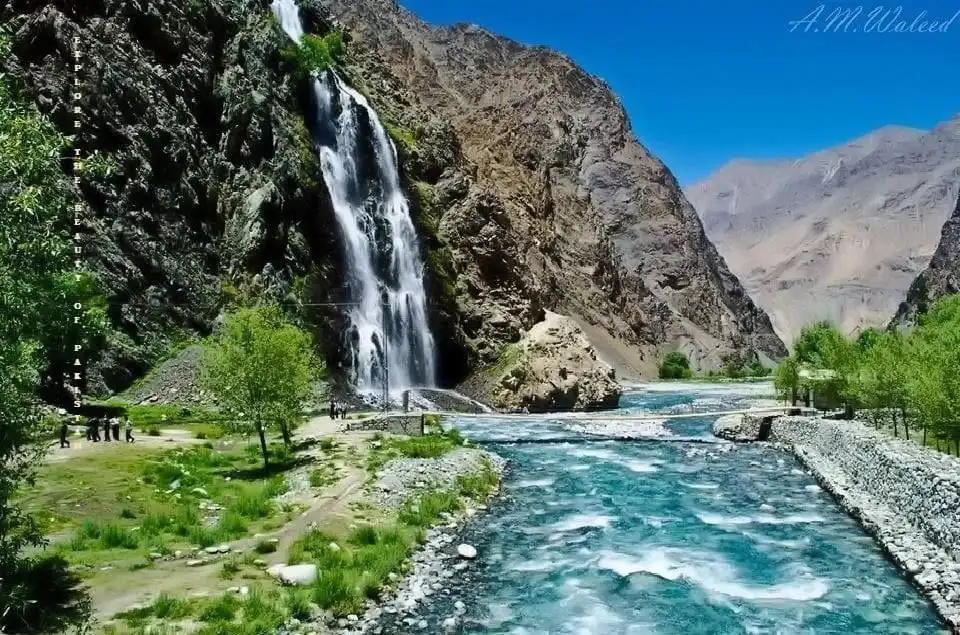
Best Time: Water volume peaks in early-to-mid summer (June–July) during snowmelt; the surrounding greenery is at its best in spring and early summer.
Visitor Tips: Wear grippy footwear, as rocks near the base can be slippery from spray. Early morning visits mean softer light and fewer other visitors.
Khamosh Waterfall
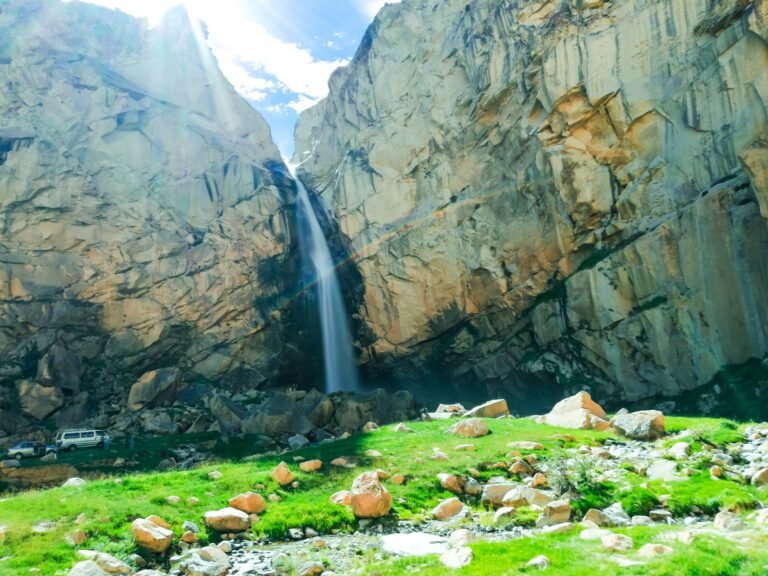
Roughly on the way between Skardu and the Kharmang villages, Khamosh (“silent”) Waterfall is one of the highest overhung falls in Gilgit-Baltistan, with water appearing to drop straight out of open air on the cliff face. It’s quieter than Manthokha and worth a stop for the sheer scale of the drop and the calm setting around it.

Ghandus Valley
A side valley known for its remote, high-altitude scenery, alpine meadows, and a demanding but rewarding approach through rugged terrain. Ghandus rewards travelers looking for a short trek or jeep excursion away from the main road, with landscapes that shift from farmland to bare mountain within a few hours of walking.
It’s a gentle introduction compared to Baltistan’s bigger walks — if you’re weighing it against something longer, our guide to trekking routes in northern Pakistan sets out the options
Mehdiabad
Formerly known as Parkuta, Mehdiabad is one of Kharmang’s most fertile pockets — a patchwork of orchards, wheat fields, and Balti hamlets along the Indus. It’s an easy, scenic stop for village walks and a good introduction to how life in the valley is organized around the river and its irrigation channels.
Kharmang Fort
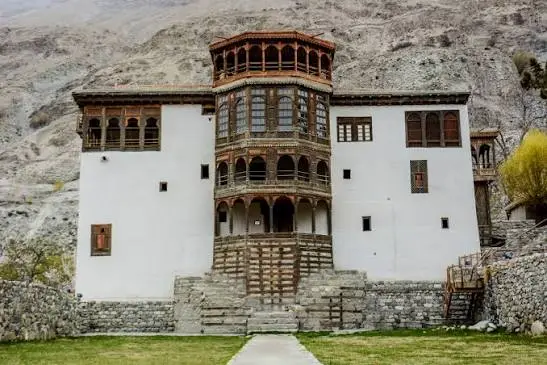
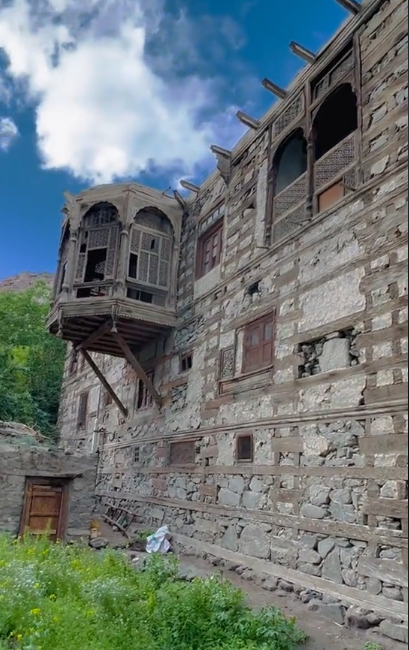
Also called Boti Khar, this fort in Kharmang Khas dates to before 1565 and was built by the region’s ruling family as part of a network of strongholds guarding the valley — the reason “Kharmang” (valley of forts) got its name. It’s a modest, double-story structure rather than a restored monument, and it currently has no formal heritage protection, so visits should be respectful and low-impact. What it lacks in polish it makes up for in authenticity: this is history you’re seeing largely as it was left.
Indus River Viewpoints
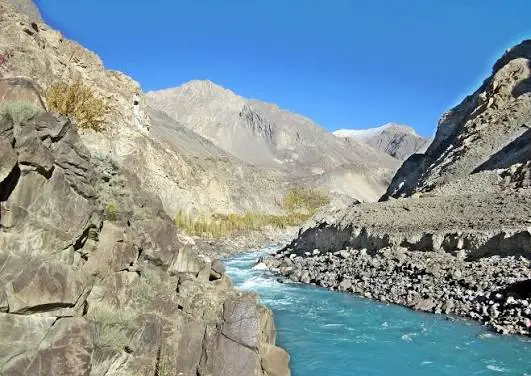
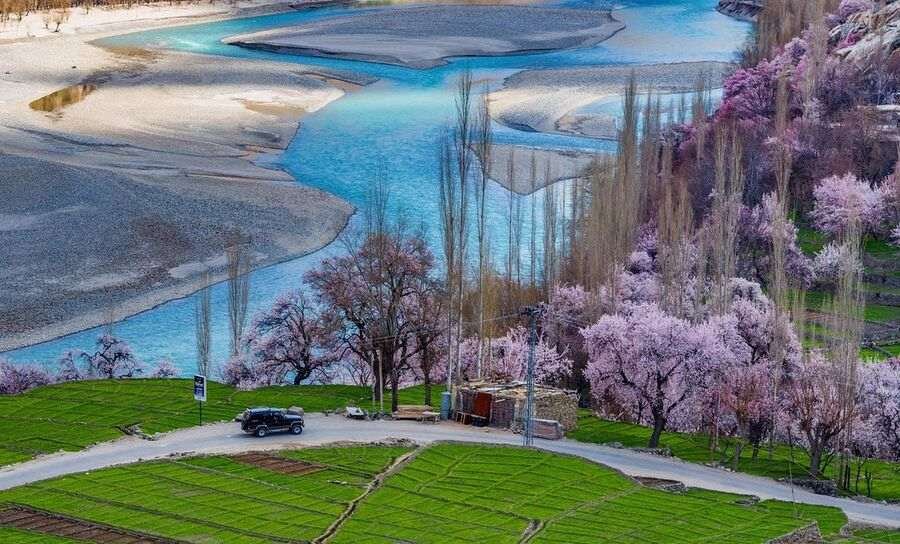
Several points along the Skardu–Kharmang road offer sweeping views of the Indus as it winds through the gorge, particularly striking in the golden hour before sunset. These viewpoints require no hiking and make natural stops for photography breaks during the drive.
With the highlights covered, most visitors want to know how to actually spend their time in the valley day to day.
Things to Do in Kharmang Valley
- Sightseeing along the main road, stopping at waterfalls, forts, and river viewpoints
- Waterfall visits to Manthokha and Khamosh, ideally at different times of day for different light
- Village walks through Mehdiabad, Tolti, and smaller hamlets to see orchards and traditional homes
- Photography sessions focused on golden hour, architecture, and daily life
- Camping near riverbanks or meadow clearings for travelers with their own gear or a guided setup
- Hiking into side valleys like Ghandus for half-day or full-day treks
- Jeep excursions to reach less accessible viewpoints and remote villages
- Cultural experiences, including tea with local families where homestays are arranged
- River exploration, walking sections of the Indus bank and its tributary streams
- Local market visits in Tolti for dry fruit, produce, and everyday Balti goods
Which of these activities makes sense depends heavily on when you visit — so timing your trip matters as much as planning the itinerary.
Best Time to Visit Kharmang Valley
Spring (April–May): Orchards bloom and meltwater fills the waterfalls, making this a strong window for photography and greenery, though some higher side-valley routes may still be affected by residual snow.
Summer (June–August): The most popular and most reliable season. Roads are fully open, waterfalls run at full volume, weather is warm and stable, and this is the easiest season for families and first-time visitors.
Autumn (September–October): Orchards turn gold and rust, days stay mild, and crowds thin out further — a favorite window for photographers who want color without summer’s heat.
Winter (November–March): Cold, with snow at higher elevations and some side routes becoming difficult or impassable. Winter travel is best left to experienced travelers with flexible plans, as accommodation and transport options are more limited.
Recommendation: For most travelers, especially families and first-timers, June through September offers the best balance of accessible roads, comfortable weather, and full waterfall flow. Photographers chasing autumn colour should aim for late September into October. You can find more timing details in our comprehensive guide on the best time to visit Gilgit-Baltistan.
Weather in Kharmang Valley
Kharmang has a high-altitude, semi-arid climate typical of Baltistan: strong sun, low humidity, and a notable difference between day and night temperatures.
| Season | Daytime Temp | Roads | Waterfall Flow | Best For |
| Spring (Apr–May) | ~10–20°C, cool nights | Main road open; residual snow in side valleys | Rising with meltwater | Orchard blossom, photography, greenery |
| Summer (Jun–Aug) | High 20s–low 30s°C | Fully open | Full volume | Families, first-time visitors, most reliable window |
| Autumn (Sep–Oct) | Comfortable days, crisp nights | Open, thinning traffic | Dropping | Autumn orchard colour, fewer people |
| Winter (Nov–Mar) | Near or below freezing | Some side routes impassable | Reduced | Experienced travelers with flexible plans |
Packing advice: Layers are essential year-round — a light jacket for evenings even in summer, sun protection for intense daytime UV, and warm layers plus waterproof footwear if traveling in shoulder or winter seasons. A dust-resistant scarf or buff is useful on jeep tracks. Review our general Skardu packing list for broader preparation insights.
Travel considerations: Check road conditions before departure in early spring or late autumn, when weather can shift quickly, and build a buffer day into winter itineraries in case of delays.
How to Reach Kharmang Valley
By Air: The nearest airport is Skardu Airport, which receives regular flights from Islamabad (weather-dependent, as is typical across Gilgit-Baltistan). From Skardu, Kharmang is reached by road. You can crosscheck schedules via our flight schedule to Skardu page.
By Road from Skardu: The most common route. It’s approximately 120 km and takes around 3 hours, following the road that traces the Indus River southeast toward Tolti and the Kharmang villages.
By Road from Gilgit: Travelers coming from Gilgit typically drive to Skardu first (around 6–7 hours along the Karakoram Highway and connecting roads), then continue to Kharmang from there — making a Gilgit–Kharmang trip realistically a two-stage journey best split across two days.
By Road from Islamabad: The classic route is Islamabad to Skardu by road (roughly 20–24 hours via the Karakoram Highway, though most travelers break this into an overnight stop) or by air to Skardu, followed by the Skardu–Kharmang road leg. Flying to Skardu and driving into Kharmang is the most time-efficient option for travelers with limited time. Learn more about the transit route details on the Islamabad to Skardu distance guide.
Road Conditions: The main Skardu–Kharmang road is largely paved and manageable in a standard vehicle during summer and early autumn, though sections can be affected by landslides or water crossings after heavy rain. Side valleys such as Ghandus require a 4×4 and an experienced local driver.
Transport Options: Private car or jeep hire from Skardu is the standard approach for independent travelers; Northern Discover arranges private vehicles, drivers, and 4×4 support as part of its Kharmang itineraries.
| Starting Point | Distance | Travel Time | Vehicle | Notes |
| Skardu (by road) | ~120 km | ~3 hours | Standard car in summer/early autumn | The standard route; follows the Indus southeast toward Tolti |
| Gilgit (by road) | ~300 km | 6–7 hrs to Skardu, then ~3 hrs | Standard car | Two-stage journey, best split across two days |
| Islamabad (by road) | ~640 km | 20–24 hrs via KKH, then ~3 hrs | Standard car | Most travelers break this with an overnight stop |
| Islamabad (by air) | — | Flight to Skardu, then ~3 hrs | Standard car from Skardu | Weather-dependent flights; the most time-efficient option |
| Ghandus & Side Valleys | Varies | Varies | 4×4 with experienced local driver | Jeep track only, not passable in a standard vehicle |
Suggested Itineraries
1 Day (from Skardu): Depart early, visit Manthokha and Khamosh waterfalls, stop at an Indus viewpoint, and return to Skardu by evening. Best for travelers with limited time who still want the valley’s highlights.
2 Days: Day 1 covers the drive in, Manthokha Waterfall, and an overnight stay in or near Tolti or Mehdiabad. Day 2 adds Kharmang Fort, a village walk, and the return journey.
3 Days: Extends the 2-day plan with a half-day excursion into Ghandus Valley or additional time in Mehdiabad’s orchards, allowing a more relaxed pace and more flexibility around weather and light.
4 Days: Adds a full trekking or camping day in a side valley, plus unhurried time for photography, village conversations, and local markets — ideal for travelers who want to properly settle into the valley’s rhythm rather than move through it quickly. For comprehensive regional options, consult our standard Gilgit-Baltistan travel itinerary framework.
Kharmang + Skardu: The most natural pairing. Spend 2–3 days on Skardu’s core sights (Shigar Fort, Kachura Lake, Satpara Lake) and add 2 days for Kharmang as an extension.
If you’d rather not piece the Skardu half together yourself, our Skardu tour packagesalready cover those days, and we can bolt the Kharmang extension onto any of them.
Kharmang + Khaplu: Combine Kharmang’s waterfalls and forts with Khaplu’s palace and Shyok Valley scenery for a fuller cultural circuit of Baltistan’s eastern valleys.
Kharmang + Shigar: Pair Kharmang with Shigar Valley’s fort, cold desert, and orchard villages for a well-rounded look at Baltistan’s variety within a single trip.
Travel Costs in Kharmang Valley
Transport: The largest line item for most visitors — private vehicle hire from Skardu, priced by day and vehicle type (sedan for the main road, 4×4 for side valleys).
Accommodation: Ranges from simple guesthouses and homestays at budget-friendly rates to more comfortable private rooms in Tolti and larger villages; expect fewer high-end options than in Skardu itself.
Meals: Modest, with local dhabas and guesthouse kitchens serving Balti and Pakistani staples at reasonable prices; costs rise slightly for meals arranged at private accommodations.
Entry Fees: Kharmang Fort and most natural attractions currently have no formal entry fee, though small community or parking contributions may apply at some sites.
Guides: Recommended for side-valley treks like Ghandus and useful throughout for cultural context; local guide rates are generally affordable compared to more heavily touristed regions.
Camping: Budget-friendly if you bring your own gear; a full camping setup (tents, cooking, transport) can be arranged through Northern Discover for a fixed package rate.
Custom Tours: Northern Discover’s private and custom itineraries bundle transport, accommodation, and guiding into a single transparent quote — the most convenient option for travelers who prefer not to negotiate each element separately.
Money-Saving Tips: Travel in a small group to split vehicle costs, choose homestays over guesthouses where available, and combine Kharmang with an existing Skardu itinerary rather than booking it as a separate trip.
Accommodation in Kharmang Valley
Kharmang’s accommodation scene is intentionally low-key, and that’s part of its appeal.
- Hotels: A small number of simple hotels exist in Tolti and larger villages, offering basic rooms and clean, functional service.
- Guest Houses: The most common option for travelers — family-run guesthouses with private or shared rooms, often including home-cooked meals.Our guide to guesthouses in Gilgit-Baltistan sets out what to expect.
- Homestays: The most immersive choice, staying directly with a local family in villages like Mehdiabad — a meaningful way to experience Balti hospitality first-hand.
- Camping: A strong option near riverbanks and meadow areas for travelers who want to sleep under Baltistan’s night sky, especially when combined with a Ghandus excursion.
- Luxury vs. Budget: Kharmang currently favors budget and mid-range travelers; those seeking luxury-standard rooms typically base themselves in Skardu and day-trip into the valley.
Northern Discover pre-vets accommodation options in Kharmang and can book guesthouses, homestays, or full camping setups as part of a package — useful given how limited independent booking platforms are for this district.
Transportation Within Kharmang Valley
Private Cars: Suitable for the main Skardu–Kharmang road and most valley-floor sightseeing.
4×4 Vehicles: Necessary for side valleys such as Ghandus and for any jeep track beyond the paved main road.
Local Transport: Shared vans and local transport exist between villages but run infrequently and aren’t practical for time-limited itineraries.
Self-Drive: Technically possible on the main road but not generally recommended for first-time visitors, given variable road conditions and the value of a driver who knows the route and its seasonal quirks.
Road Conditions: Generally good on the primary route in summer and early autumn; more variable after rain, in early spring, or in winter.
Driver Recommendations: Northern Discover works with experienced local drivers who know the Kharmang route, current road conditions, and the best stops along the way — a meaningful advantage over generic taxi arrangements from Skardu. If you’d rather drive yourself, here’s what to know about renting a car in Skardu.
Featured Northern Discover Tours
Northern Discover runs Kharmang Valley itineraries as both stand-alone additions and as part of broader Baltistan circuits.
- Private and custom trips, built around your dates, pace, and how much of Baltistan you want to fit in
- Group departures for travelers who prefer a shared itinerary and a shared cost
Whichever format fits your trip, the itinerary is built around the valley’s actual rhythm — not a rushed checklist — and can be adjusted once you’re on the ground.
Local Culture in Kharmang Valley
The people of Kharmang are Balti, sharing the language, Islamic faith, and agricultural traditions found across Baltistan, with roots tracing back to Tibetan and early Buddhist influence before Islam took hold in the region.
Language: Balti is the everyday language; Urdu is widely understood, and English is spoken in tourism-facing settings, though less consistently than in Skardu.
Hospitality: Guests are treated with genuine warmth — tea and a place to sit are offered readily, and conversation is valued as much as any transaction.
Architecture: Traditional homes use stone, mud, and timber, built to handle temperature extremes, often clustered around irrigation channels that have shaped village layout for generations.
Festivals: Local life follows the Islamic calendar (Eid celebrations in particular) alongside harvest-season gatherings tied to the apricot and apple crop. For context on seasonal heritage events, check out our report on cultural festivals of Gilgit-Baltistan.
Daily Life: Centered on farming and livestock, with many households also having family members working abroad, particularly in the Gulf states.
Etiquette: Dress modestly, especially in villages; ask before photographing people; greet with a smile and a simple “Assalam-o-Alaikum,” which goes a long way here. Our guide to solo female travel in Gilgit-Baltistan goes into this properly.
Food is deeply tied to this cultural rhythm, and it’s one of the simplest ways to connect with the valley.
Local Food in Kharmang Valley
Kharmang’s food reflects Baltistan’s high-altitude farming: hearty, simple, and built around what the valley actually produces.
- Traditional Balti dishes, including hearty wheat and barley-based meals suited to the region’s climate our guide to Skardu’s local food covers these in more detail
- Butter tea (payu cha) and regular milk tea, both common at homestays and guesthouses
- Local breads, typically flatbreads baked fresh and served with most meals
- Apricots, fresh in summer and dried for the rest of the year — one of the valley’s signature products
- Organic produce, largely grown without commercial inputs given the region’s traditional farming methods
Dining Tips: Meals in homestays are often part of the accommodation cost and served family-style; come with an appetite and an openness to trying what’s offered, as menus are rarely extensive but the ingredients are consistently fresh. You can cross-reference macro-regional diets in our guide to traditional foods of northern Pakistan.
If the food gives you a taste of the valley, the local markets let you take a piece of it home.
Shopping in Kharmang Valley
- Dried fruits, especially apricots, a genuine specialty of the valley
- Local handicrafts, including textiles and woven goods found in small village shops
- Traditional crafts, reflecting Balti design and materials
- Everyday local products from the Tolti bazaar, useful both as souvenirs and for restocking travel supplies
- Souvenirs are best sourced directly from small producers or markets rather than tourist-focused shops, which are limited here compared to Skardu
Shopping well often means being in the right place at the right time of day — which is also true for photography.
Photography Guide to Kharmang Valley
- Drone considerations: Drone use in Gilgit-Baltistan is subject to permits and restrictions, particularly given Kharmang’s proximity to the Line of Control; confirm current rules before flying, and avoid flying near border areas entirely.
- Rules change, so check with the Gilgit-Baltistan Tourism Department before you travel rather than relying on what a previous visitor tells you.
Gallery